


SPACE November 2026 (No. 708)
What Values Sustain a Building?
South Korea has long protected historical architecture such as palaces, city gates, and Buddhist temple halls under its Cultural Heritage Protection Act of 1962. More recent works of modern architecture, however, long fell outside the scope of this protection. Only a limited number of Western-style buildings from the modernisation period were designated as historic sites, while many modern architectural structures disappeared before they had the opportunity to receive broader social recognition. The Registered Cultural Heritage system, introduced only in 2001, sought to address the limitations of the designated heritage system, whose principle of preserving buildings unchanged had made adaptation for new uses difficult. Under the new system, buildings constructed since the enlightenment period which are at least fifty years old could retain their exteriors while their interiors were newly designed for continued use. Yet, the registration system was not sufficient. There was no mechanism to protect buildings once their registration had been announced but before it took effect, and financial support for repairs was often too limited compared to the economic benefits of demolishing and replacing a building. In most cases, the system only came into operation after a building’s value had already been recognised.
Then, what value sustains a building prior to institutional intervention? These may be the historical, cultural, and architectural values embodied in the building itself, as in the former Supreme Court Building (1928), whose façade has been retained as part of the Seoul Museum of Art (2002); the Seoul Country Club House (1970), Korea’s first golf clubhouse designed by Ra Sangjin, now known as Kkummaru, Seoul Children’s Grand Park (2011); or the French Embassy in Korea (1962) designed by Kim Chung-up. They may also lie in the memories held by the land itself, as at the execution ground of the Joseon dynasty now occupied by the Seosomun Shrine History Museum (2019), or the former site of Andong Byeolgung Palace, where the Seoul Museum of Craft Art (2020) now stands. How has each selected project preserved and revealed these values? Beyond those foregrounded by the selected projects, what other values might sustain a building?
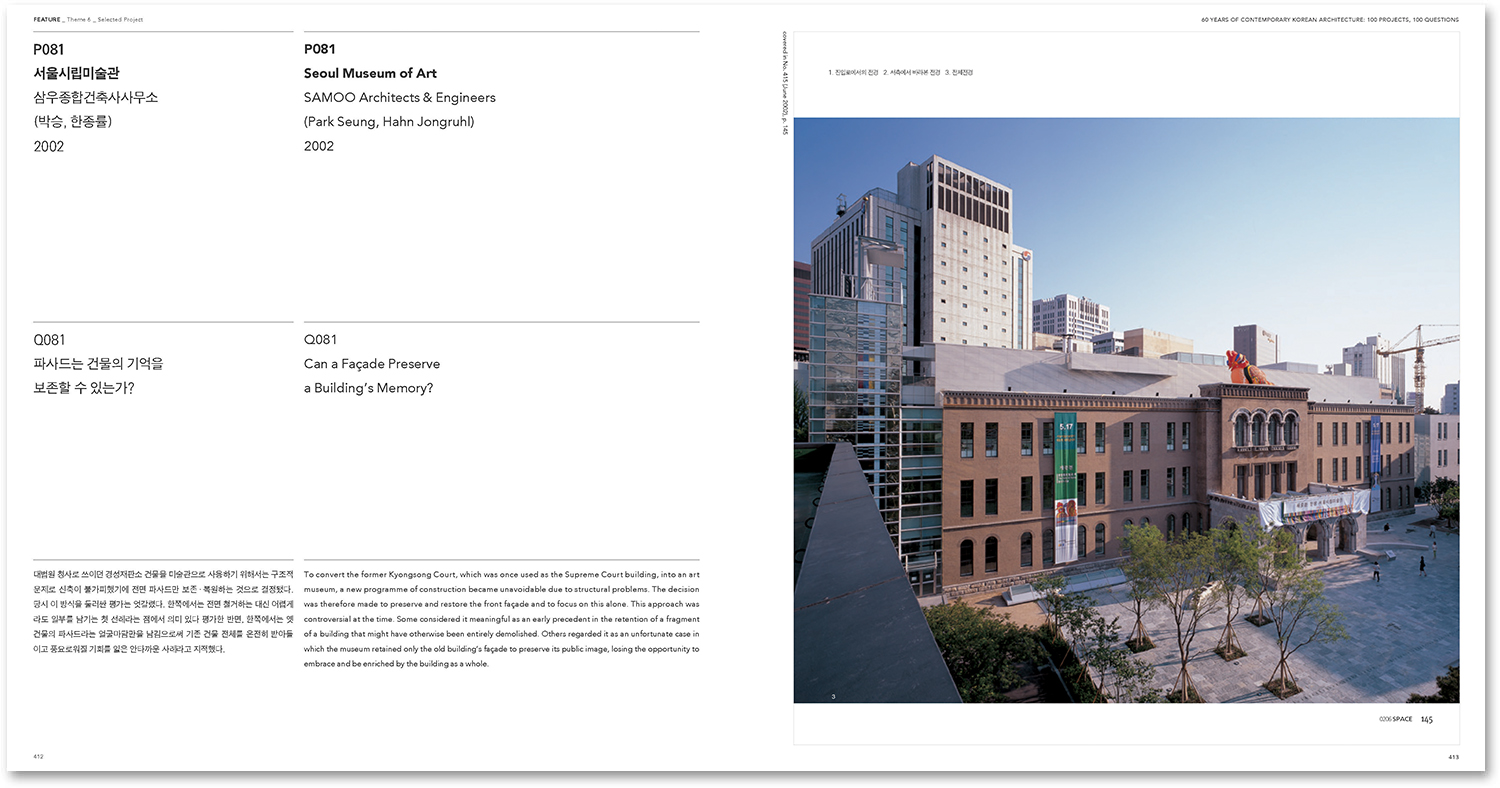
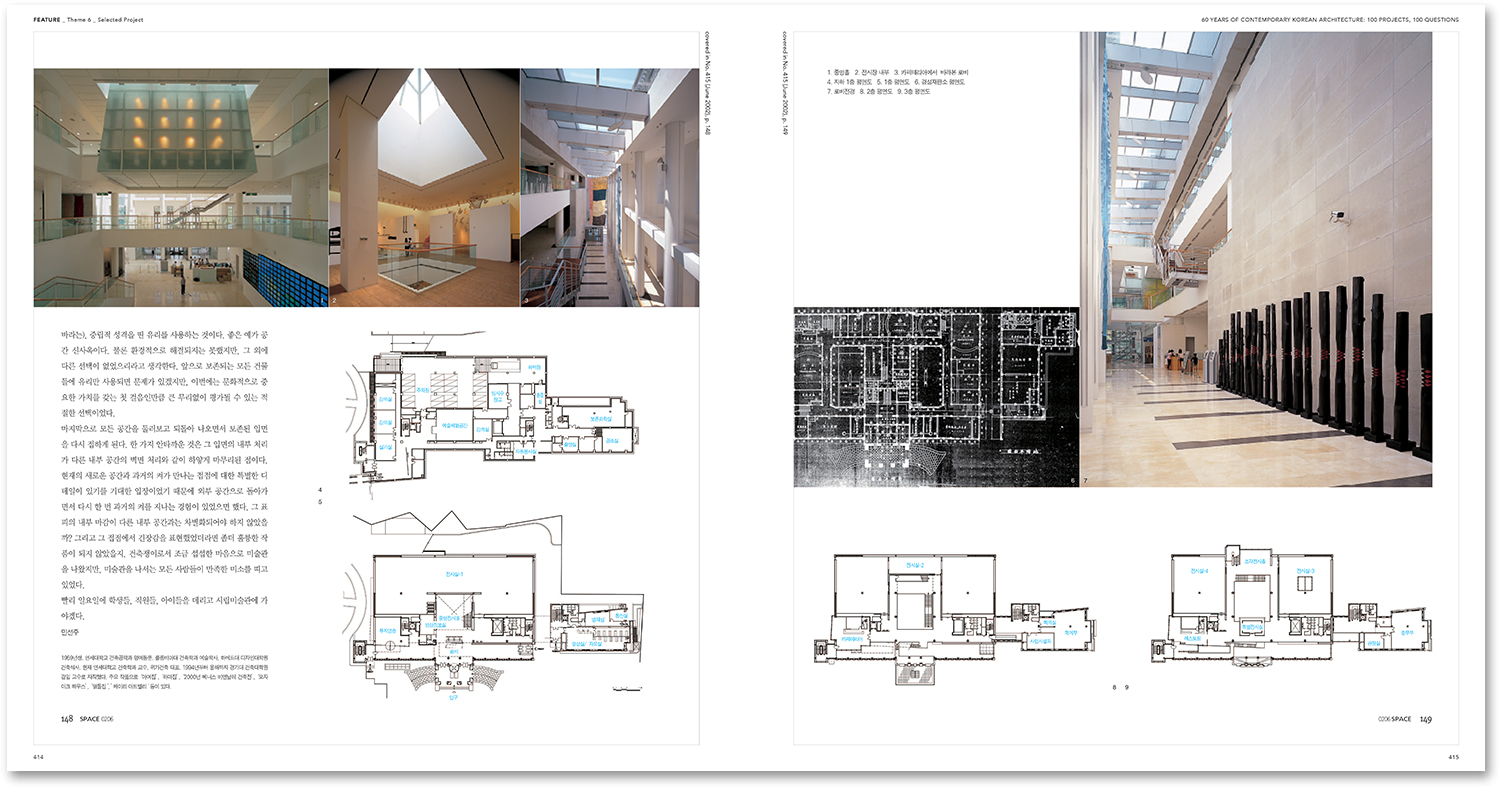
P081 Seoul Museum of Art | Q081 Can a Façade Preserve a Building’s Memory? |
P082 Kkummaru, Seoul Children’s Grand Park | Q082 How Should We Interpret and Engage with Architecture from an Earlier Generation? |
P083 Seosomun Shrine History Museum | Q083 How Can the Memory of Forgotten Land Be Revived Through Space? |
P084 Seoul Museum of Craft Art | Q084 What Should We Preserve and Sustain in a Changing City? |
P085 French Embassy in Korea New Construction and Renovation | Q085 How Should Architecture Engage with Heritage Architecture? |
You can see more information on the SPACE No. November (2026).
0