


SPACE November 2026 (No. 708)
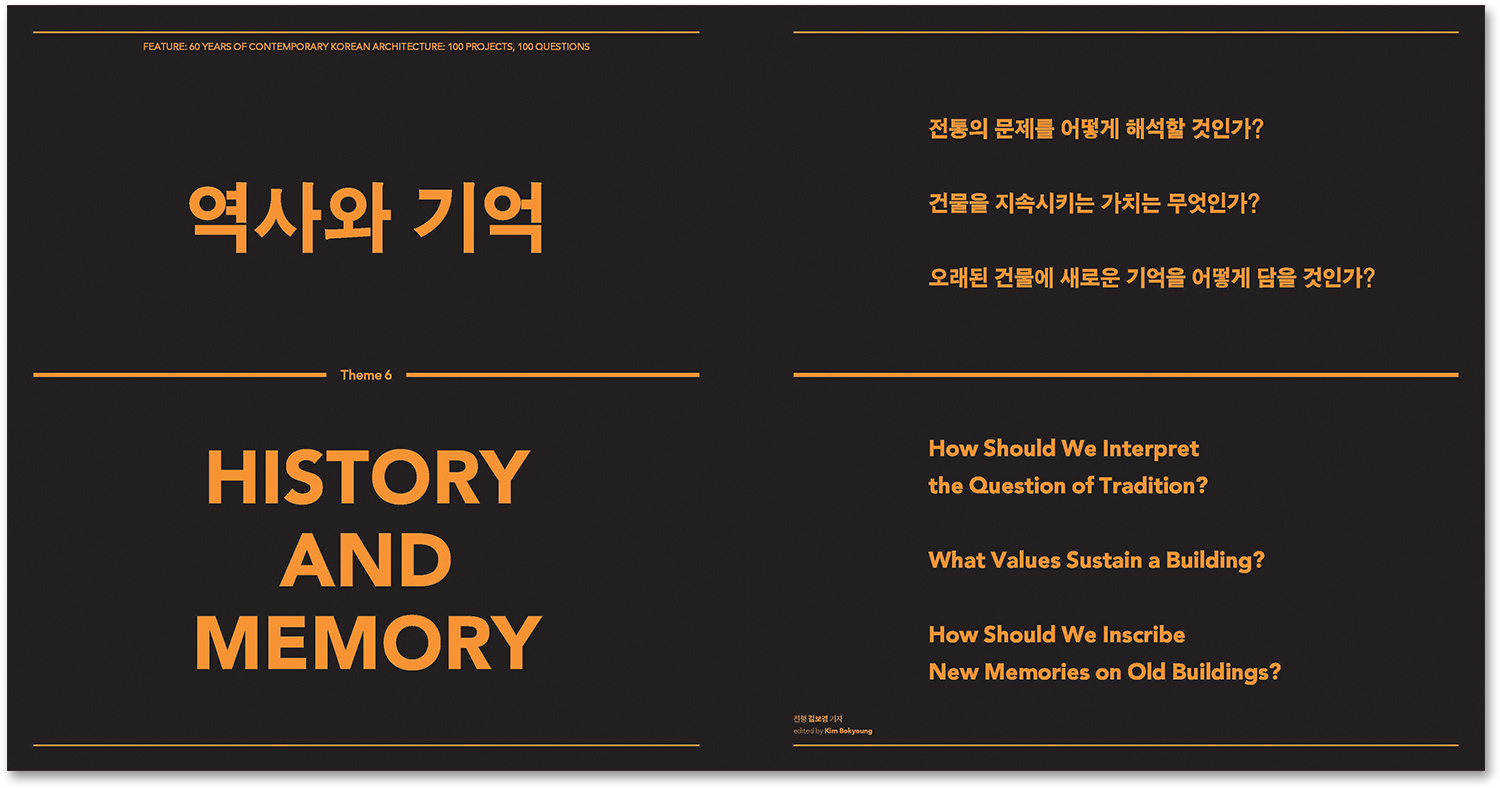
THEME 6.History and Memory
How Should We Interpret the Question of Tradition?
How has tradition been approached in Korean architecture? In the 1960s, when the imprint of colonial rule was still vivid, traditional architecture served above all as a means of creating monuments to the nation state. As the controversy concerning the Buyeo Museum (1968) demonstrates, traditional Korean architecture was also regarded in the public imagination as a symbolic form that had to be visually distinct from Japanese architecture. Architects, however, took a different position. Rather than simply imitating the forms of traditional architecture, they argued that attention should be paid to the spatial organisation of the hanok, while contemporary architecture should be built using the materials and construction methods of the era. This position brought architects into conflict with the state. The debate over the traditional subsequently expanded into a broader discussion of what defines ‘Koreanness’. (As the discussion of ‘Koreanness’ is addressed in ‘Space and Composition’, this subsection focuses specifically on how traditional architecture and the hanok have been approached.)
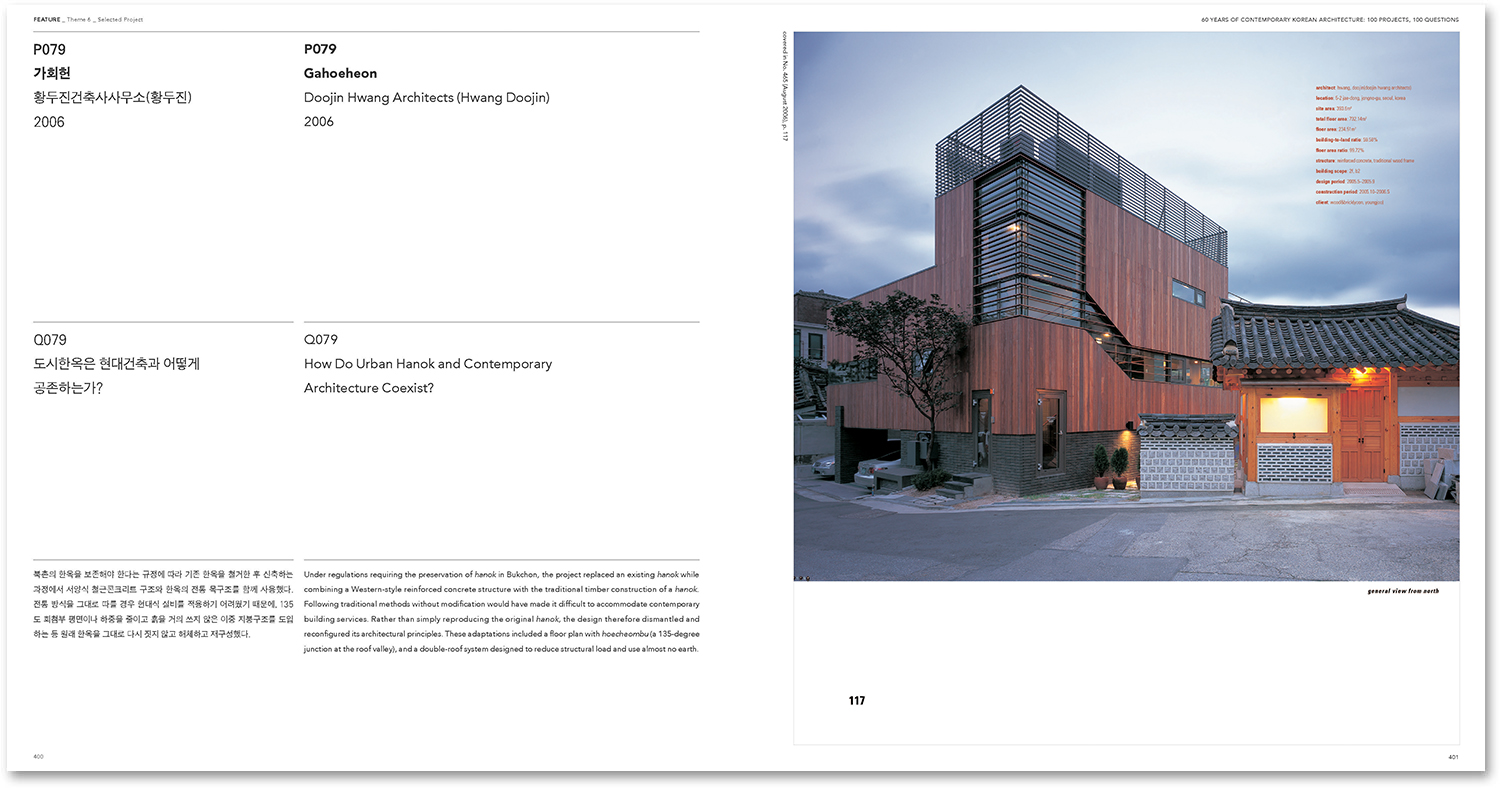
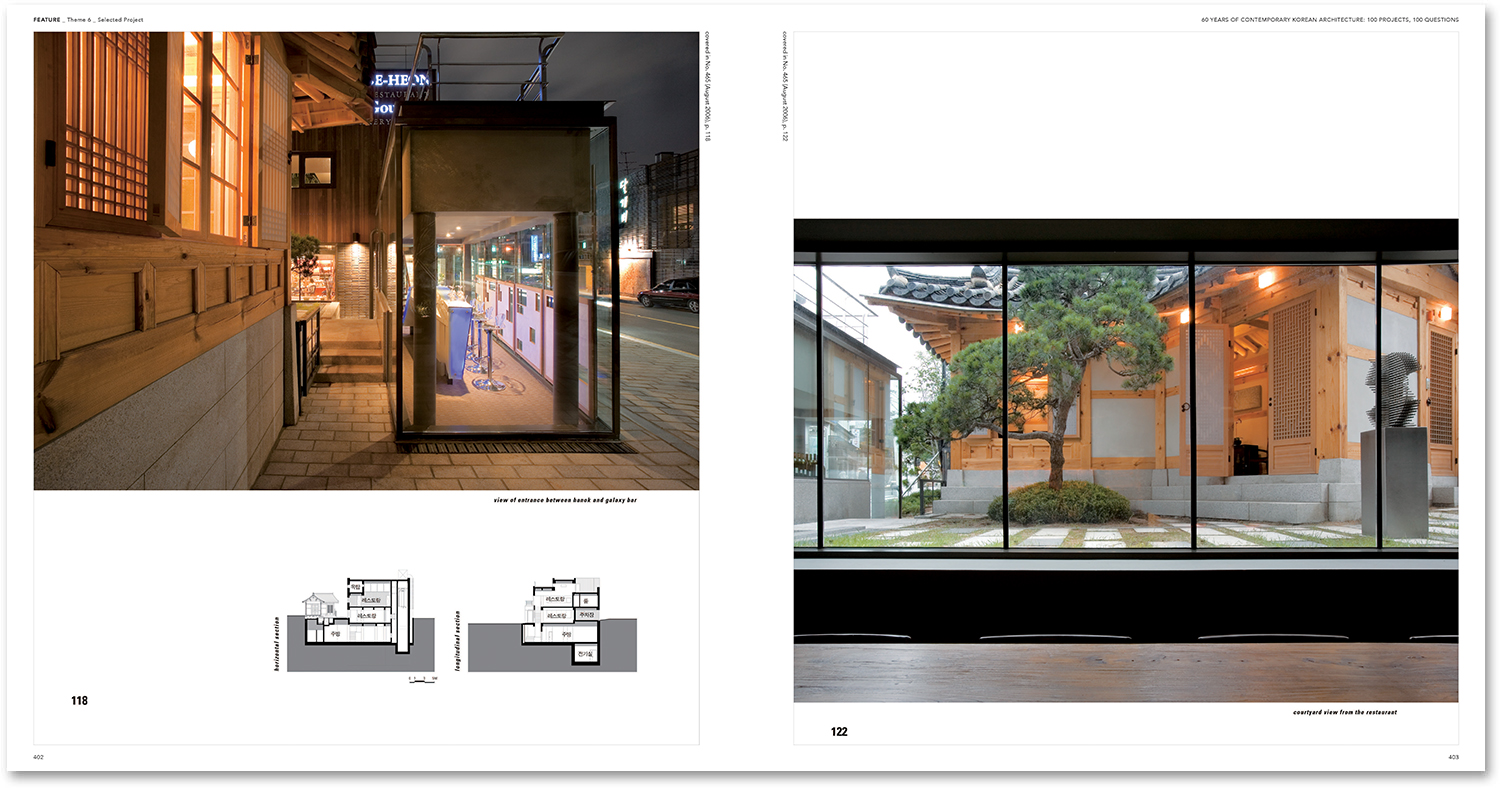
In the years that followed, the architectural profession distanced itself from traditional architecture, leaving the hanok to carpenters and specialists. It was not until the early 2000s that the hanok re-emerged within architectural discourse and practice. This was also when the Seoul Metropolitan Government launched the ‘Preservation & Regeneration of Bukchon’, providing support for the repair and new construction of hanok. Of the projects selected for this subsection, Gahoeheon (2006) approaches new hanok construction from the premise that adopting a hanok tectonic logic is neither imitation nor replication, while the Jinkwansa Korean Cultural Experience Center (2021) reinterprets the characteristically horizontal arrangement of a hanok by stacking its spaces vertically in response to practical constraints. As Kim Chung-up had already observed during the Buyeo Museum controversy, the focus of carrying the traditional forward is shifting from questions of form to the ways space is organised, and also to the ways architecture is constructed.
P077 Buyeo Museum | Q077 What Have Been Identified as the Key Values and Elements of Traditional Architecture? |
P078 National Unified Museum of Korea | Q078 How Was the Inheritance of the Traditional Addressed in an Era of Nationalism? |
P079 Gahoeheon | Q079 How Do Urban Hanok and Contemporary Architecture Coexist? |
P080 Jinkwansa Korean Cultural Experience Center | Q080 How Can Hanok Be Vertically Expanded? |
You can see more information on the SPACE No. November (2026).
0