


「SPACE(공간)」 2026년 11월호 (통권 708호)
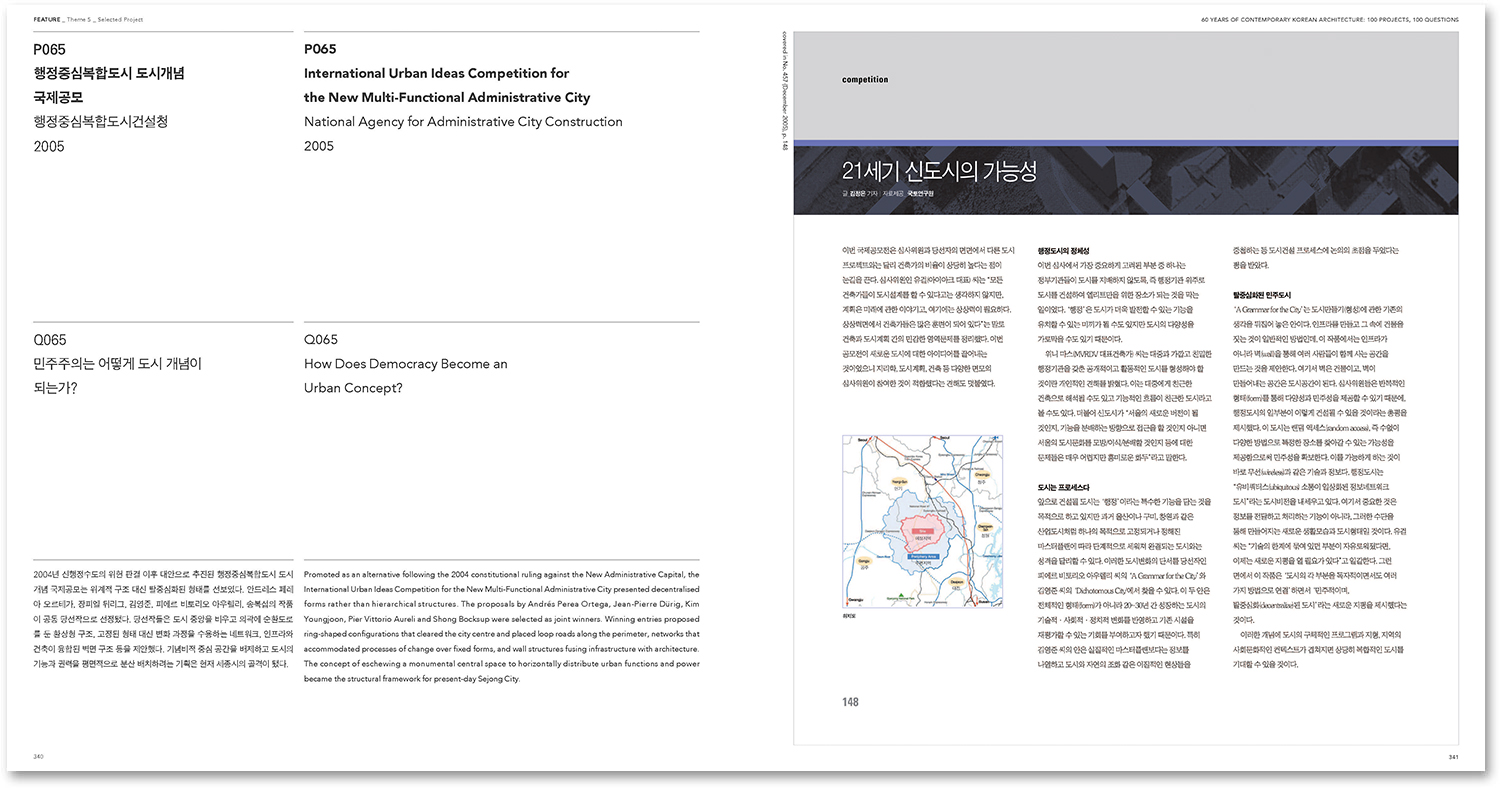
Mainstream media coverage can expose the issues tackled by architecture in any given era. Over the past six decades, the projects published in SPACE represent the architectural hallmarks of the era, carefully chosen by its editorial team. However, the demand to select representative works also calls attention to those that did not make the cut. In curating the new ‘100 works of contemporary Korean architecture’, I deliberately stepped beyond the episteme of each distinct period, to ask instead: does this work speak meaningfully to today’s concerns? Projects meeting this standard were incorporated even if SPACE originally omitted them, while works less relevant to contemporary issues – regardless of their execution – were excluded.
We live in a late-capitalist system where nearly everything converges on consumption. Architecture has actively reinforced this system and structures our daily lives, yet projects that illuminate this role have seldom attracted mainstream media attention. A prime example is LOTTE WORLD (1990), co-designed by Japanese architect Kurokawa Kisho. Planned ahead of the 1988 Seoul Olympics, this megaproject forms a conceptual pair with the large-scale apartment complexes built en masse since the 1980s. Just as apartment complexes were redefining urban daily life, LOTTE planned a ‘palace of consumption’ hyper-densely packed with commercial, cultural, and leisure facilities. If Chung Juyung of the HYUNDAI GROUP provided homogeneous housing through the logic of modernity, Shin Kyukho of LOTTE offered a space of fantasy and consumption through the logic of hyperreality. Inside its climate-controlled interior, an all-season ice rink, a global-themed amusement park, and a dome observatory were heterogeneously juxtaposed, condensed within a single colossal structure. Living in uniform apartment complexes, Seoul residents flocked to LOTTE WORLD on weekends to experience a new vision for consumption. In the late 1980s, as Seoul’s population peaked, this was a project of modernity woven by the metropolis.
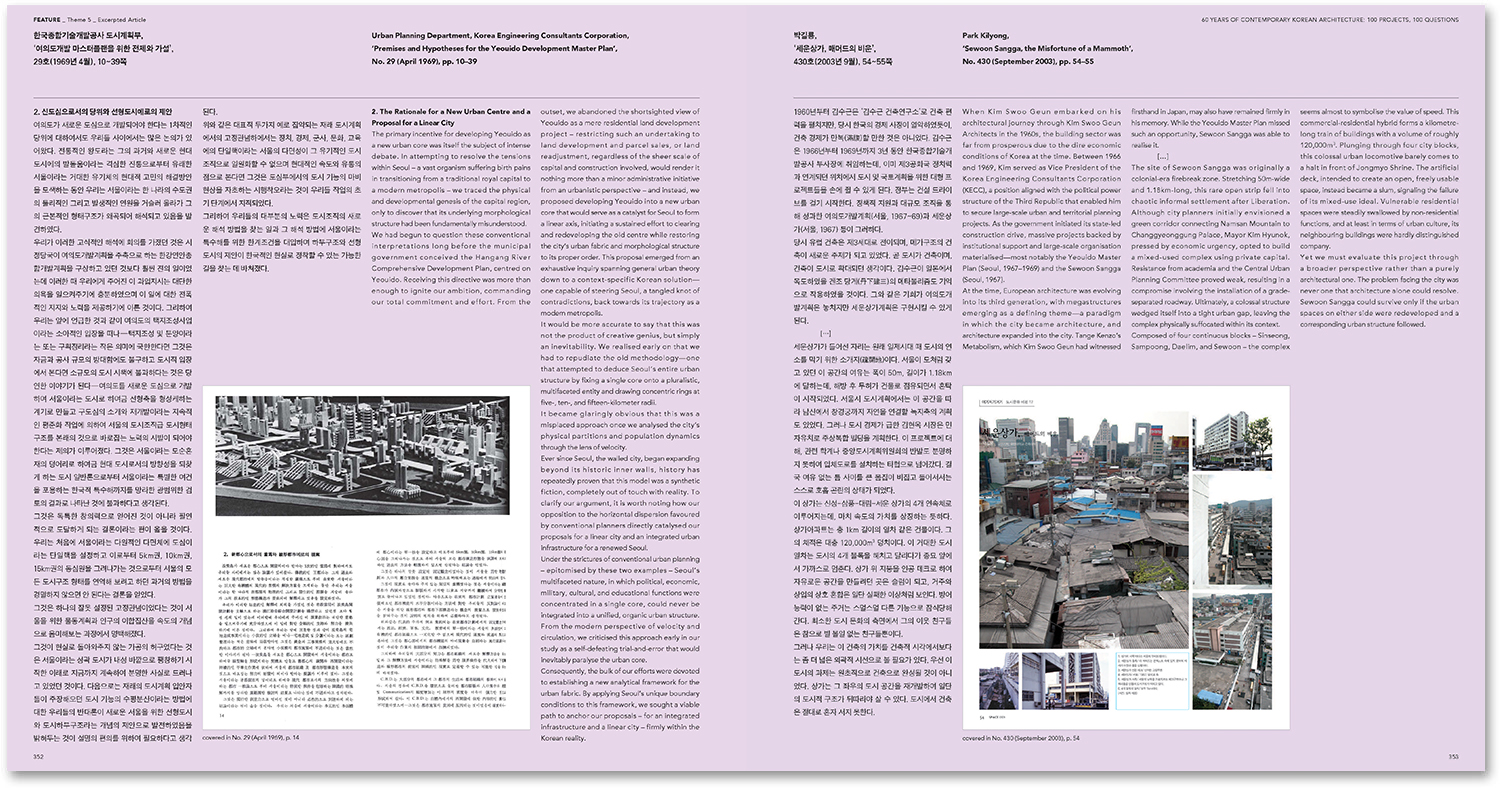
This megastructure was directly linked to the public transit loop encircling the city. When Subway Line 2 – Seoul’s first circular line – fully opened in 1984, LOTTE WORLD connected seamlessly to Jamsil Station at the basement levels, creating a direct pipeline to channel foot traffic inside. The building thus functioned as ‘urban a...
*You can see more information on the SPACE No. November (2026).
*Subscribers can browse through E-Magazine right now. >> Available Here
Lee Janghwan
Lee Janghwan is a Principal at Urban Operations, working on urban, cultural, and architectural issues, and an Adjunct Professor at Hanyang University. He graduated from Hongik University and Seoul School of Architecture (sa), and graduated with honours from the Delft University of Technology in the Netherlands. He worked at the OMA and designed the Qatar National Library, as well as numerous projects throughout Asia, Europe, and the Middle East.
0