


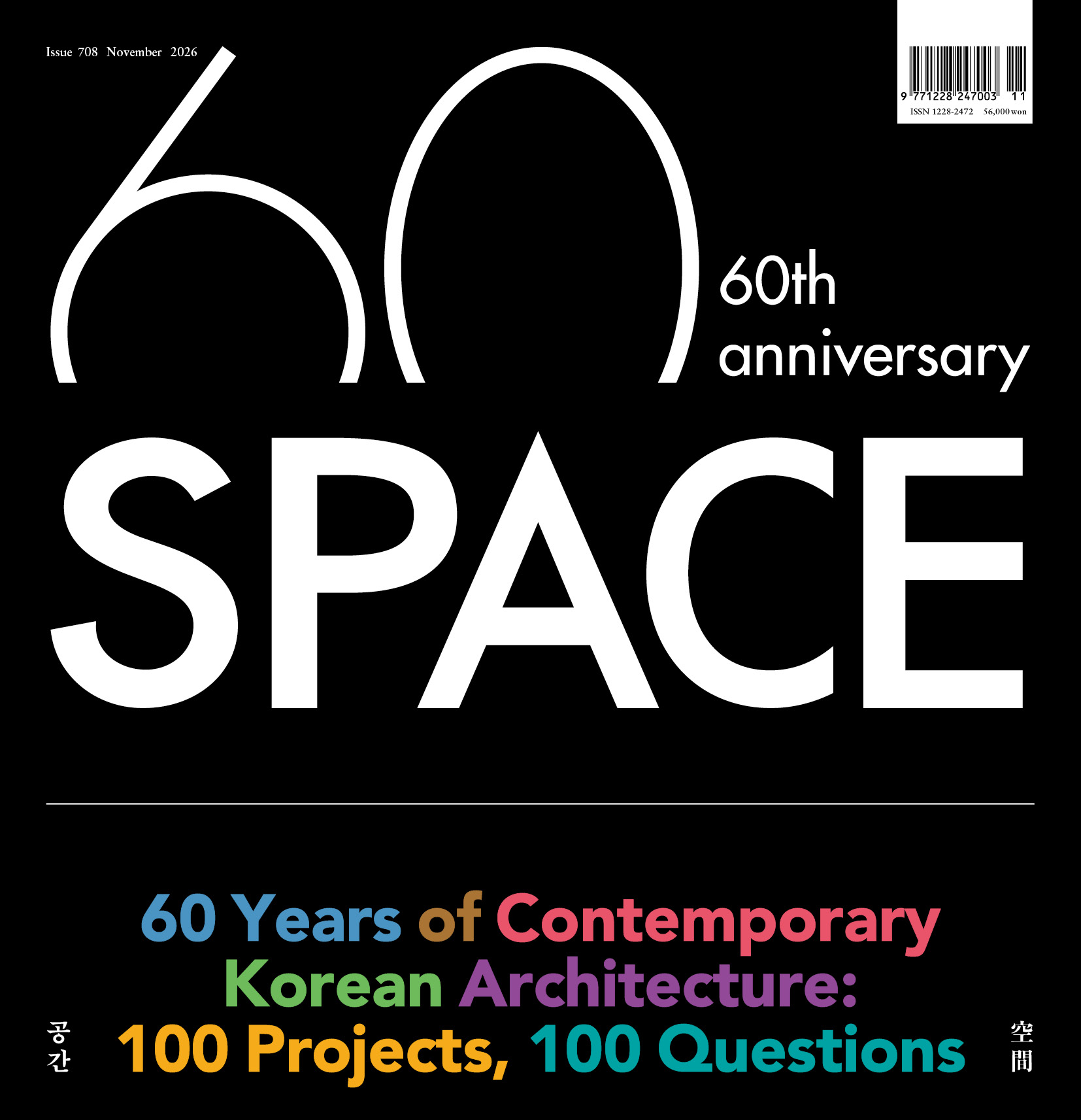
SPACE November 2026 (No. 708)
THEME 5.Urban and Region
How Are Commercial Spaces Organised in a Capitalist Society?
Commercial space responds sensitively to historical shifts. Consequently, observing commercial spaces and their surrounding environments clearly reveals the values prioritised by the city of that time. During the rapid industrialisation of the 1960s, commercial-residential complexes combining retail, housing, and transit emerged as a groundbreaking urban typology—using land intensively while rendering visible the scale and momentum of development. As cities expanded further and consumption infiltrated daily life more deeply, perspectives on commercial space evolved. Architecture faced critical questions: How much of a building’s occupied land should be returned to the city? What kind of ‘publicness’ can be generated within private architecture? Architects explored various interfaces—Kim Swoo Geun’s Samtoh Building (1979) relaxed the boundary between street and building by opening its ground floor, and Choi Moongyu’s Ssamzigil (2004) drew the alleyway into its interior. Later, as the urban growth curve gradually flattened and small neighbourhood lots, alongside neighbourhood living facilities, became the primary sites of intervention, discourse on the public realm shifted towards smaller, more intimate scales—encompassing alleysway, courtyards, neighbourly ties, and the long-term sustainability of local commerce.
Perhaps the host of commercial developments embodying the logic of capital fell outside the core interest of SPACE, explaining their relative absence from this selection. Yet, the five works featured here mark key inflection points that reinterrogated the interface between commercial architecture and the city. Tracing their trajectory reveals how commercial spaces have addressed their relationship with everyday life beyond their role as spaces of consumption.
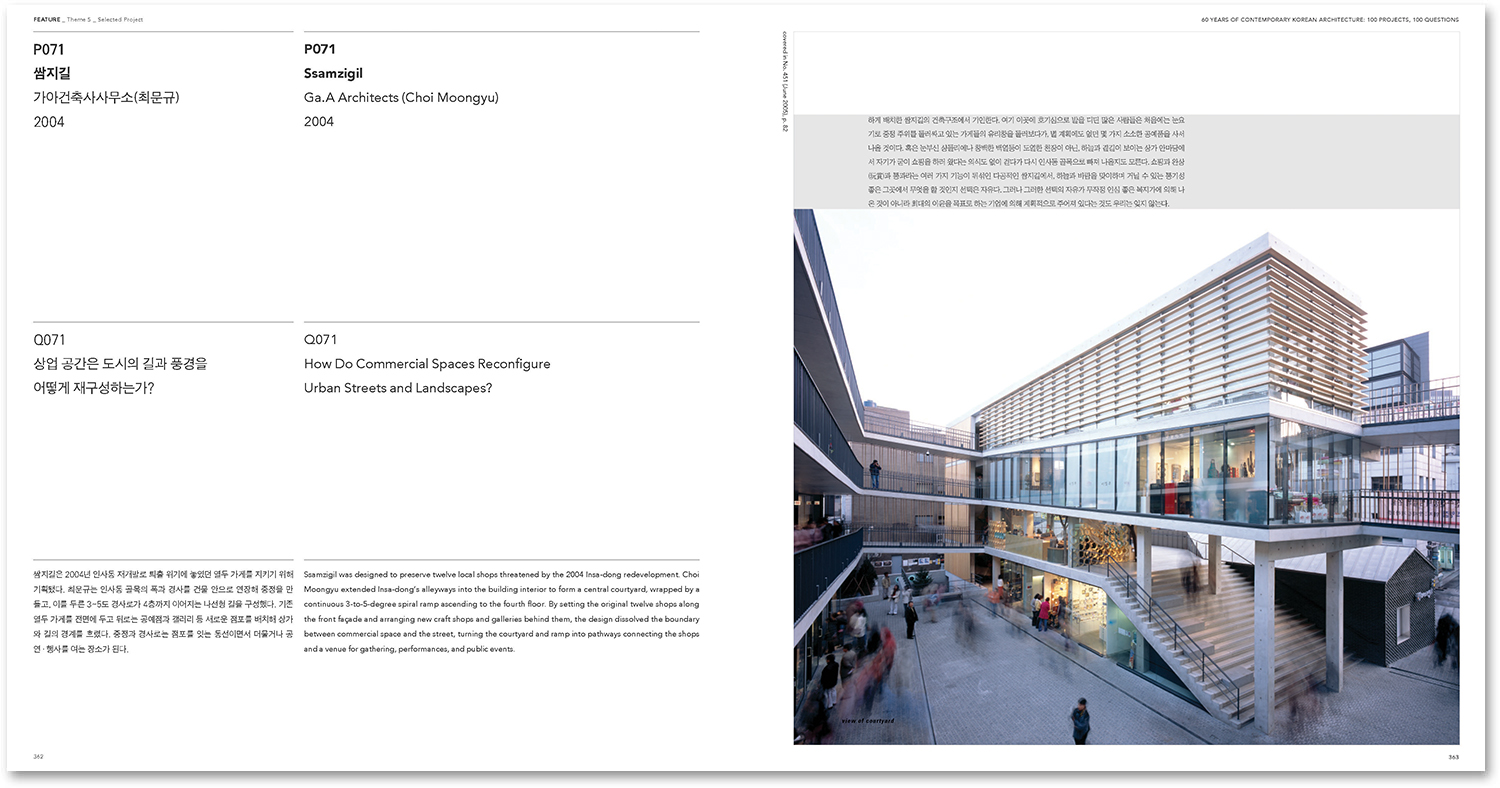
P069 Nagwon Arcade | Q069 How Did the Architectural Ideals of the Development Era Reconfigure Markets and Roads? |
P070 Samtoh Building | Q070 How Can the Lower Levels of a Building Extend the Public Realm of the City? |
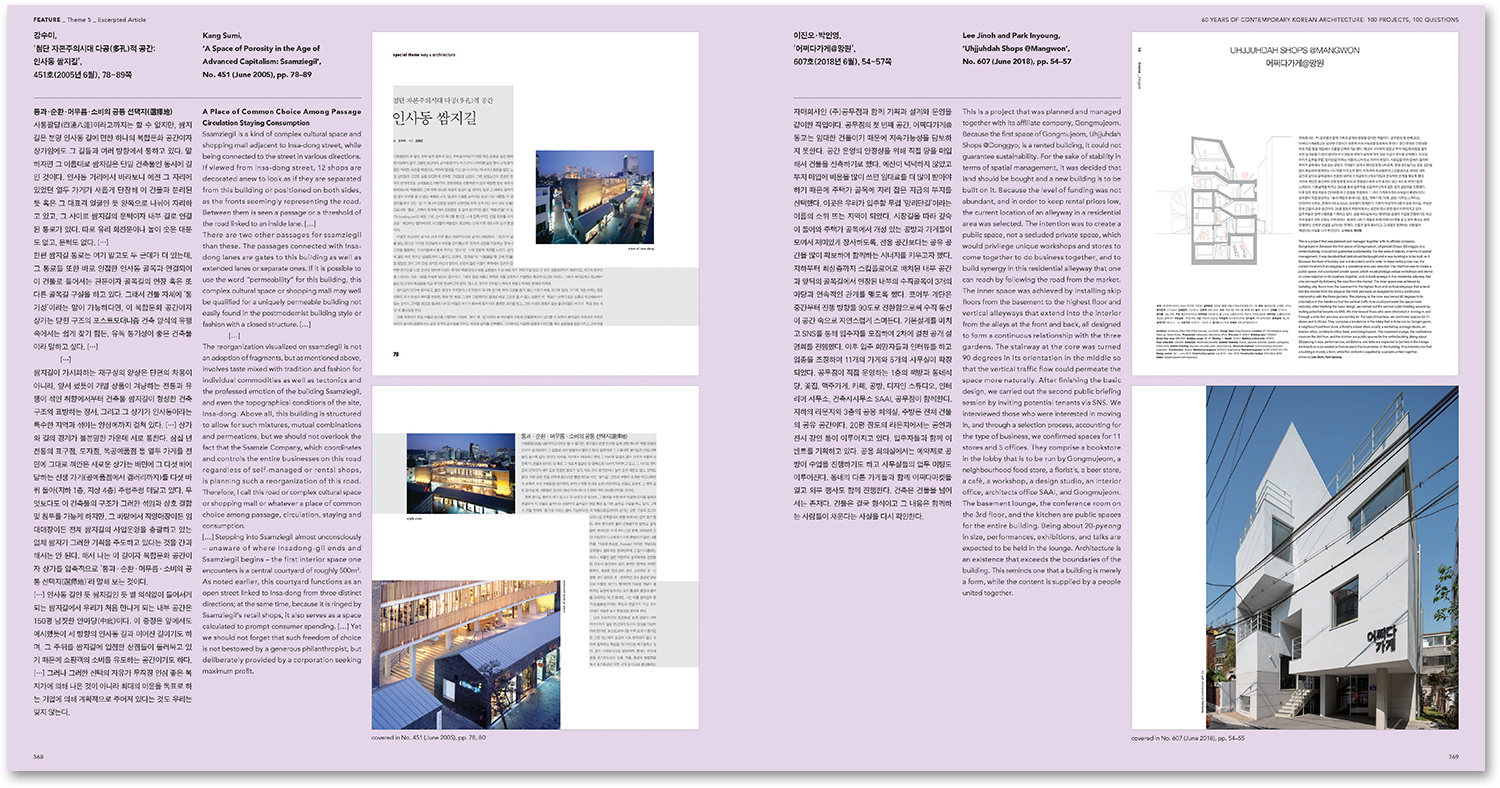
P071 Ssamzigil | Q071 How Do Commercial Spaces Reconfigure Urban Streets and Landscapes? |
P072 Hanyu Group Building | Q072 How Do Disparate Programmes Coexist in a Single Building? |
P073 Uhjjuhdah Shops @Mangwon | Q073 How Do Small-Scale Neighbourhood Living Facilities Organise Neighbourhood Life? |
You can see more information on the SPACE No. November (2026).
0