SPACE April 2026 (No. 701)
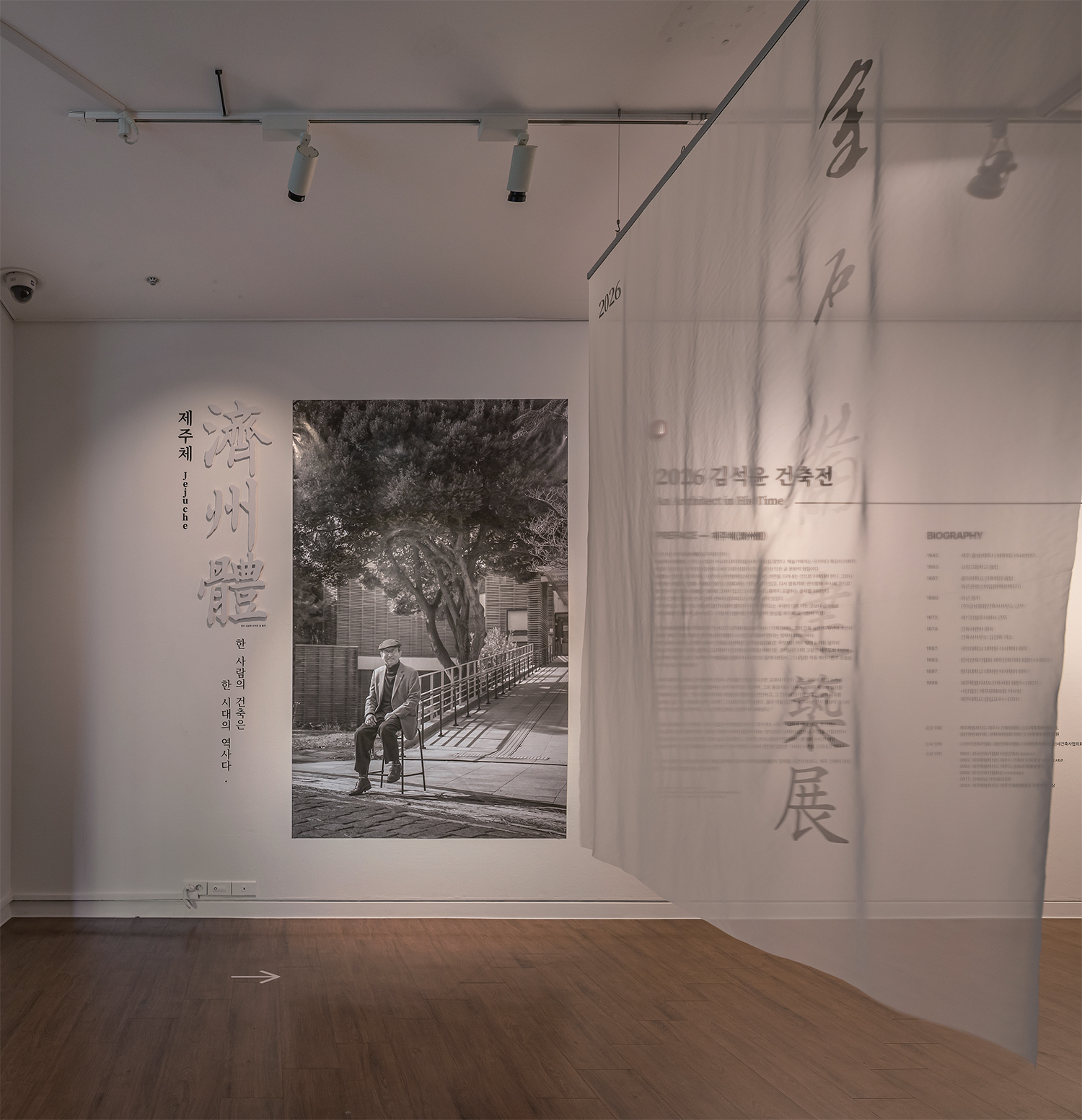
Exhibition view of ‘Jeju-che: The Architecture of Kim Suk Yoon’. The Chinese charaters for Jeju-che (濟州體) in the exhibition title, is composed of characters drawn from the Thousand Characters calligrapy by Kim Gwangchu.
Jeju Museum of Contemporary Art
Feb. 6. ~ Mar. 29, 2026
The exhibition ‘Jeju-che: The Architecture of Kim Suk Yoon’ focuses on the theme of Jeju-che▼1 and presents the work of Kim Seokyoon (1945 ‒, Principal, Architect Kim’s Atelier, covered in SPACE No. 687), a representative architect of Jeju island. As Kim’s architectural trajectory developed alongside the evolution of modern architecture in Jeju, the exhibition is significant in that it surveys not only the architect’s individual works but also the broader trajectory of architecture on the island. Beginning with the Comprehensive Tourism Development Plan of Jeju Island in the 1970s and continuing to the present, Jeju’s architecture has evolved its own distinctive character amid a rapid rate of change that shifted development from government-led initiatives to private-sector projects. One important strand within this history is Kim’s works. The Jeju Museum of Contemporary Art (2006), where the exhibition takes place, is a building designed by Kim himself. The museum embodies his architectural world, which explores both modernity and the logic of regional context and landscape. Walking along the entrance that sits low in its fragmented forms – designed out of respect for the nearby Gotjawal Forest – visitors encounter the rhythm of light and shadow created by the cut basalt façade.
One of the key components of the exhibition is a series of photographic works in which architectural photographers – Kim Jaekyeong, Kim Yongsoon, Kim Jaeyoun, Kim Jaehyun, Kim Changmook, Park Youngchae, Yeo Inwoo, Yoon Donggyu, Yoon Joonhwan, Lee Namsun, Lee Jaesung, Lee Hanul, Chin Hyosook, Choi Jinbo – revisit and capture Kim’s architecture. These photographs document buildings that can still be encountered across Jeju today, including the Jeju Tamra Library (1989) and the Jeju Halla Library (2008), as well as the Jeju Museum of Contemporary Art. By portraying the natural, lived-in state of these buildings, the works guide viewers toward Kim’s architecture as it exists today. The weathered surfaces and accumulated traces of human use reveal that architecture is not completed at the moment of construction, but rather becomes complete in the passage of time.
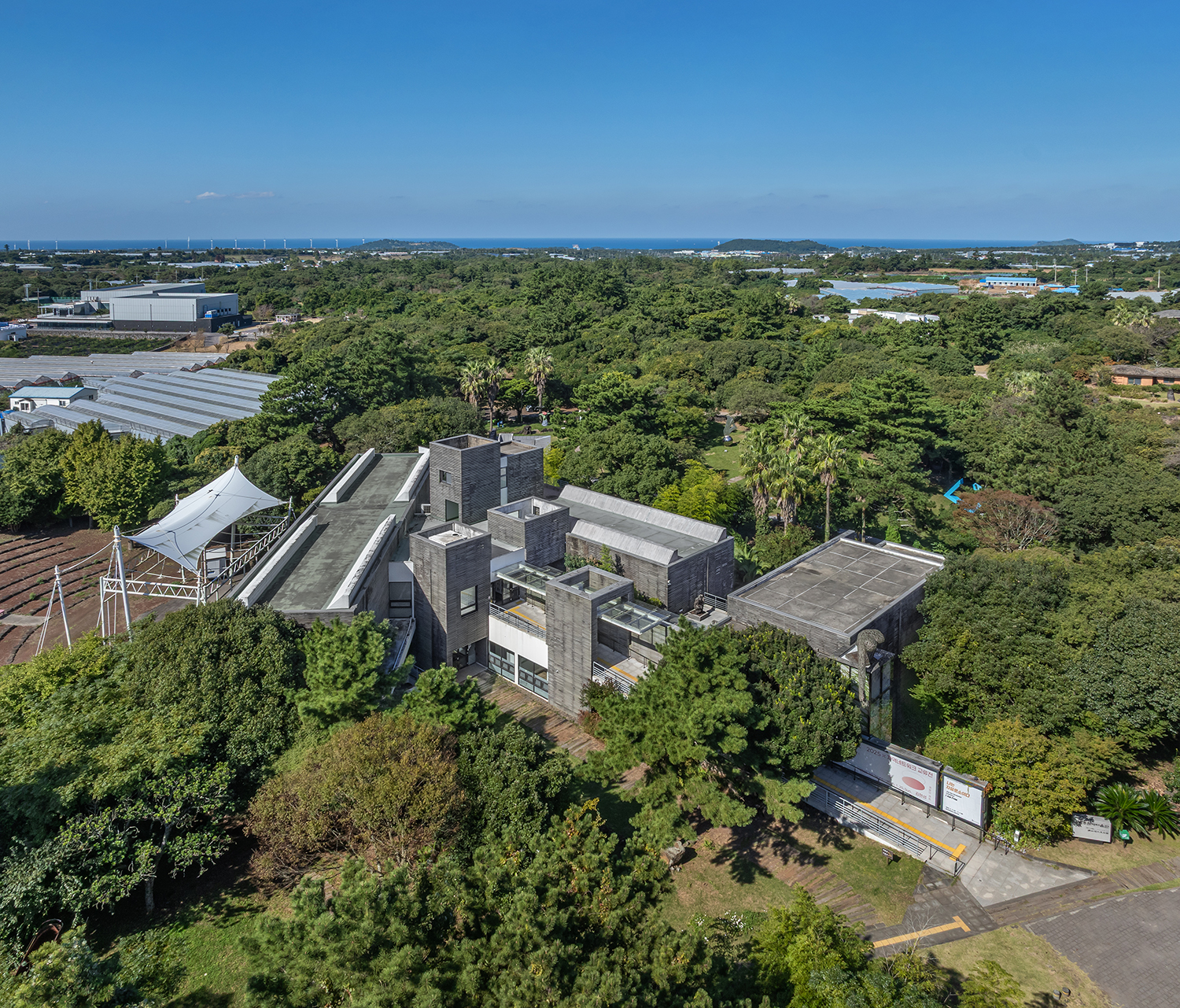
Jeju Museum of Contemporary Art (2006), photographed by Yoon Joonhwan (2025)
Another noteworthy part of the exhibition is the participation of 30 architects who were the students of Kim, architects who once worked in his office, and younger architects influenced by his work. Architectural models created by these participants have been placed throughout the gallery. Installed at the entrance of the exhibition is a model of Kim Seokyoon’s House (1913).▼2 The work presents the past, present, and future of the tiled-roof house in Hwabuk-dong, where Kim was born and raised. The model incorporates the historical landscape of Hwabuk Port, where it was once the gateway to Jeju, the spatial arrangement of the terrain, and the present form of the house where it reflects key characteristics of Jeju architecture such as the angeori and bakgeori (the traditional separation of main and secondary living quarters). It also includes the architect’s unbuilt proposal for the Cheongtan Memorial Hall, offering a speculative view of the site’s future. Other works reinterpret Kim’s public architecture through four key themes: material, roof, topography, and metaphor and symbolism. Each model emphasixes the symbolic form of buildings to create a strong sculptural presence▼3. By fragmenting the structures to reveal their interiors, the models expose the logic of spatial organisation▼4 and by dismantling and reassembling them▼5, they generate entirely new architectural scenes.
Meanwhile, the exhibition’s curator, Kim Jihee (Principal, Kim-O Architects), also produced an architectural film, Architecture Entering the Body (2026). Set against the spaces of the Jeju Museum of Contemporary Art and created in collaboration with choreographers and a film director active in Jeju, the film captures the movements of dancers and explores the essence of architectural space through rhythm and motion. The work invites viewers to experience the sensation of drifting through the flows and contexts embedded within the architecture.
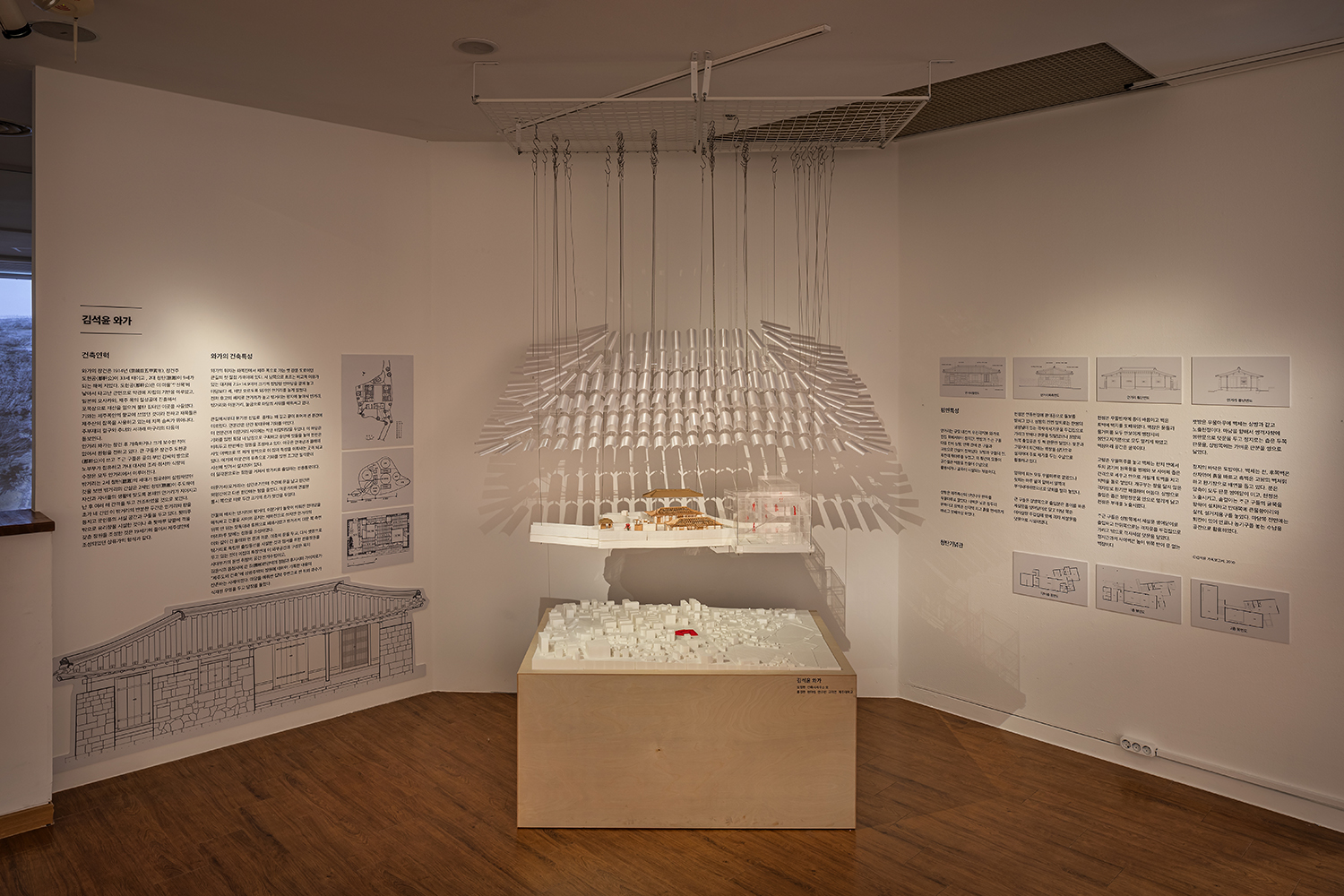
Model of Kim Seokyoon’s House (1913), Layered Time, made production by Oh Jeong-heon
The exhibition also presents works by Kim Gwangchu, the father of Kim Seokyoon and a prominent modern calligrapher of Jeju. His Thousand Characters calligraphy, photographs, and other calligraphic works are displayed, offering insight into the cultural and artistic background that shaped Kim’s architectural sensibility. In addition, the exhibition presents a timeline tracing the trajectories of a global, Korean mainland and Jeju architecture, along with a relational map plotting Kim and his contemporaries. Through these materials, the exhibition situates Jeju within broader architectural developments of its time. The architect’s residential works and major public architecture projects are also introduced through photographs, drawings, models, and interview videos with clients, offering multiple ways of reading both Kim’s architecture and the architecture of Jeju.
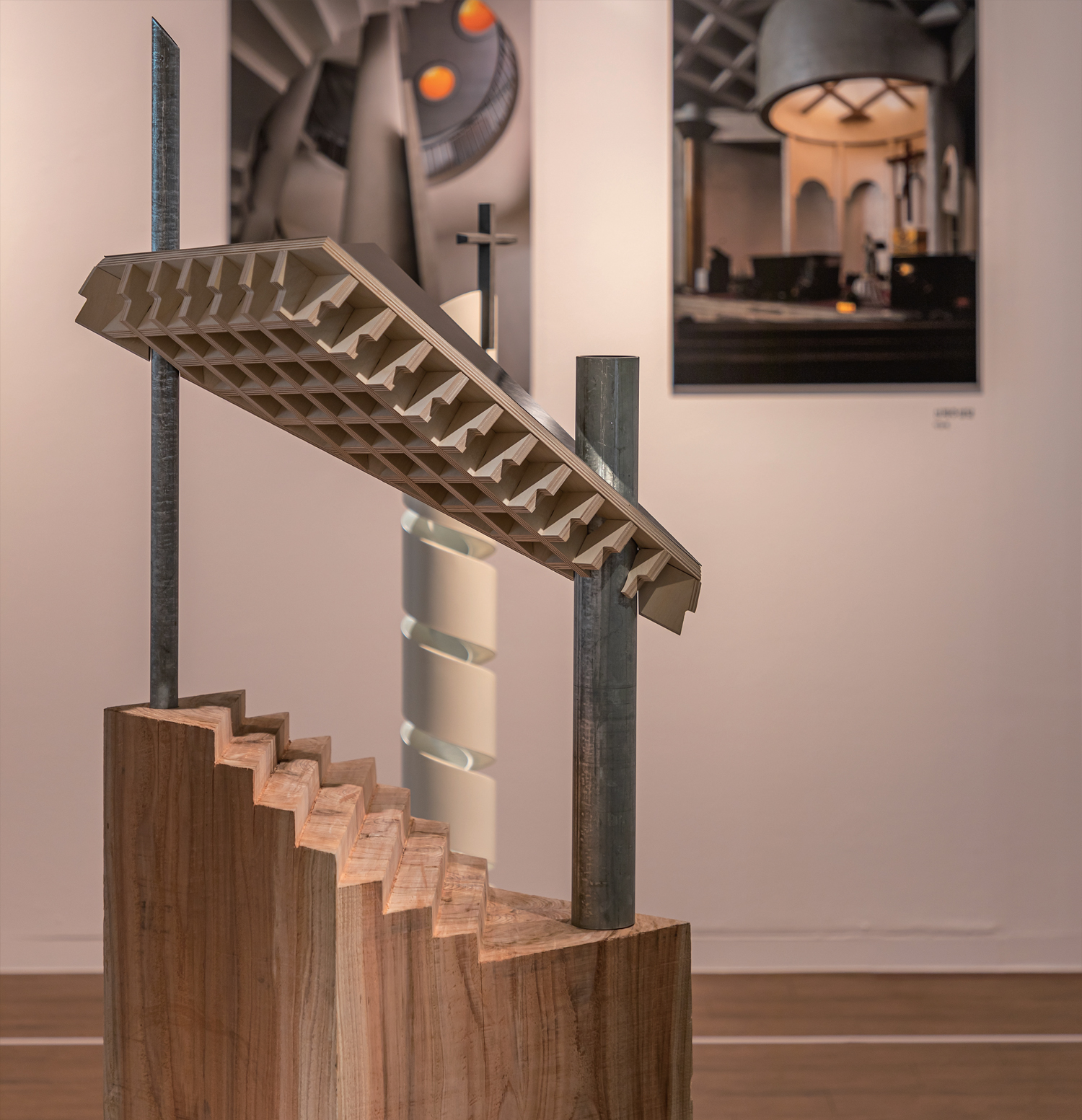
Model of Sinjeju Catholic Church (1993) centred on the theme of the roof, made production by Yang Hyun-jun + Kim Hyun-A
_
1 Considering how che (calligraphic style) in the calligraphy world is conceived not just as a form of writing but as a complex whole that encompasses everything about its user to the deeper layers of consciousness, Jeju-che represents a physical constitution that is born out of Jeju’s indigenous environment and history and an embodiment of Jeju’s form made manifest through architecture.
2 Layered Time (2026), Oh Jeong-heon (O Architects)
3 Yang Hyun-jun (SOHUN Architects & Planners) and Kim Hyun-A (A_GRAMM Architecture Firm) presented a model of Sinjeju Catholic Church that emphasises the form of its roof, while Ko Gi-bong (WooYeon Architects & Planners) and Ko Seongeun (GOGL. ARCHITETS) introduced a model that metaphorically interprets the symbolic spire of the church.
4 Moon Hui-beom (COA Architects), Jeong Sohee (heeA Architecture & Design), and Yang Inseok (GimC Architectural Firm) produced a model of the Jeju Local Official Training Center that highlights its interior spaces.
5 Kim Jong-hyun and Koh Eunjinn (Haengun-siwoo Architects) created a model of the Jeju Tamra Library by stacking dismantled Scoria-brick façade elements, referencing the now-demolished exterior.