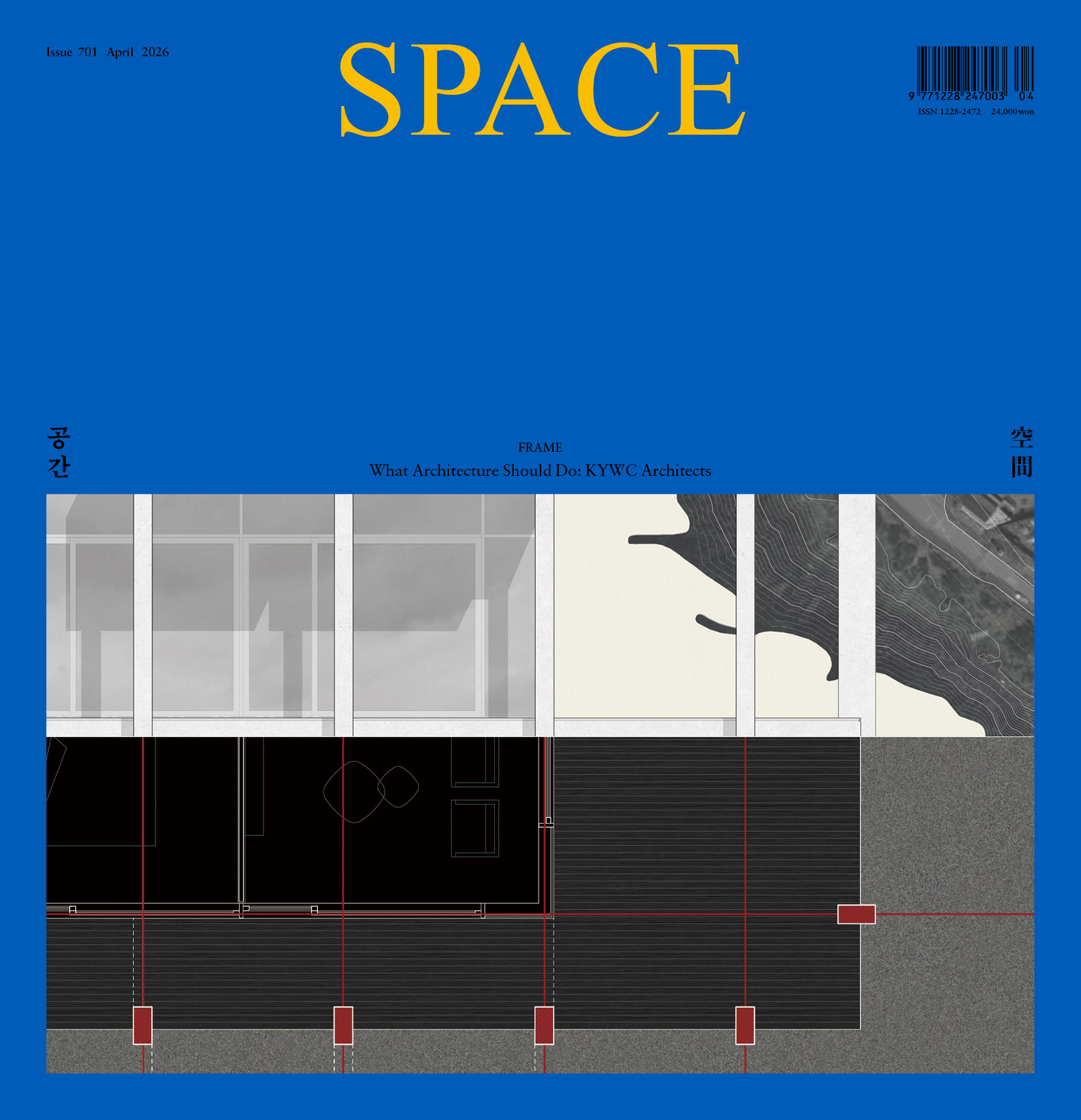
SPACE April 2026 (No. 701)
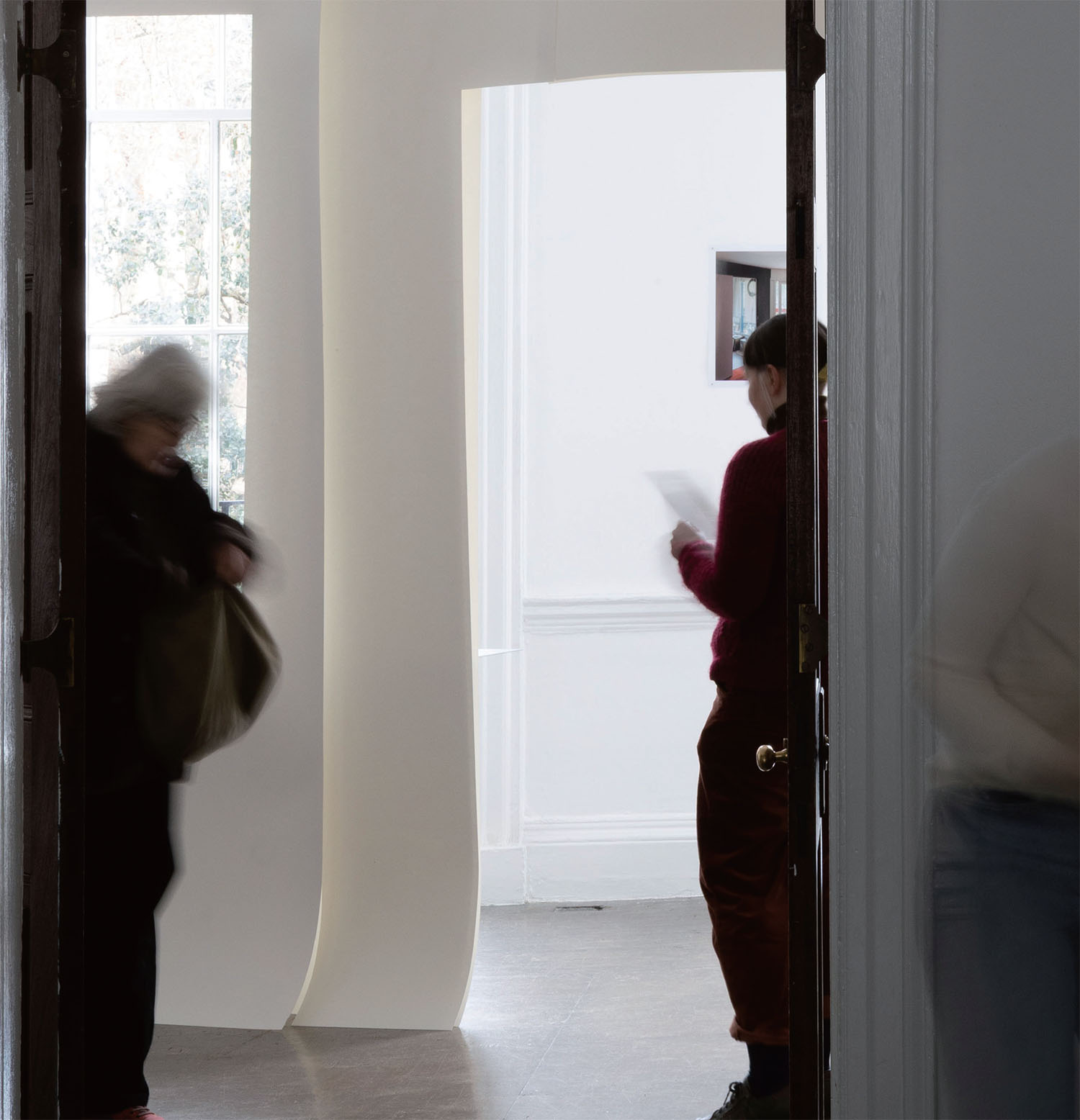
Exhibition views of ‘Renée Gailhoustet: A Thousand and One Ways of Living’
AA Front Members’ Room and AA Bar in AA School
Jan. 16 ‒ Mar. 21, 2026
interview Nichola Barrington-Leach Principal, NVBL Architects × Kim Bokyoung
Most of us, in Korea, live within the same apartment floor plan. The social housing in the French suburbs designed by Renée Gailhoustet (1929 ‒ 2023) is atypical. Having designed over 2,000 social housing units in the Paris suburbs, Gailhoustet chose a different path when others opted for repetition ‒ believing that just as each family is unique, so too should each dwelling be ‒ and went on to design some 1,500 distinct unit types. We sat down with the exhibition’s curator, Nicolas Barrington-Leach (Principal, NVBL Architects), to discuss her long-overlooked body of work and the exhibition that brings its diversity to light.
Kim Bokyoung (Kim): What first drew you to Renée Gailhoustet? I understand that you studied her work during a residency programme.
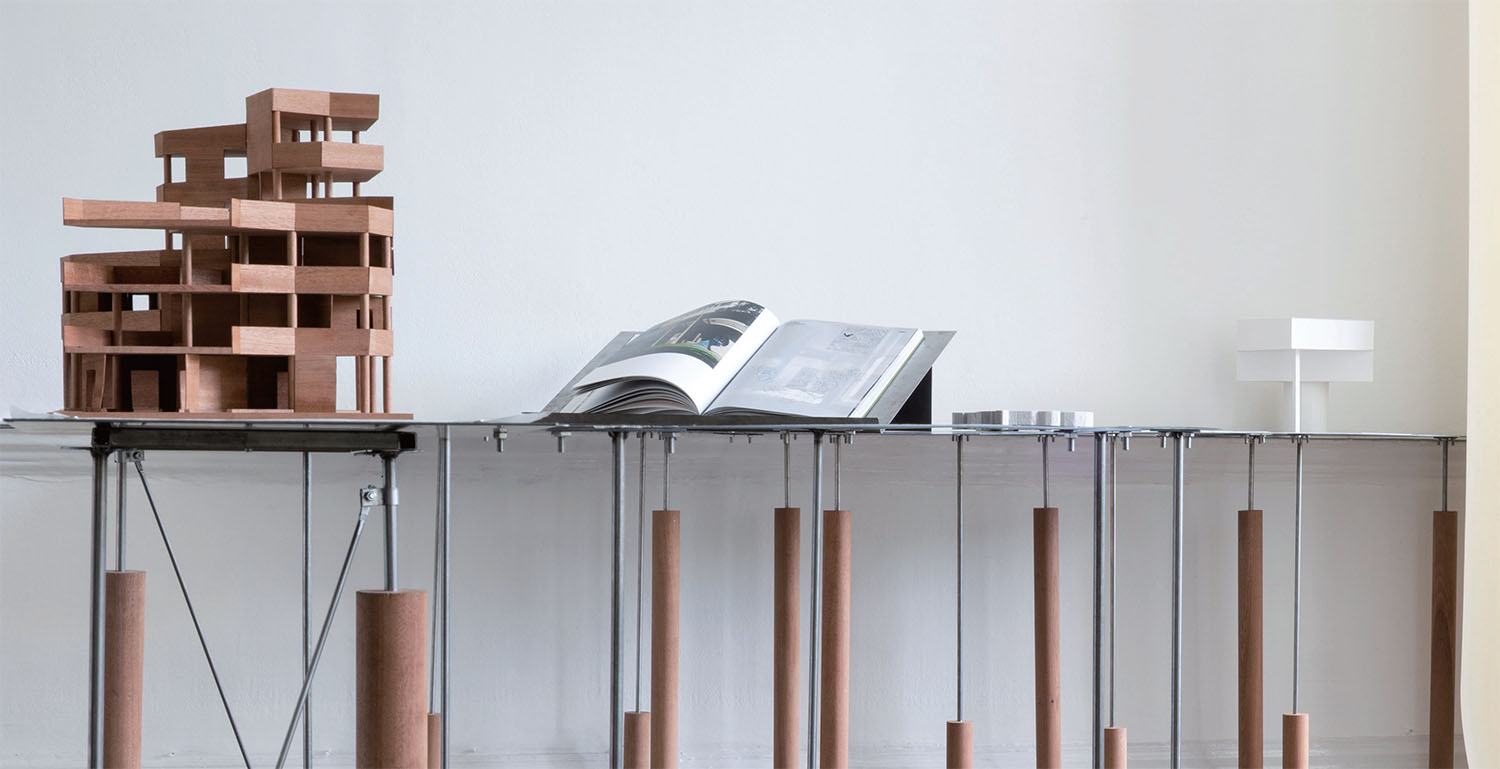
Exhibition views of ‘Renée Gailhoustet: A Thousand and One Ways of Living’
Kim: Gailhoustet completed her architecture degree at the École des Beaux-Arts in 1961, and the following year joined the office of Roland Dubrulle, who was then the chief architect of Ivry-sur-Seine. Just two years after graduating, she was handed the masterplan for the entire Ivry-sur-Seine district—responsible for designing a city in her late twenties. The broader historical context in France at the time, which made this possible, seems equally important here.
Barrington-Leach: In the Ivry-sur-Seine’s masterplan, her office ‒ founded in 1964 ‒ directly led nine projects, while she commissioned a few others to different architects. At the same time, she was also running two separate masterplans in northern Paris: La Maladrerie and Saint-Denis.
Of course, Gailhoustet was still a singular and remarkable figure even then, but she had an infrastructure behind her that we don’t necessarily have today. She was a communist, and there was funding for those areas. There was also a wish, want, and a belief from the residents. And there was a momentum—an idea that architecture could change the world. Her work emerged during the Trente Glorieuses (Thirty Glorious Years, 1945 ‒ 1975)—a period shaped by post-war economic crisis, unemployment, social inequality and political imbalance. Though generally remembered as an era of rapid expansion, the early post-war years were in fact characterised by widespread poverty and dire economic conditions. The mass housing provision that emerged in response to the acute housing shortage of this period quickly became a major tool of national modernisation, and it was within this context that modernist urban planner Maurice Rotival proposed the grands ensembles—large-scale public housing projects. Gailhoustet’s projects are too often mistakenly conflated with the grands ensembles; yet her work stood in direct opposition to the standardisation and social segregation inherent in these state-led developments, demonstrating instead an independent and humane vision for the city. Her free architectural spirit could only materialise in space through her encounter with the maires bâtisseurs—the builder mayors of the Parisian ‘red suburbs’ who governed the communist municipalities on the periphery of Paris.▼1
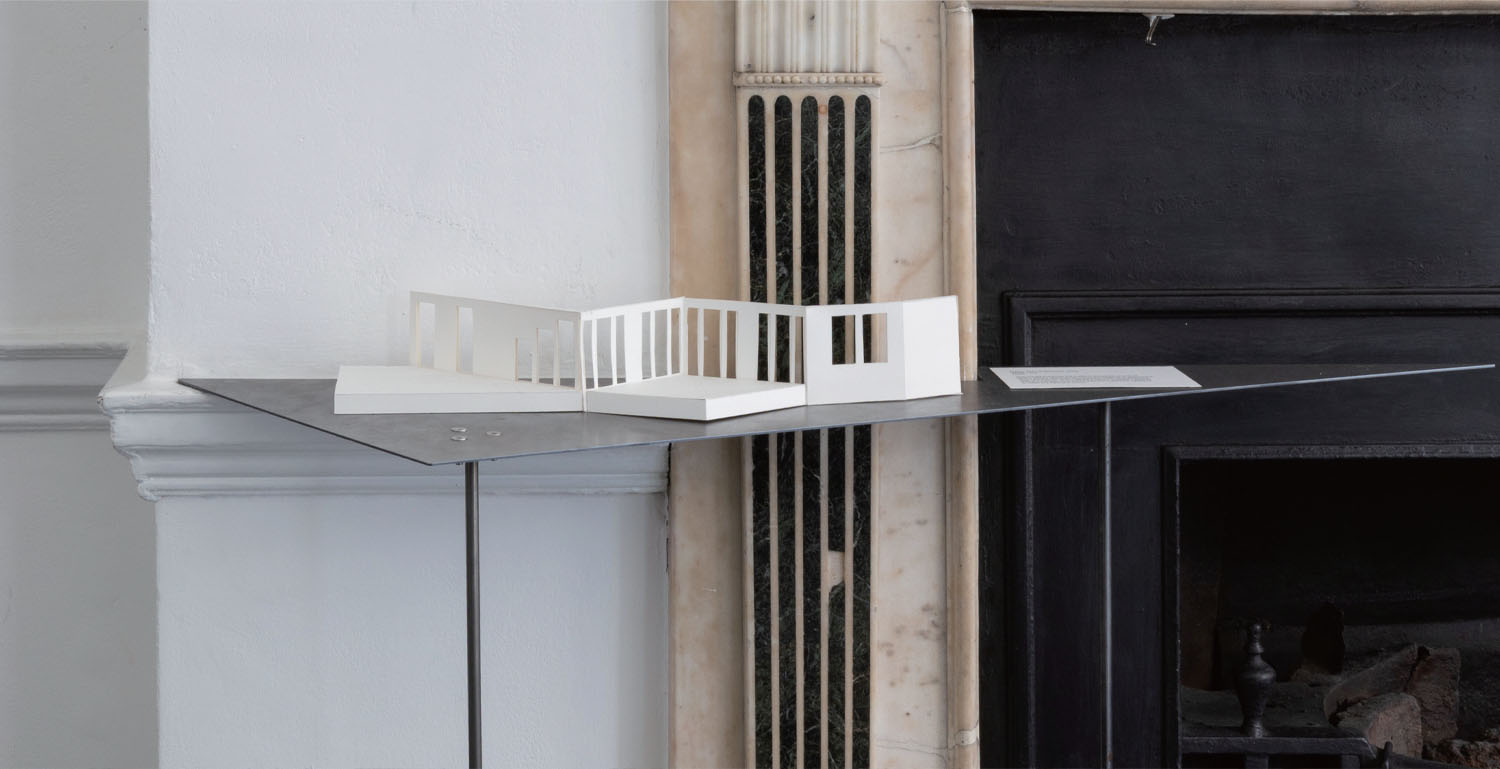
Exhibition views of ‘Renée Gailhoustet: A Thousand and One Ways of Living’
Kim: Such an extensive body of work must have required an enormous amount of research on your part.
Barrington-Leach: Honestly, I had planned to use the residency to look at her work, learn from it, alongside our work in practice. I quickly realised that to learn from her work, we actually needed to translate and document her work clearly—because her work is not particularly well communicated. When I arrived and went to the Frac ‒ the regional collection of contemporary art ‒ there were floorto- ceiling piles of her hand-drawn A1 and A0 drawings. They were beautiful. But only two or three projects had actually been archived. I didn’t know where her work was; I was trying to figure out what was hers, what belonged to someone else, and what her role had been in each project.I brought in a team including a photographer and additional support to re-draw and model the work and together we visited all of her buildings, photographed them, and met the residents. With the help of those around me, I was able to connect with many people close to her work, and, through that, I came to understand what needed to be recorded and what was important to show. I also met Katherine Fiumani, an architect who had worked with Gailhoustet for two years and has lived on one of her estates for many years. Fiumani’s account is included as an essay in the recently published book Renée Gailhoustet, which accompanies the exhibition. The photographs of Valérie Sadoun are also included as a photographic essay in the book. She had met Gailhoustet in 2014, and photographed her apartment shortly after she passed away.
I wanted to find a way of drawing Gailhoustet’s work. Her buildings are so large that they are difficult to contain within a single drawing and, as a result, her work has largely been communicated through photographs rather than plans. Every drawing in the book was re-drawn. In doing so, I discovered remarkable variety in the flats and a kind of spatial confusion that I hadn’t anticipated.
Barrington-Leach: Visiting Gailhoustet’s social housing, you can feel that the residents genuinely love their spaces. Ivry-sur-Seine may be peripheral, but it is in fact very accessible from the centre of Paris, and the space residents enjoy is far greater than anything comparable in the city centre. To pay around 800 euros a month for that amount of space, in social housing, with large terraces and gardens—of course they love it. Gailhoustet herself lived in Le Liégat until she died. Her apartment had four terraces, including one of 100m2. Her architecture is genuinely generous. At ground level, the street opens up and expands. Through the hexagonal grid system, residents share gardens with those above, below, or beside them, and rather than worrying about the tension that it might bring, she actively encouraged it. That kind of proximity allows people to find friendships, build connections, and communicate in ways that might not otherwise happen.She also believed that every family lives differently, and so every apartment should be different. She designed around 1,500 completely individual units. Starting with the grid and the massing, her team would work outwards, creating forms and angles, leaving open the positioning of the terrace, the windows, the orientation. From there, they would cut, pull, and push until something distinct emerged. It was designed from the inside out, with the actual resident in mind rather than form for its own sake. And the living spaces themselves were never rigidly defined by function—there was always room for fluidity and change.
Beyond the residents and Gailhoustet’s family, I also met academics and architects who are actively working on housing issues in France. I wanted to trace the relationship between her vision in the 1960s and how that has evolved across Europe today. There are still issues to be contended with in collective housing, it is such an important topic.
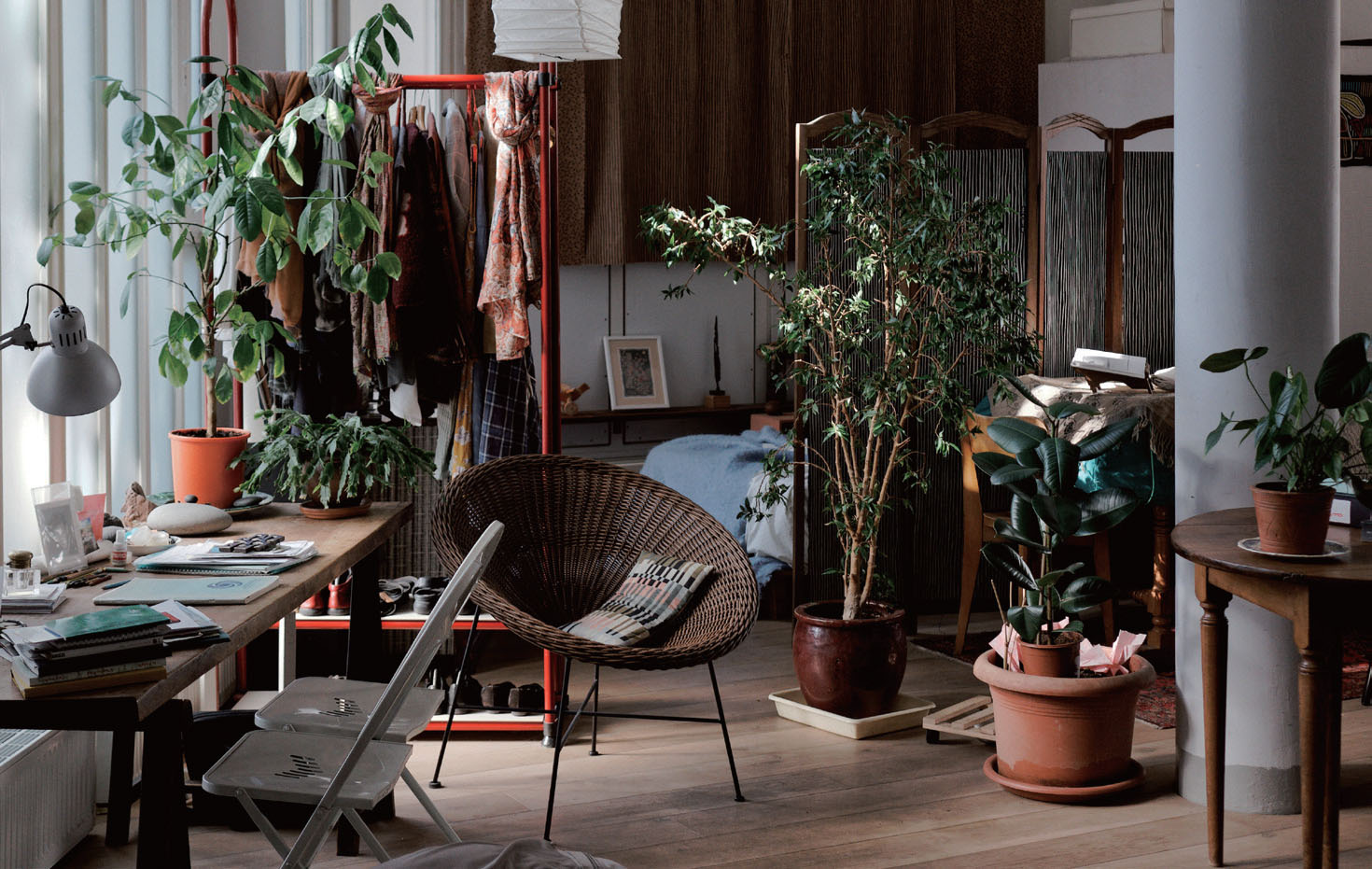
Interior view of Le Liégat ©Sacha Trouiller, commissioned and directed by NVBL Architects
Kim: What influence has Gailhoustet had on social housing in Europe?
Barrington-Leach: In the U.K., what is called ‘affordable housing’ is, in practice, often anything but affordable. So, there are conversations happening around finding good examples of housing—better for all. Gailhoustet is a vital starting point for that. Her work was never just about good walls, floors, and ceilings—it was about creating genuine communities where neighbours interact and share, alongside spaces rich in variety and quality, with terraces and other elements that matter deeply to the people who live there. In the book, Magda Maaoui notes that ‘The fact that architects like Lacaton & Vassal are referring to Gailhoustet’s approach to amenity for renovation projects is good reason to preserve and repair her projects, as they clearly remain inspiring and relevant.’Kim: How has your research into Gailhoustet’s work influenced you? And what direction do you hope your work will take from this point onwards?
Barrington-Leach: Above all, I came to deeply admire her. On a personal level, I also felt a strange connection to her. I’m half French, but I hadn’t lived in France since university—so in a way, it was also an experience of rediscovering a time of my own life.
As an architect, what I took from her was a generosity of collaboration. She brought many architects into her masterplans and was willing to share the work—to give it away. She wanted to keep her office small, just seven people, and had no desire to grow beyond that. In our industry, so many people want bigger practices and more projects. I’ve never had that ambition either—I’ve worked at a relatively small scale, focused on residential work. When a practice grows too large, I think it loses the creativity of enjoying the designing experience.Honestly, her work is not to my aesthetic taste. But what those spaces offer, and her human-centred approach to architecture, left a deep impression on me. She designs experiences, not elevations. And I love that about her work—because when it’s about the elevation, it’s no longer about the person living there.
Kim: Let’s turn to the exhibition. You reconstructed a unit from Le Liégat ‒ the building where Gailhoustet herself lived ‒ within the AA Front Members’ Room and AA Bar. How did you approach the exhibition design, and why Le Liégat in particular?
Barrington-Leach: Le Liégat felt like the right choice because it is the first building where Gailhoustet’s architecture truly came to life. She had built Corbusian-style buildings in Ivry-sur-Seine before, but it was at Le Liégat that she found what she was really looking for, and that vision then carried forward into the larger masterplans in the north of Paris.
The AA School occupies a series of Georgian houses arranged around a private square—a formation typical in London, where most squares remain privately owned. The idea was to introduce social housing to this rich Georgian setting, and with it, the disorienting experience of being inside one of Gailhoustet’s spaces. Most of us are so accustomed to square or rectangular rooms that stepping into her spaces leaves you genuinely uncertain of your orientation. You turn around and the entrance isn’t where you thought it was. You get a little lost, in her flats, buildings, masterplans. I found that one of the most beautiful things about her work. You feel free, unconstrained by a map.I placed the plan in the Members’ Room, next to the Bar, the heart of the AA School, where tutors, students, and visitors all come together. The circular table in the space is the same scale as the staircase inside the Le Liégat unit. Models and drawings sit on top, and the hanging paper represents the walls. The terrace was built to exact scale, and it collides with the existing fireplace. In that large, open room, I wanted to create moments of enclosure and surprise, the kind of spatial shifts you experience in her work.I also wanted to show just how large the unit is. The floor plan doesn’t fit inside the Members’ Room—which would have been the main living room of the original Georgian house, and one of the largest rooms in the AA School. That it doesn’t fit matters: it means that a single floor of this social housing unit is larger than one of the grandest rooms in the Georgian house. And the unit is a duplex, so in reality it is larger still.
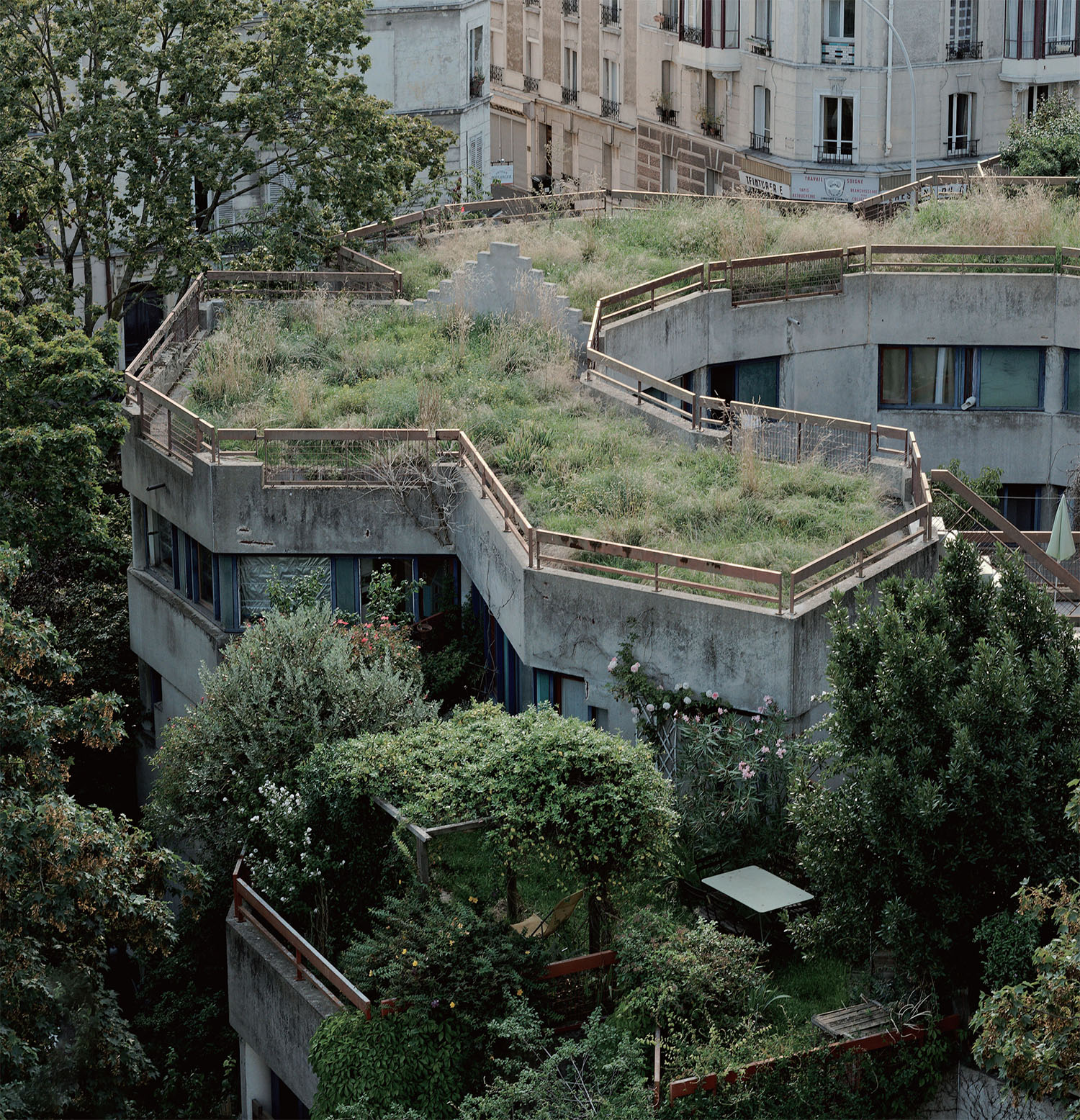
Exterior view of Le Liégat ©Sacha Trouiller, commissioned and directed by NVBL Architects
Kim: For most of the Korean readers, myself included, who weren’t able to see the exhibition in person, the upcoming book will be an important way to get to know Renée Gailhoustet’s work. What did you focus on most when writing and editing it?
Barrington-Leach: The exhibition covers only a small part of her oeuvre, but the book shows the full extent of her legacy. Gailhoustet received her first awards only late in life, and I felt it was important to celebrate her career.
It was also important to me that the book is bilingual, in French and English. Looking into her work was itself a journey of translation, and the book felt like a continuation of that—a more rigorous version of it. At its heart, this is a book about housing and good quality space homes. It is about being empowered ‒ as a designer, as an architect, as a citizen ‒ to seek out the best without being held back by constraints. It is an invitation to hope, an invitation to connect, and a reminder that we are all the same.
_
1 The ‘red suburbs’ or ‘red belt’ refers to the municipalities on the outskirts of Paris where the French Communist Party (PCF) held dominant political influence from the 1920s through the 1980s. The belt stretched primarily across Val-de-Marne to the southeast and Seine-Saint-Denis to the northeast of Paris. The maires bâtisseurs, or builder mayors, is a term used to describe the mayors of these municipalities, who actively pursued public housing construction as a central political agenda, prioritising the improvement of living conditions for local residents. Ivry-sur-Seine, situated at the northern edge of Val-de-Marne, borders Paris’ 13th arrondissement across the Paris ring road, and stands as one of the most emblematic cities in the red belt.