SPACE February 2026 (No. 699)
A Village of Diverse Lives: Living Pixel
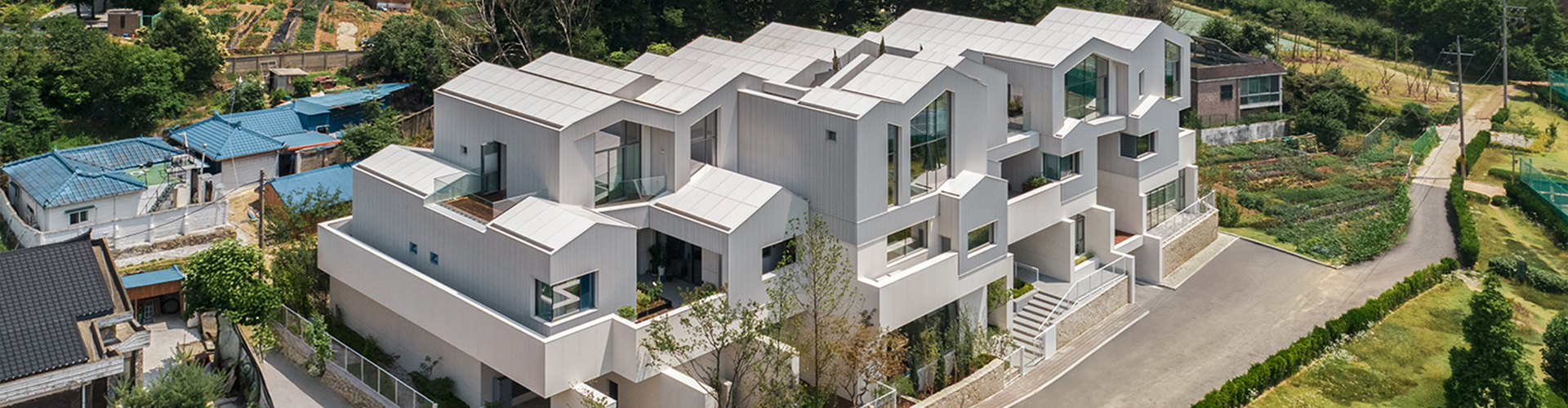
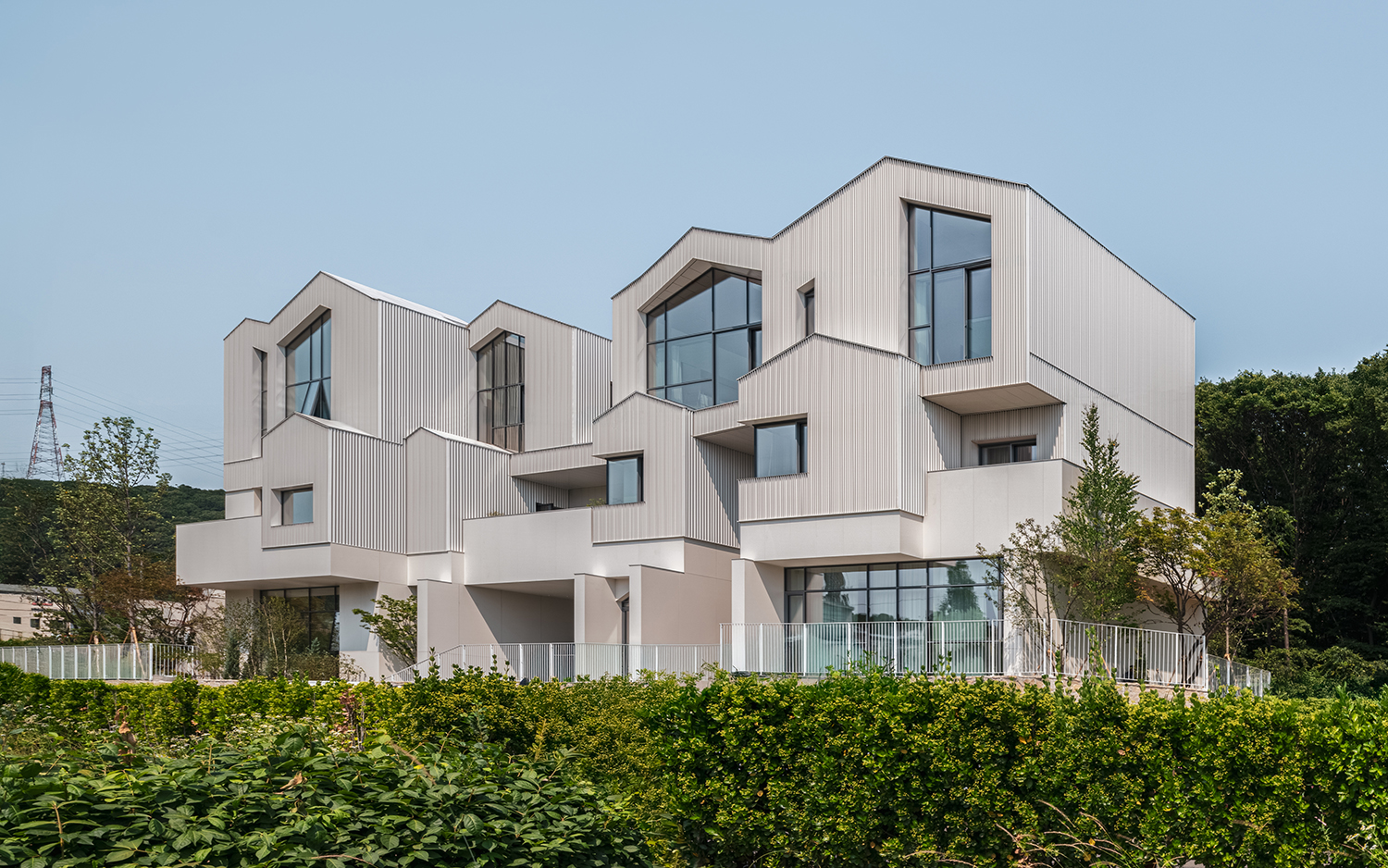
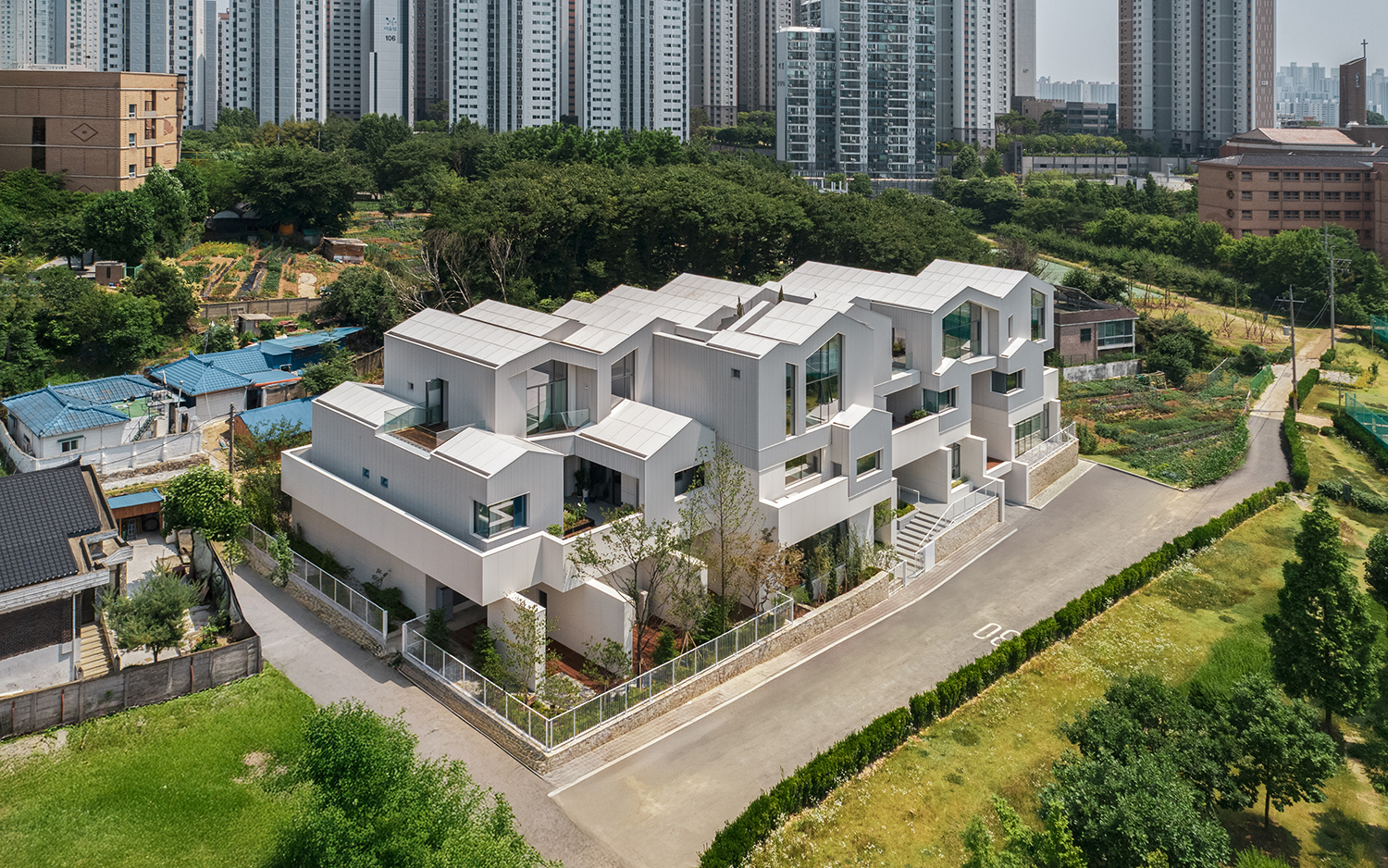
Quarter House began not with the completion of a single form, but with the intention of establishing a framework in which diverse ways of living could naturally permeate it and grow. As a family community-based residential project voluntarily formed by six households centred around four brothers and spanning three generations – siblings, parents, and children – it required a new architectural approach. Standing on the boundary between the individual and the family, and between private domains and public relationships, this housing project serves as a testing ground for a new kind of dwelling in which sharing and independence coexist. In response, we proposed a structure in which the many layers of life could be stacked within a single architectural entity, allowing different lived rhythms and relationships to be maintained simultaneously. Under the guiding concept of ‘A Village of Diverse Lives: Living Pixel’, here architecture functions as a vessel for dwelling while engaging with community.
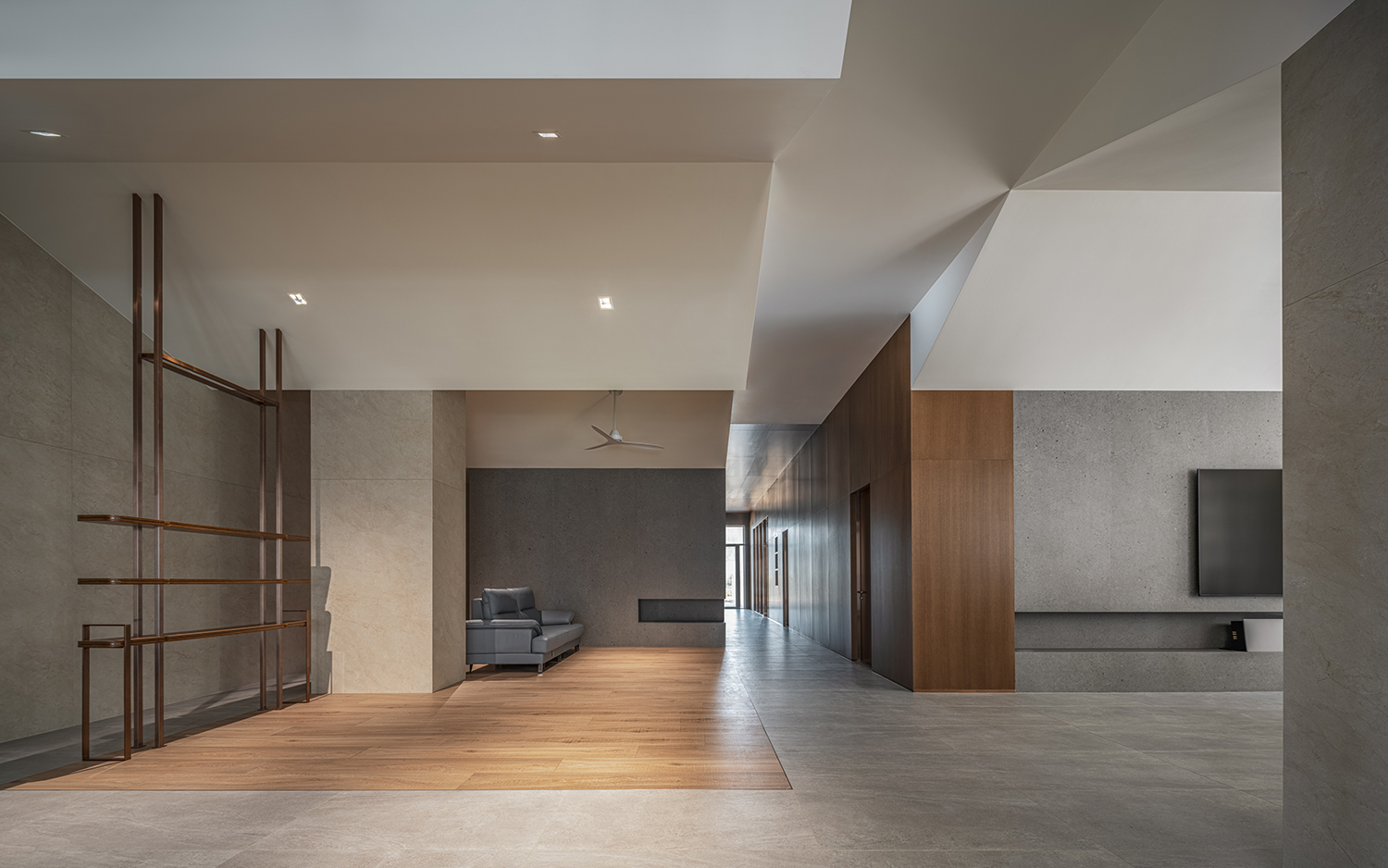
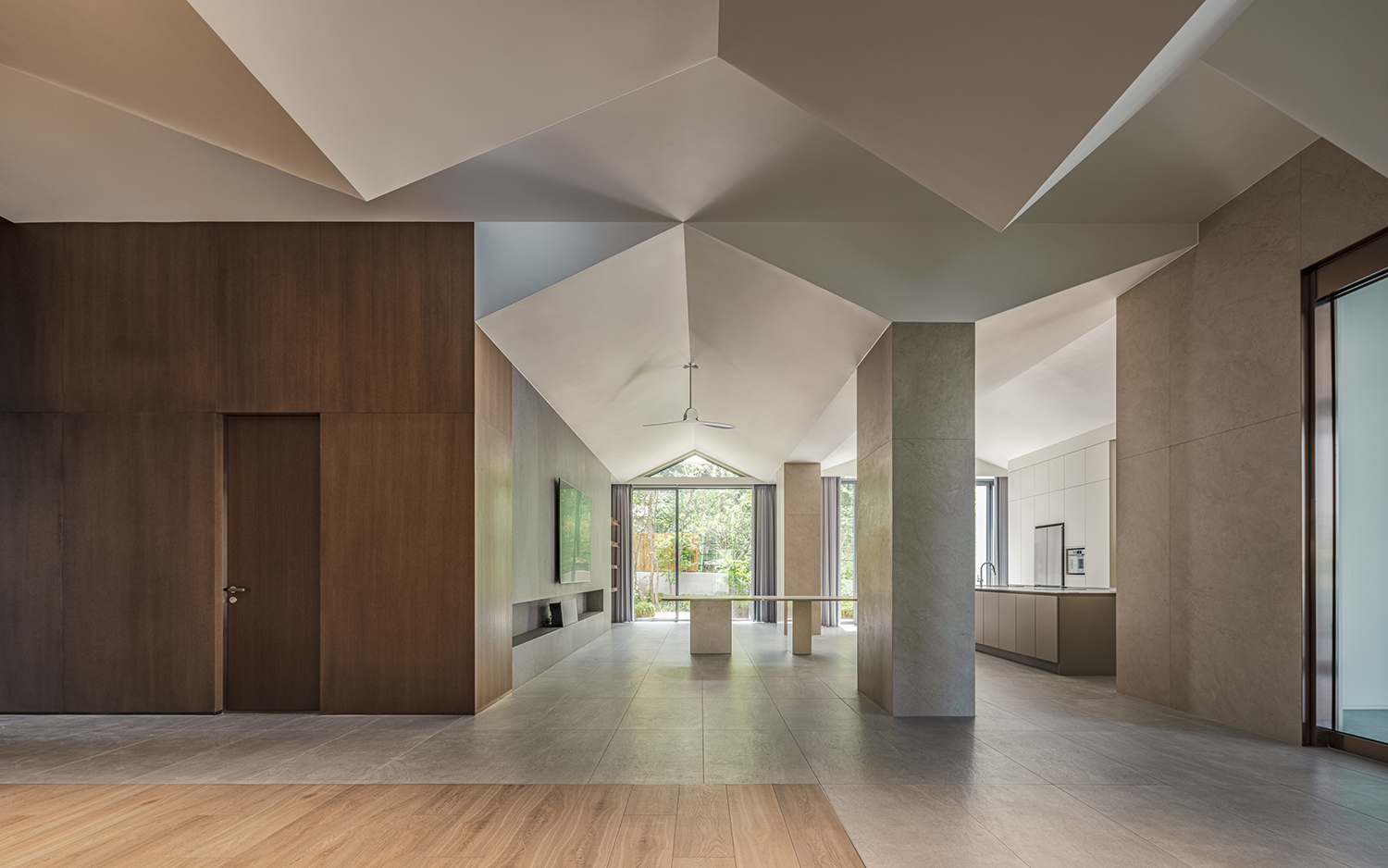
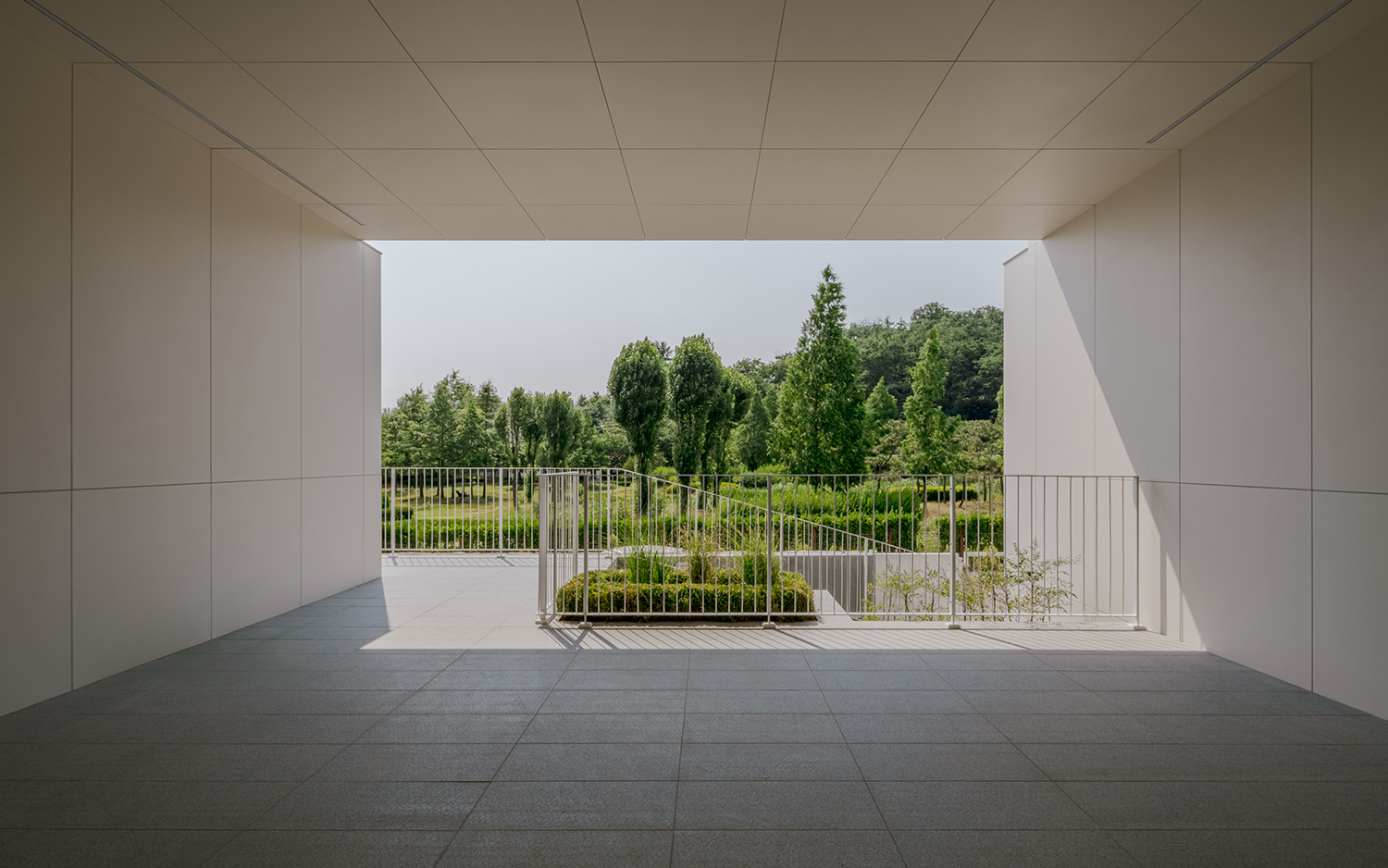
The principal spatial components of Quarter House – shared spaces, individual residential units, exterior landscaping, and community facilities – correspond respectively to the keywords well-being, life, nature, and family. Across all four spatial domains, contrasting elements such as private and shared spaces, and artificial and natural environments, have been composed to work in mutual balance in order to form a cohesive and harmonious living environment. The system of circulation, which requires residents to pass through a shared lounge before reaching individual residential units, encourages natural encounters between residents and facilitates a gradual transition from the exterior to the interior. Resident amenities such as the shared kitchen, accessible from the lounge, were planned as central spaces for dining, leisure, and rest, and to be experienced collectively. Each unit is equipped with interior and exterior yards, decks, and transitional spaces to serve as visual and cognitive buffer zones between shared and private areas. Through these transitional spaces, residents can ease into a shared way of living without too great a psychological burden.
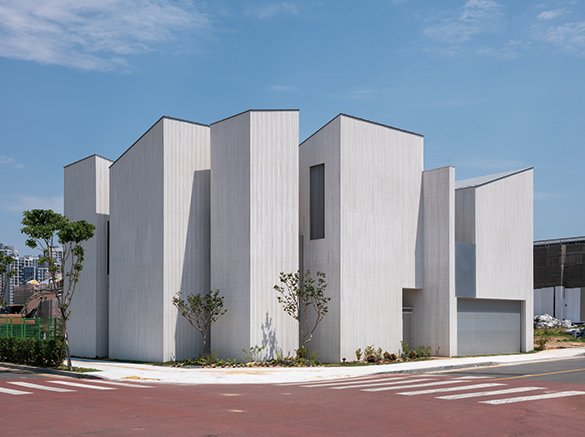
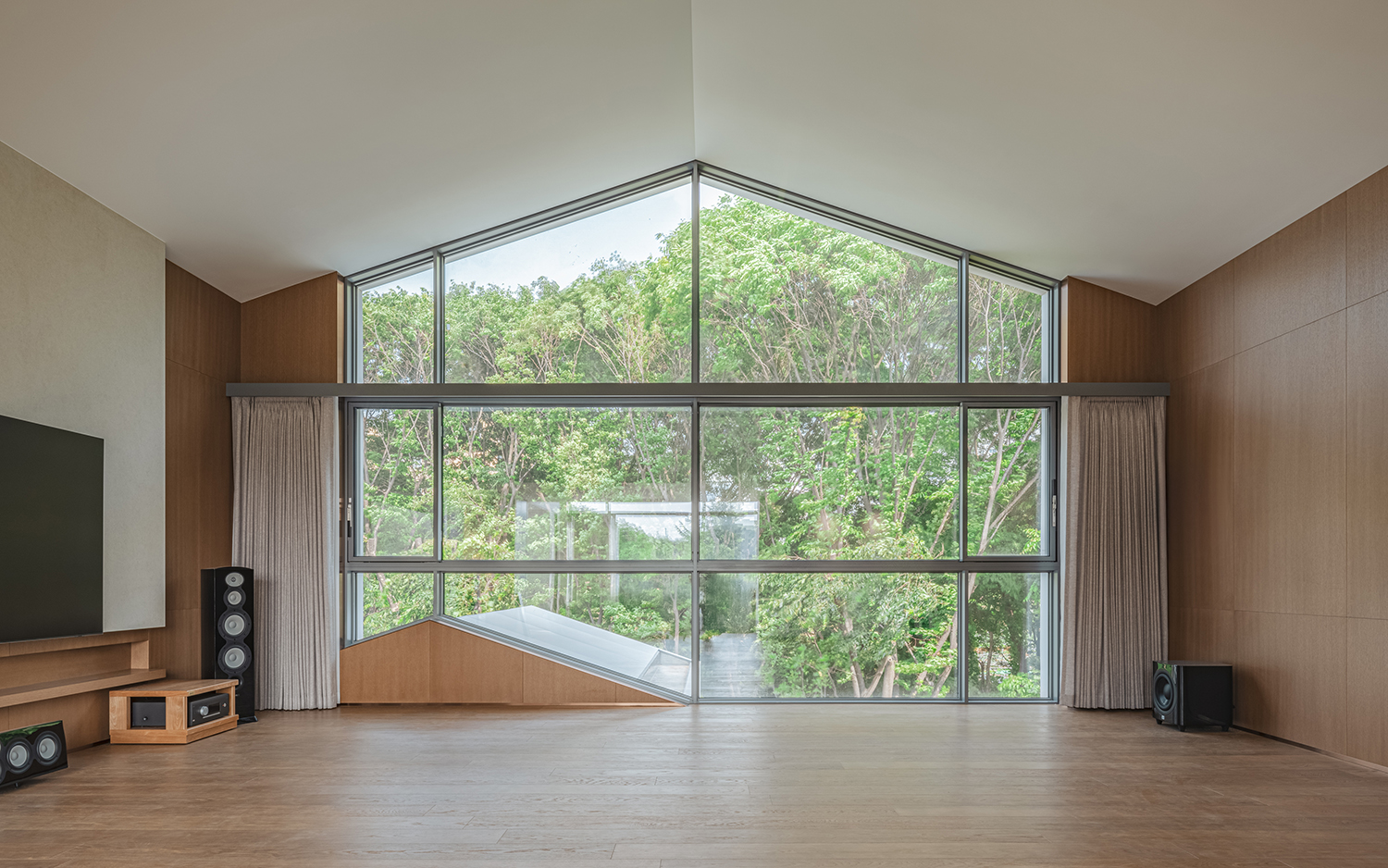
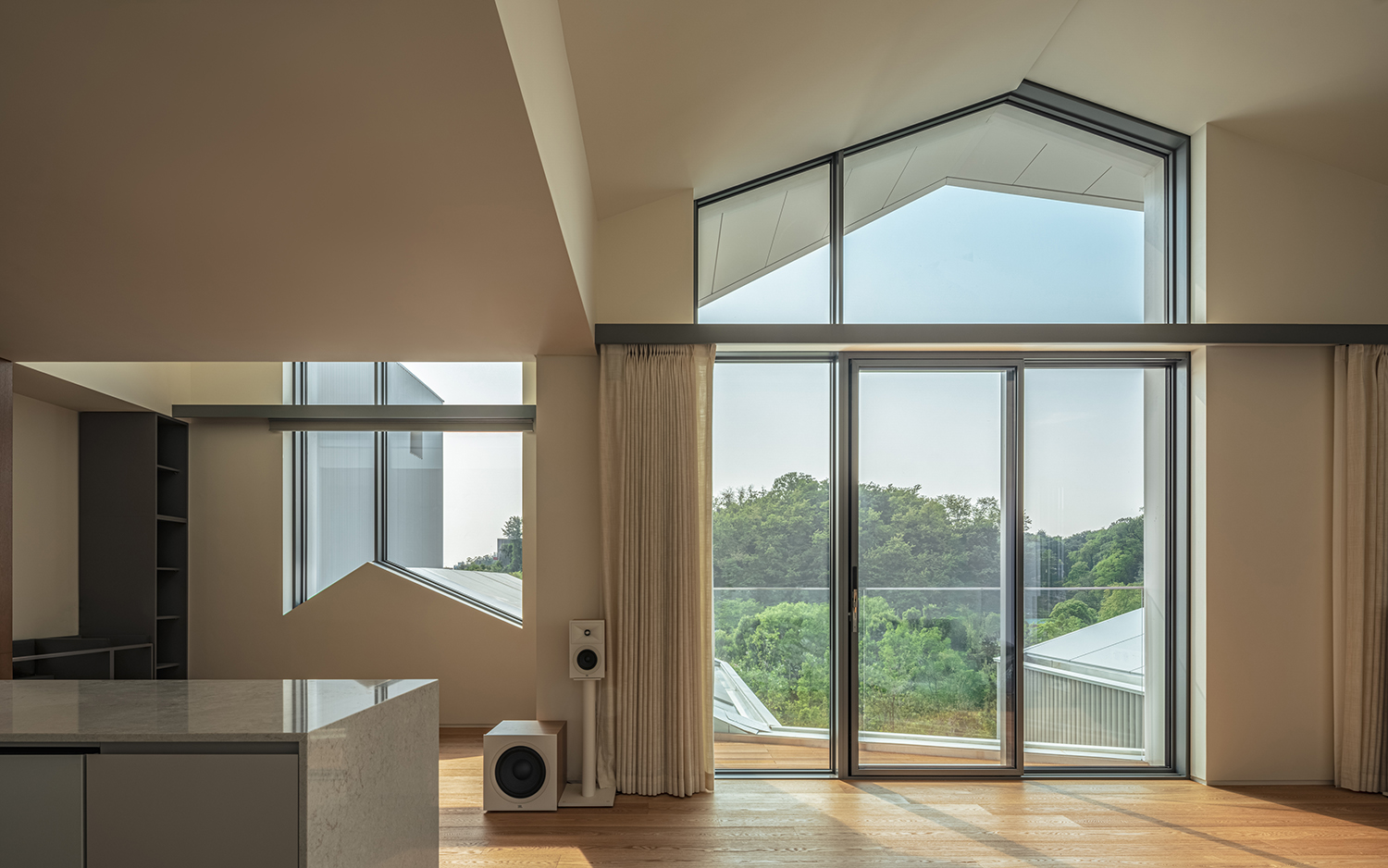
The elevations are opened toward a park at the front and green space at the rear, actively drawing the external environment into the architecture. Gabled roofs designed in accordance with the local district unit plan are composed three-dimensionally to confer a sense of rhythm to the façade. By allowing the roof forms to be perceived from within the interior, the design creates spaces that are both familiar and new.
The material selection stressed achieving a balance between stability and dynamic contrast. Ceramic panels are used on the first floor to establish a solid base, while corrugated steel panels are applied to the upper levels to produce a façade with visual variation. This material composition secures both the warmth expected of a residential space and an independent formal identity within the urban context.
You can see more information on the SPACE No. February (2026).
Jang Yoongyoo
Jang Yoongyoo is a progressive architect who investigates architectural phenomena and believes that a physical reality originates from architectural concepts. After graduating from Seoul National University’s Department of Architecture and its Graduate School, he founded the Jang Yoongyoo Architectural Experiment Atelier, which later evolved into Unsangdong Architects. His practice focuses on an architecture that responds to the changing and dynamic conditions of a new era. Jang has been awarded the Korean Architecture Award, the Seoul Architecture Award, and the Korea Institute of Architects (KIA) Award, and has gained international acclaim through awards and features in prominent international media outlets. He is currently a Professor at the College of Architecture, Kookmin University.
Shin Changhoon
Shin Changhoon graduated from the Department of Architectural Engineering at Yeungnam University and the Graduate School of Architecture at the University of Seoul. He co-founded Unsangdong Architects with Jang Yoongyoo to pursue and realise experimental and conceptual architecture. He has dedicated himself to archiving and promoting Korean architecture through his leadership of platforms such as ‘Space Coordinator’ and ‘Architecture Sympathy’. Having served as a Seoul Public Architect, he currently acts as the General Architect of Suseong-gu and the Vice Chair of the Suseong International Biennale. His broader contributions to public architectural culture include his tenure as Chair of the Young Architects Committee of the KIA. He is currently an Adjunct Professor at the University of Seoul.
11