Searching for a Criteria of Restoration and Reuse: HEUKLINGAK
photographed by
Kim Changmook (unless otherwise indicated)
SPACE February 2026 (No. 699)
The house of black scales, HEUKLINGAK (黑鱗閣), is named after its grey Japanese-style roof tiles and burnt red pine wood surface, both of which resemble black scales. The journey taken by this jeoksan (Japanese colonial property) house in Mokpo’s old city centre to reclaim its previous appearance leads one to scrutinise the restoration and use of modern architectural heritage in the present as well as in the future. This discussion features Kim Gyungin (Principal, Landscape Design SHARE), who spearheaded the restoration of HEUKLINGAK, and Seo Dongchun (Professor, Mokpo National University), a researcher of modern historical cultural heritage. Editor
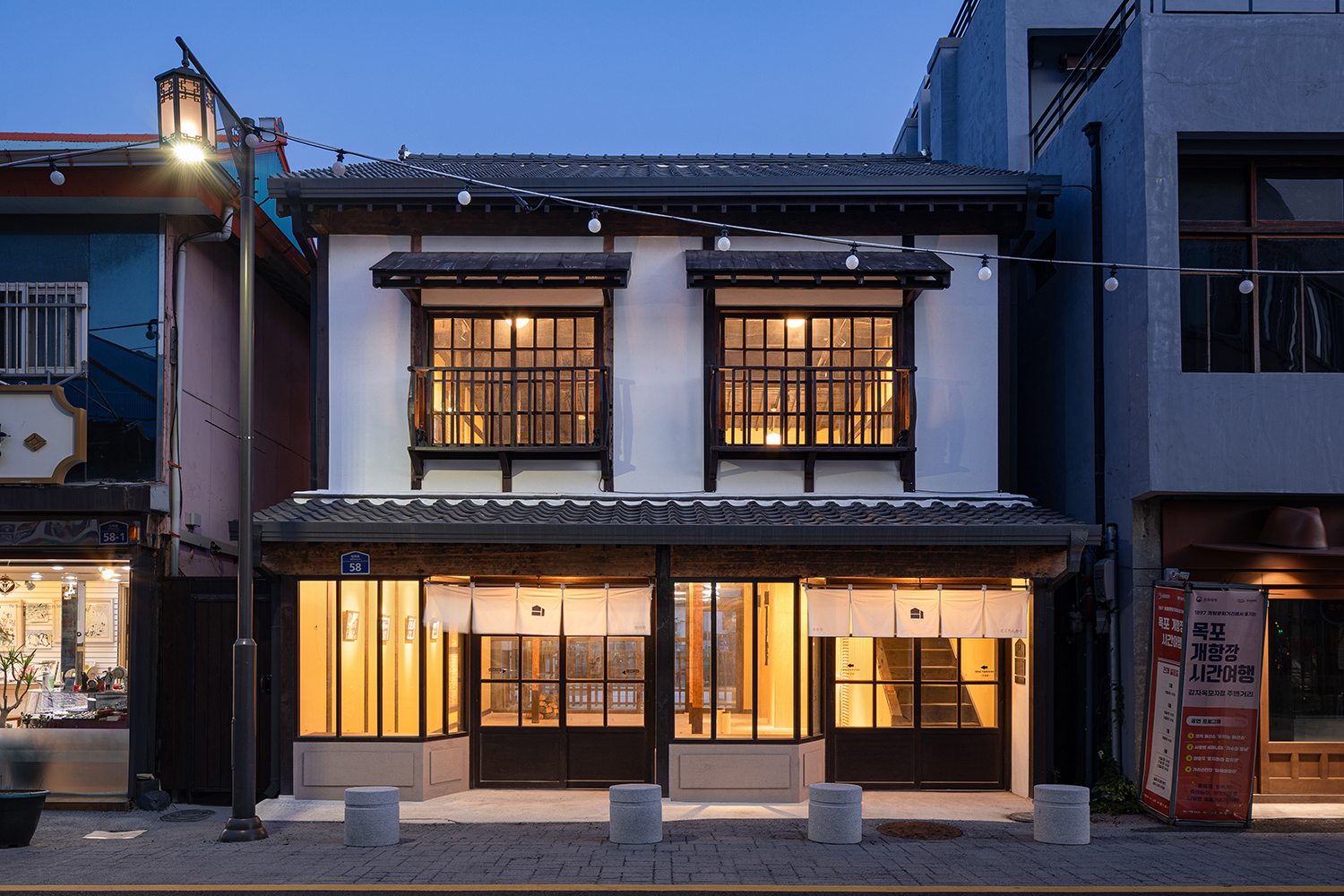
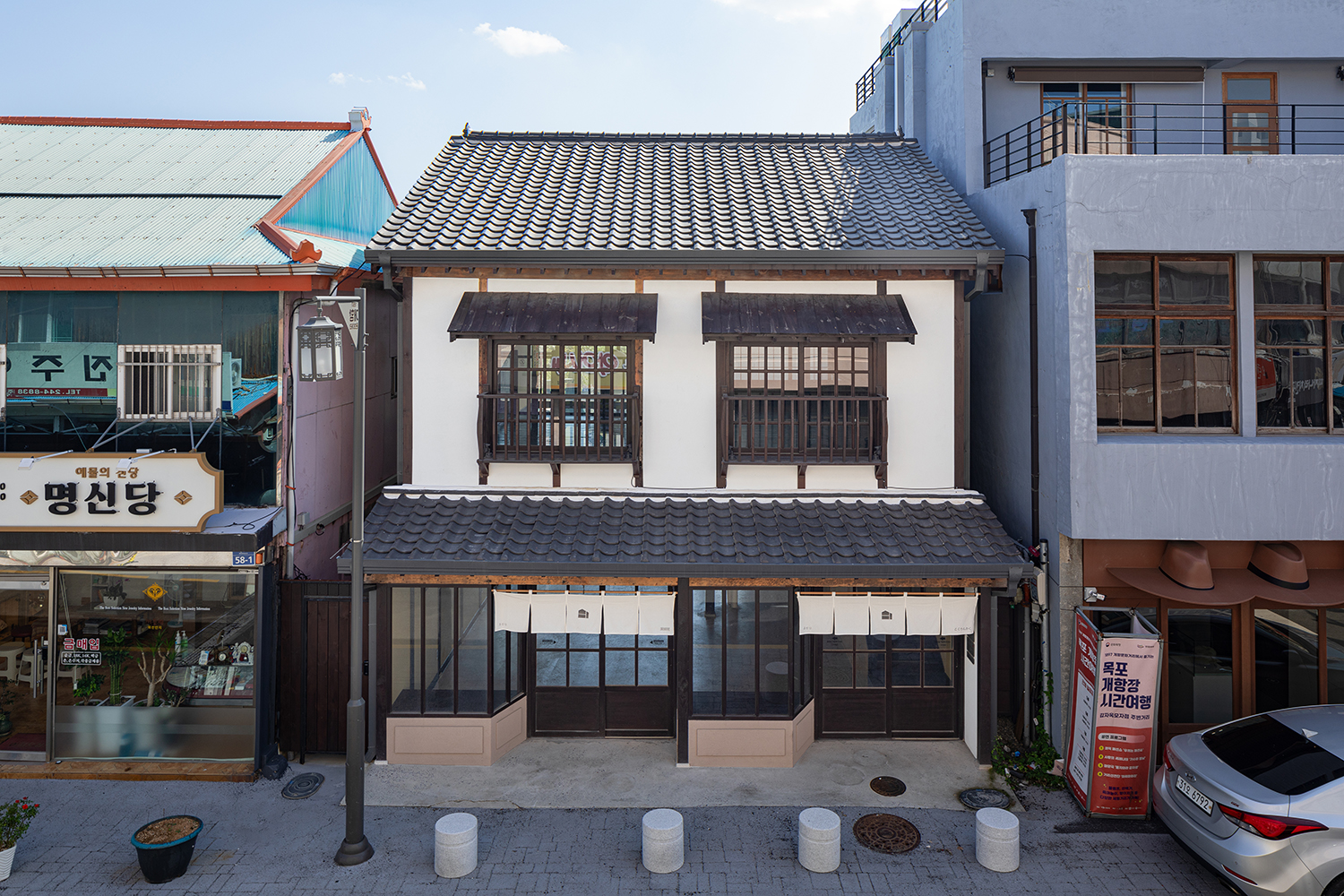
The front of HEUKLINGAK as seen from Beonhwa-ro. The restoration focused on maintaining the distinctive scale and sense of proportion characteristic of nagaya, faithfully reconstructing the roof, exterior walls, windows, bay windows (first floor), and protruding balustrades (second floor).
interview Kim Gyungin Pricipal, Landscape Design SHARE × Seo Dongchun Professor, Mokpo National University × Bang Yukyung
Bang Yukyung (Bang): You’ve restored this Japanese-style house, which was built in the mid-1920s, to return to something very close to its original form. I wonder how you found the building and what led you to purchase it.
Kim Gyungin (Kim): I was born in Jeonju and grew up in Hanok Village. Thanks to that, I often travelled with my family to places such as Gunsan, Daegu, Incheon, and Pohang, where a sense of modern and contemporary history is still present. When I first visited Mokpo in 2017, I wandered through the jeoksan houses that line the quiet original city centre, thinking that it would be wonderful to live in one of them after restoring it properly. Not long after that, I found HEUKLINGAK. It was the slightly visible, set-back elevation of the second floor behind the signboard that caught my eye. This distinctive appearance was unique to this house among the Japanese-style houses in Mokpo, cladded with its shingle wall and lime plaster wall.
Seo Dongchun (Seo): The Beonhwa-ro in Mokpo, opened in 1897, was developed as a major commercial street for Japanese people. It is lined primarily with machiya and nagaya,▼1 which create a continuous street frontage. The method of setting back the second floor is considered old-fashioned, even in Japan.▼2 This was because the Great Kantō Earthquake (1923) destroyed most timber buildings following collapse or fire damage, and the reconstruction process saw Japanese signboard architecture▼3 emerge, rather than timber or masonry structures. While timber buildings with set-back second floors are common in Kyoto, a historic city, they are almost unseen in Tokyo, for the same reason. HEUKLINGAK was a unique case in that, unlike neighbouring buildings constructed around the same time, it adhered to the traditional Japanese timber construction method for its elevations.
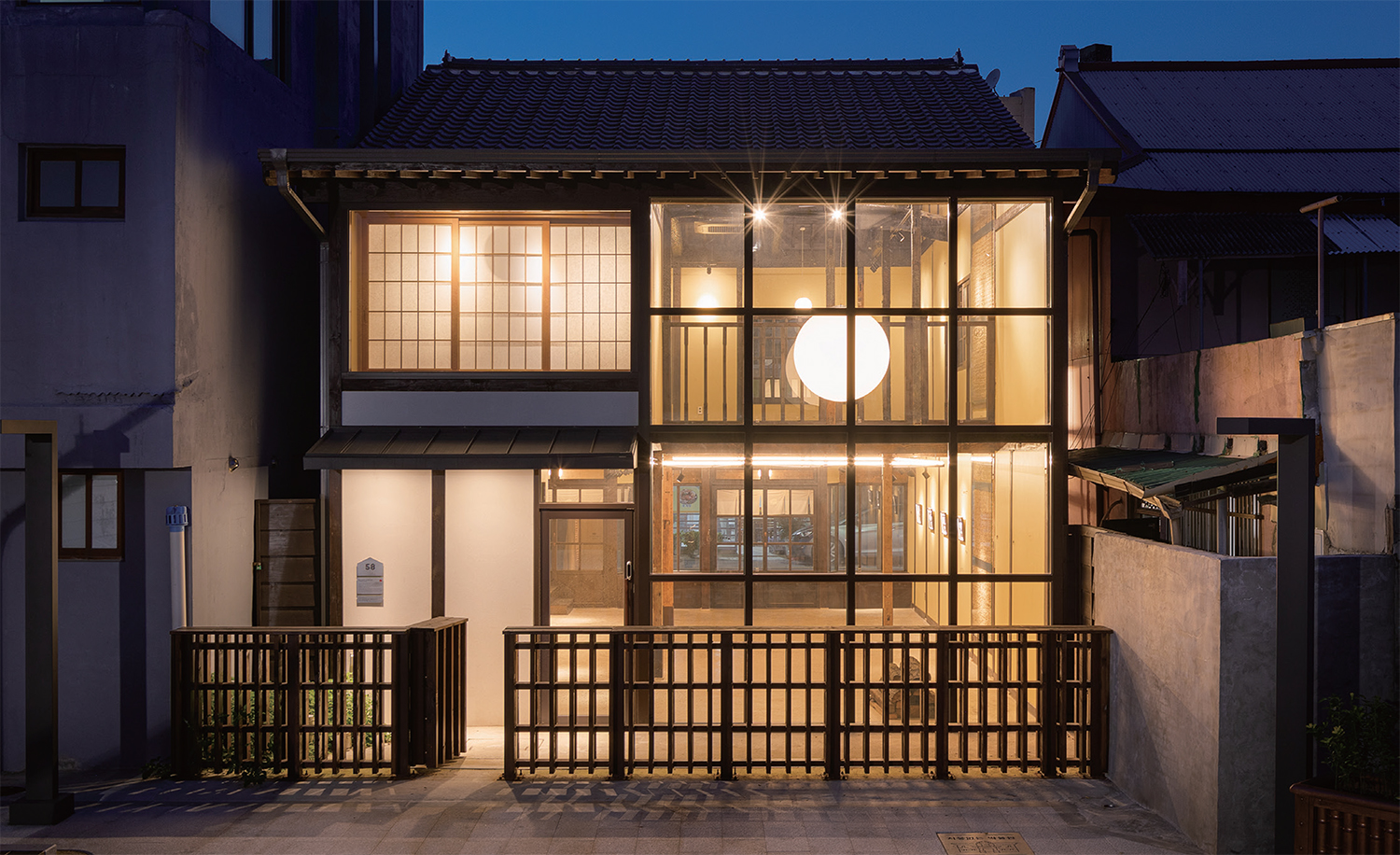
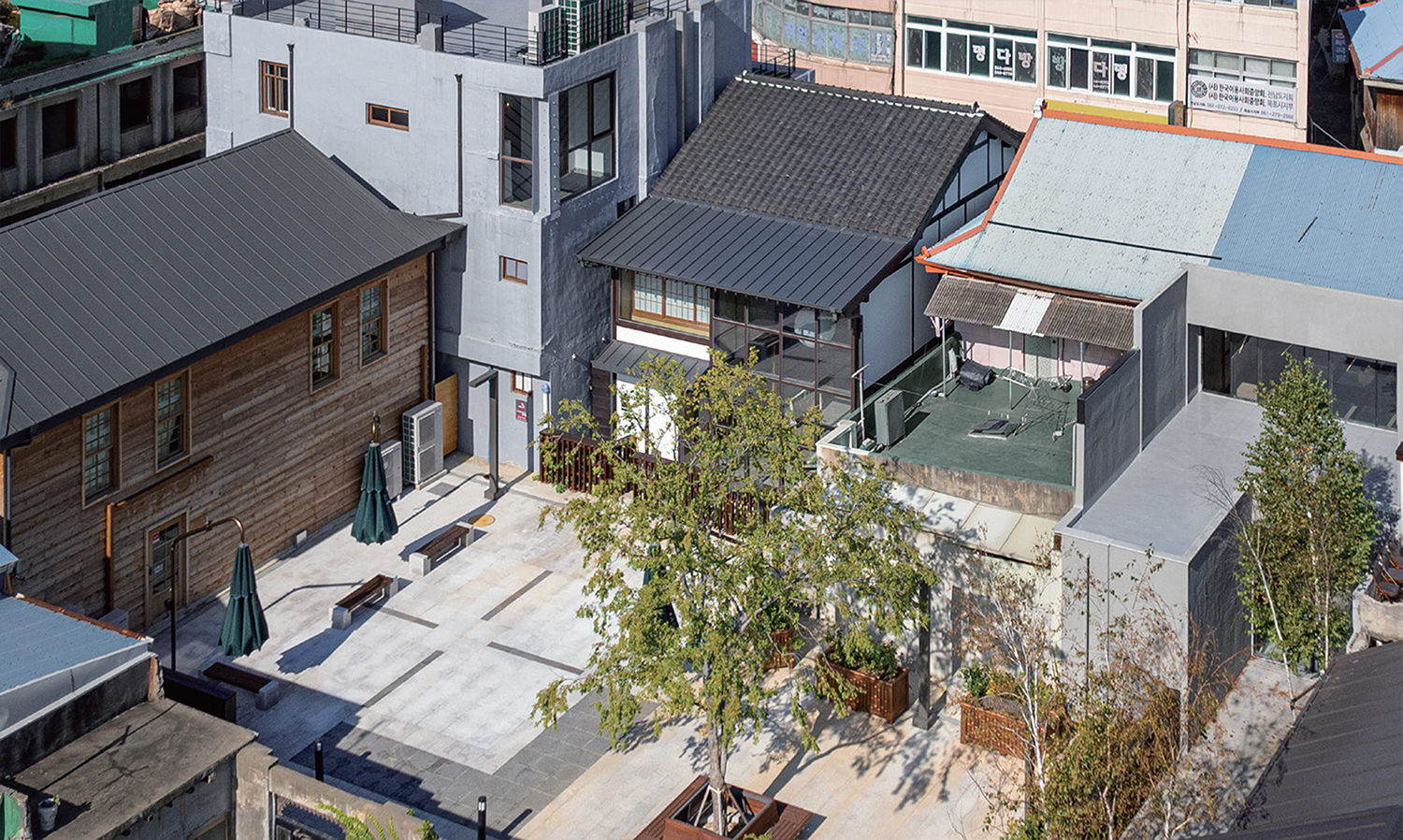
The rear façade of HEUKLINGAK facing the park established by Mokpo City
Bang: Based on clues from the picture postcards from the Japanese colonial period, it is estimated that the building was completed in 1924, and land register records show that it was first registered in 1935, with an extension recorded in 1958. Why was the decision made to restore it to its original form rather than opting for new construction or simple remodelling? How were the criteria for the ‘original form’ established?
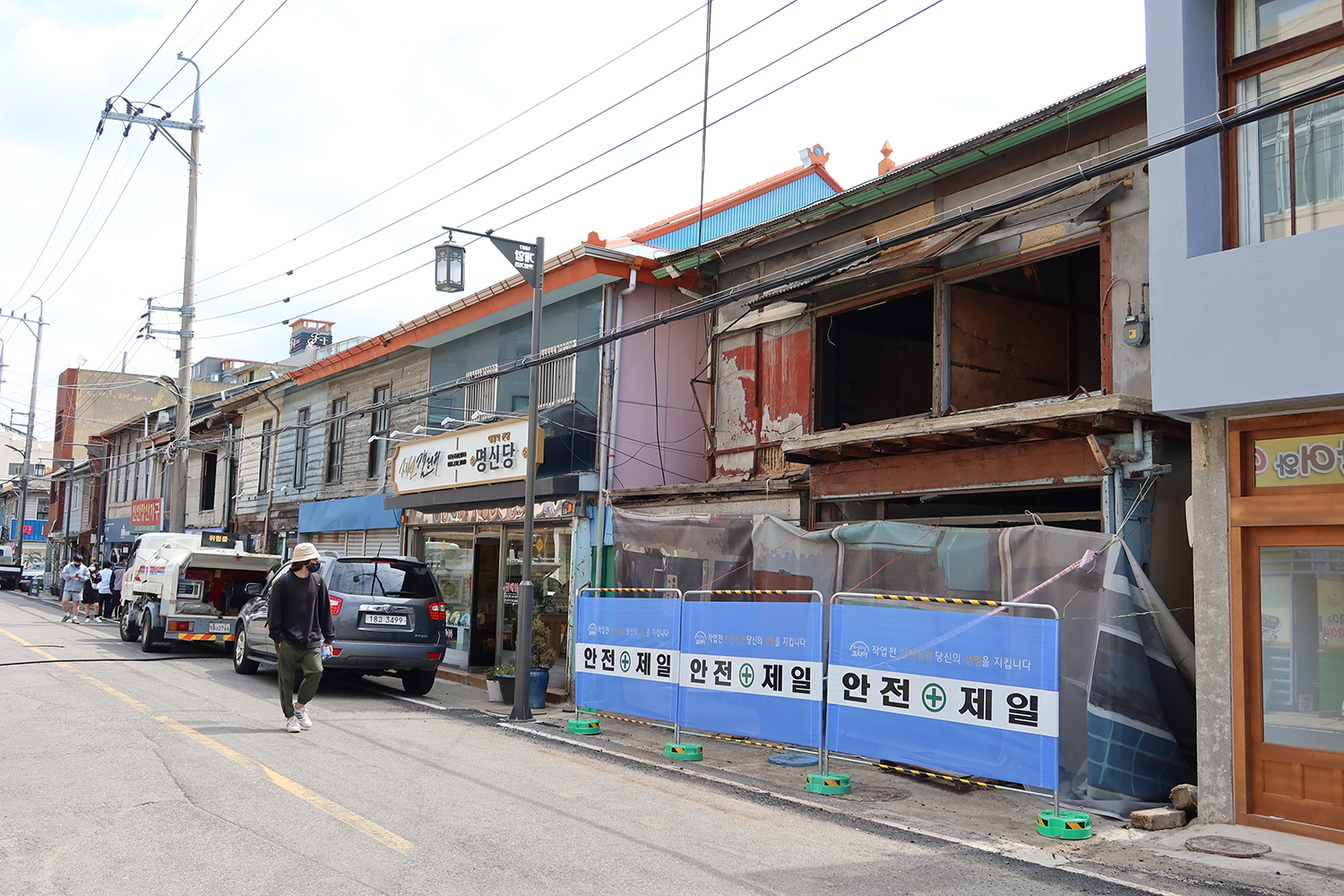
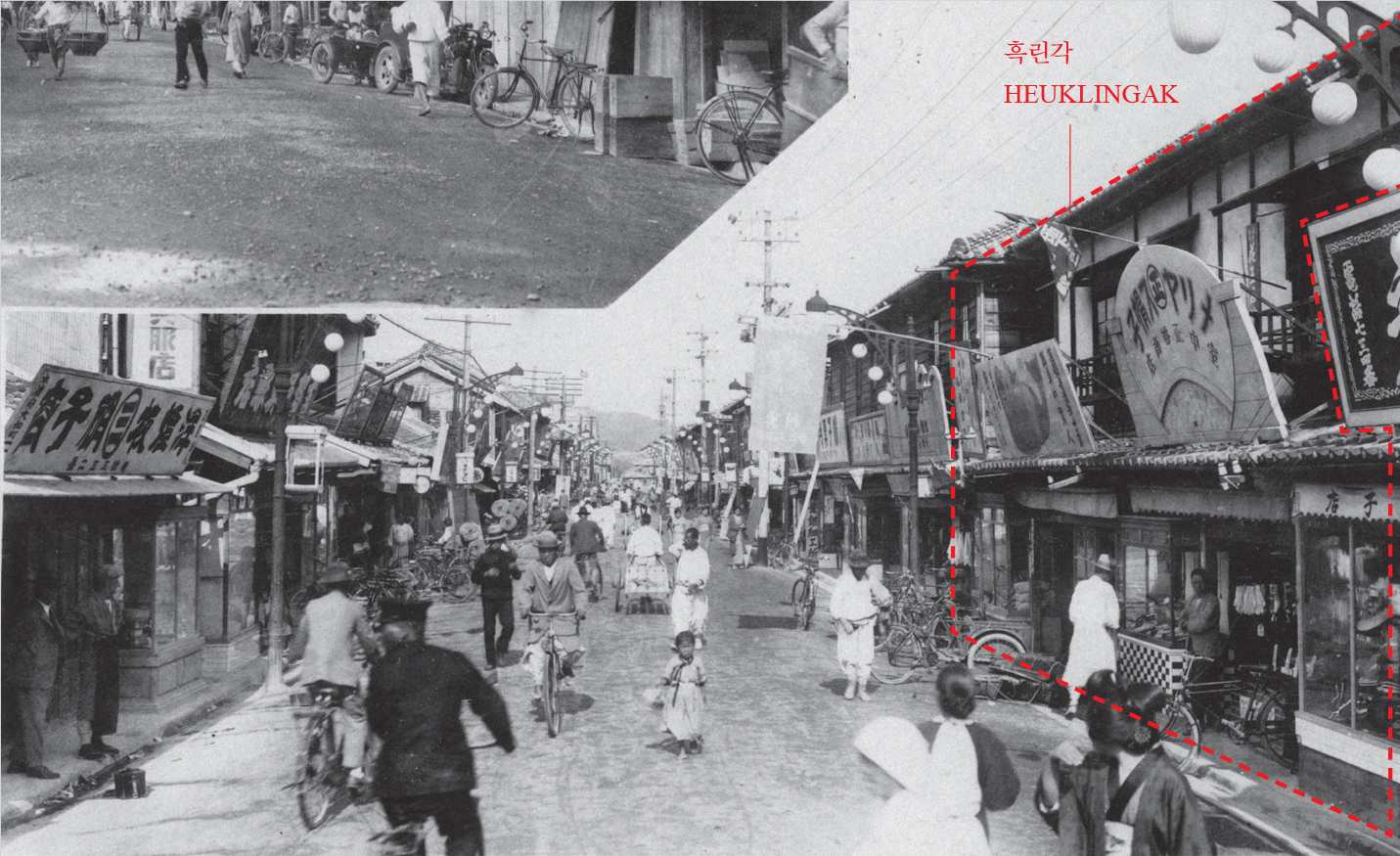
Kim: We first looked into how the nearby jeoksan houses and registered cultural heritage sites built around the same time tend to be used these days. After visiting a few sites, we decided to restore it to its original form because we thought it should become a building capable of representing the identity of the old city centre of Mokpo—in other words, it should be unique to Mokpo, not Seoul. However, given the building’s poor condition at the time, with a patchwork of a signboard and overlaid finishes, it was almost impossible to imagine its original appearance. Just when we had no idea, lacking physical materials such as architectural drawings, we found crucial documents in an unexpected place. It turned out that the Mokpo City had put up a temporary wall to facilitate the acquisition and revitalisation of the Gapjaok Hat Shop, located right next to HEUKLINGAK, and they had attached a photograph from the 1930s to the wall, which showed HEUKLINGAK. So, we got in touch with the city right away to obtain the original photograph, and we also visited the Mokpo Modern History Museum to acquire additional historical photographs capturing the whole area of HEUKLINGAK. At the same time, we looked through the Japanese colonial period database set up by the Academy of Korean Studies and, after consulting some experts, we began the restoration work, treating the appearance, as first shown in the photographs, as the ‘original form’.
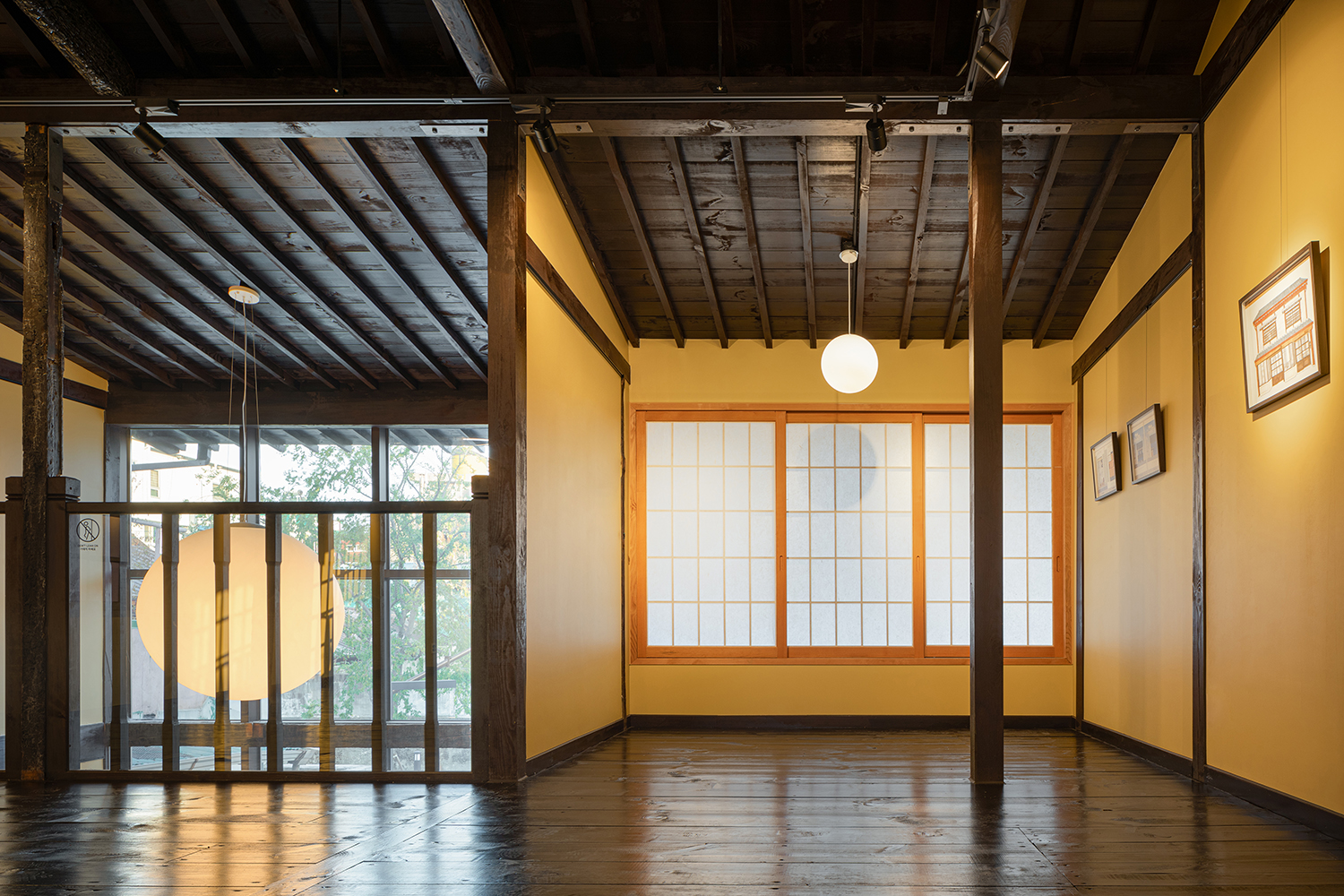
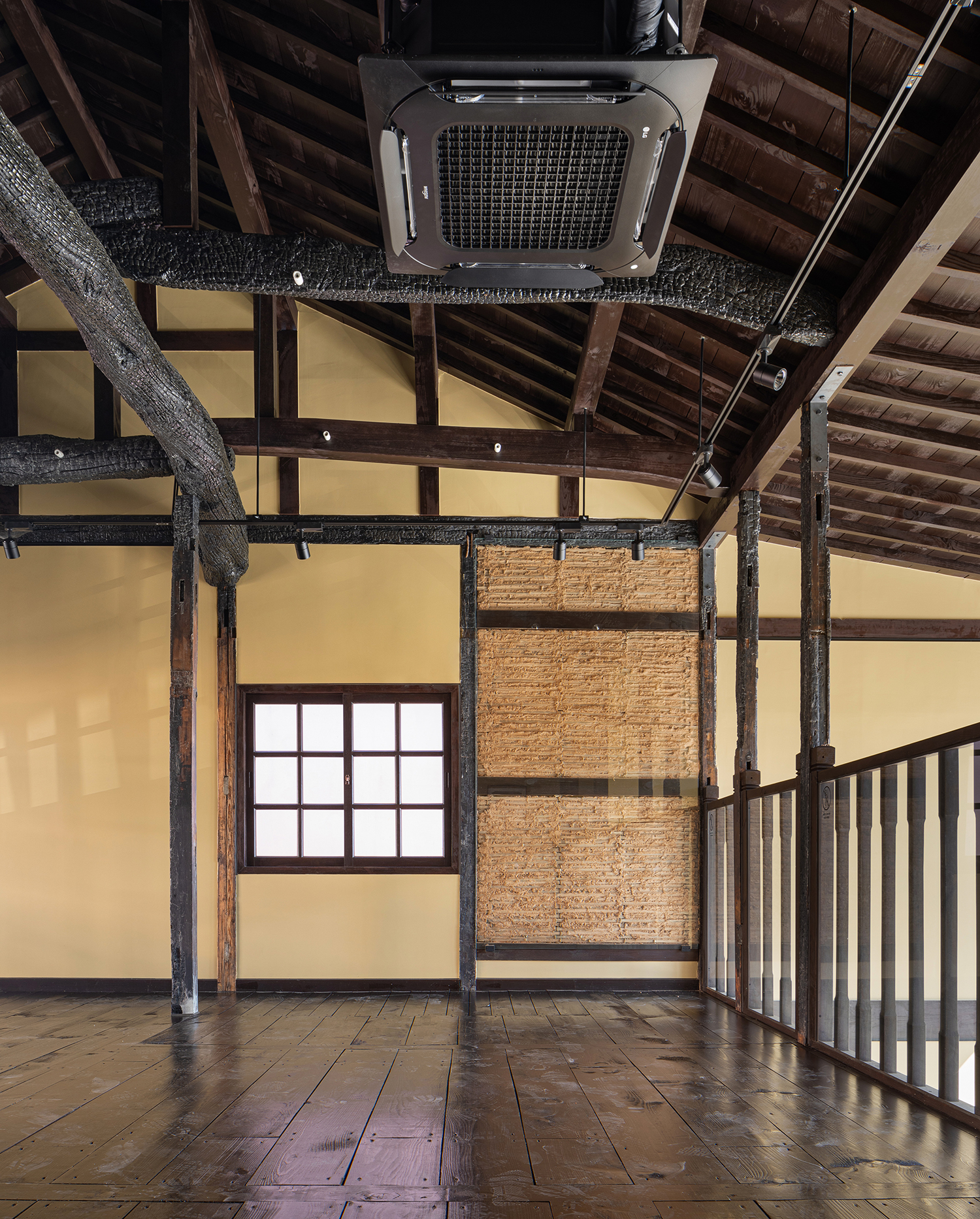
The second floor of HEUKLINGAK. The central part of wall is a reproduction of an soil wall interweaving laths.
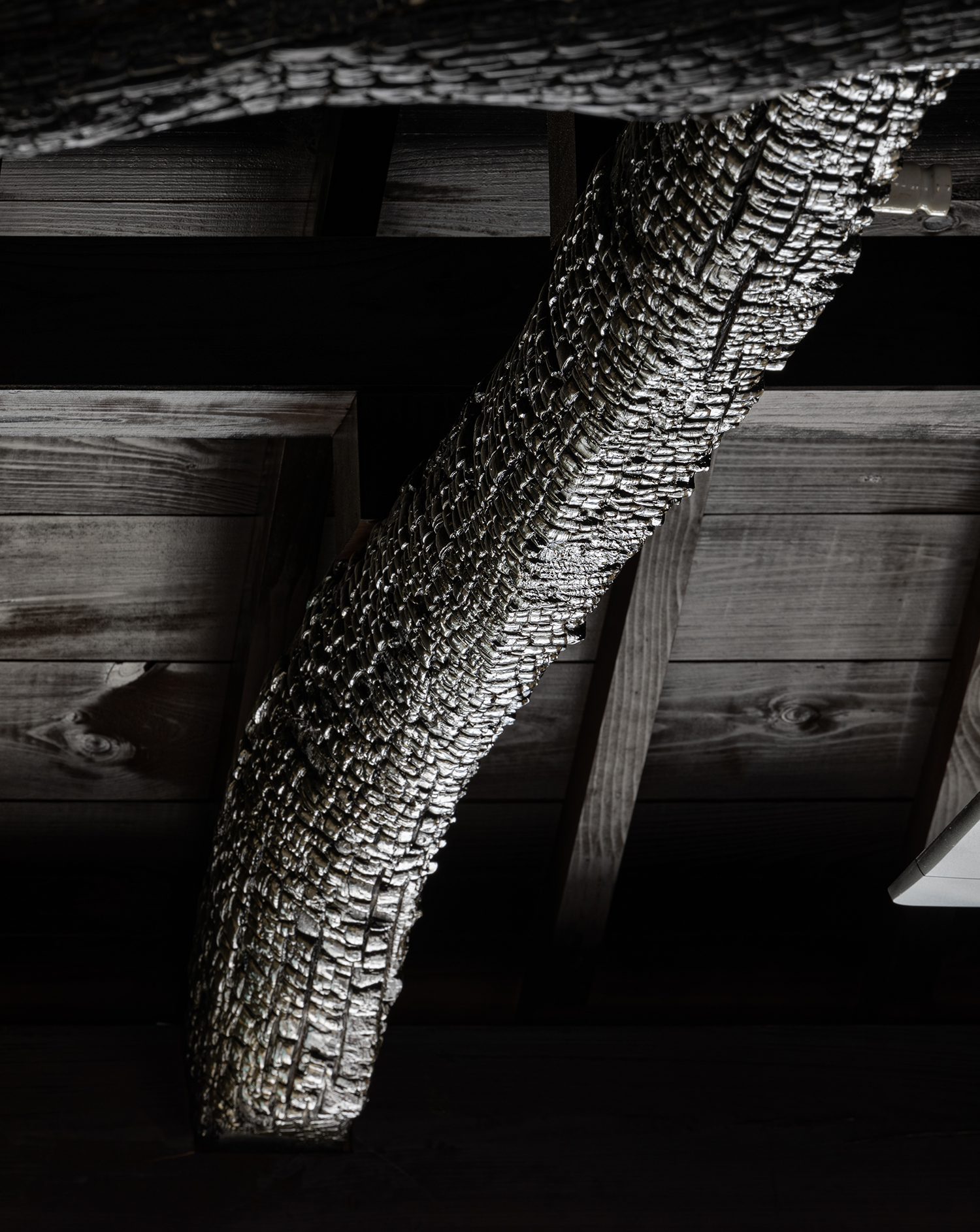
Black-and-white photograph showing the surface of burnt roof structural timber resembling scales.
Bang: It must have involved a great deal of thought about what to preserve and how, in terms of space, structure, materials, and so on. In what order did the remodelling process actually take place?
Kim: When I first discovered HEUKLINGAK, it had panels on the inside and outside, which made it difficult to tell what condition the building was actually in. When I purchased the building, I heard that in the past there had been a fire on the second floor, but you couldn’t tell from the outside. So, while I was doing my research, I decided to start with selective dismantling simultaneously. Through this process, we were able to verify specific details, such as the interior finishing materials and their condition, the structure, and the extent of fire damage on the second floor. And this allowed us to finalise the design. If we hadn’t gone through this process, we would have encountered significant issues during construction, such as finding out about problems too late and having to make design changes. (laugh) Finding out that the interior walls were made of soil walls interweaving laths, which are bamboo-framed erected as junggit (中衿) and earth-filled, was immensely helpful in attaining a better understanding of the site.
Seo: Selective dismantling involves removing parts of a building in order to accurately assess its current condition, before establishing a restoration plan for its future as a cultural heritage site. It’s extremely rare for selective dismantling to be carried out on privately owned buildings like HEUKLINGAK. Within the cultural heritage arena, when it comes to modern historical cultural heritage in particular, planning often prioritises ‘utilisation’ over ‘preservation’. Consequently, although selective dismantling is absolutely necessary, it is rarely undertaken. It feels as though this is a measure designed to avoid situations in which unexpected discoveries are made while parts of a building are being removed for verification purposes, resulting in construction having to stop. Currently, there are no regulations or legislation mandating selective dismantling.
Kim: The restoration of the original form was carried out according to three principles: preserving the original structure, using original components, and reproducing original materials.
The second floor of HEUKLINGAK. The wall visible in the centre of the second floor of HEUKLINGAK is the section that preserves the line where the two buildings were joined together.
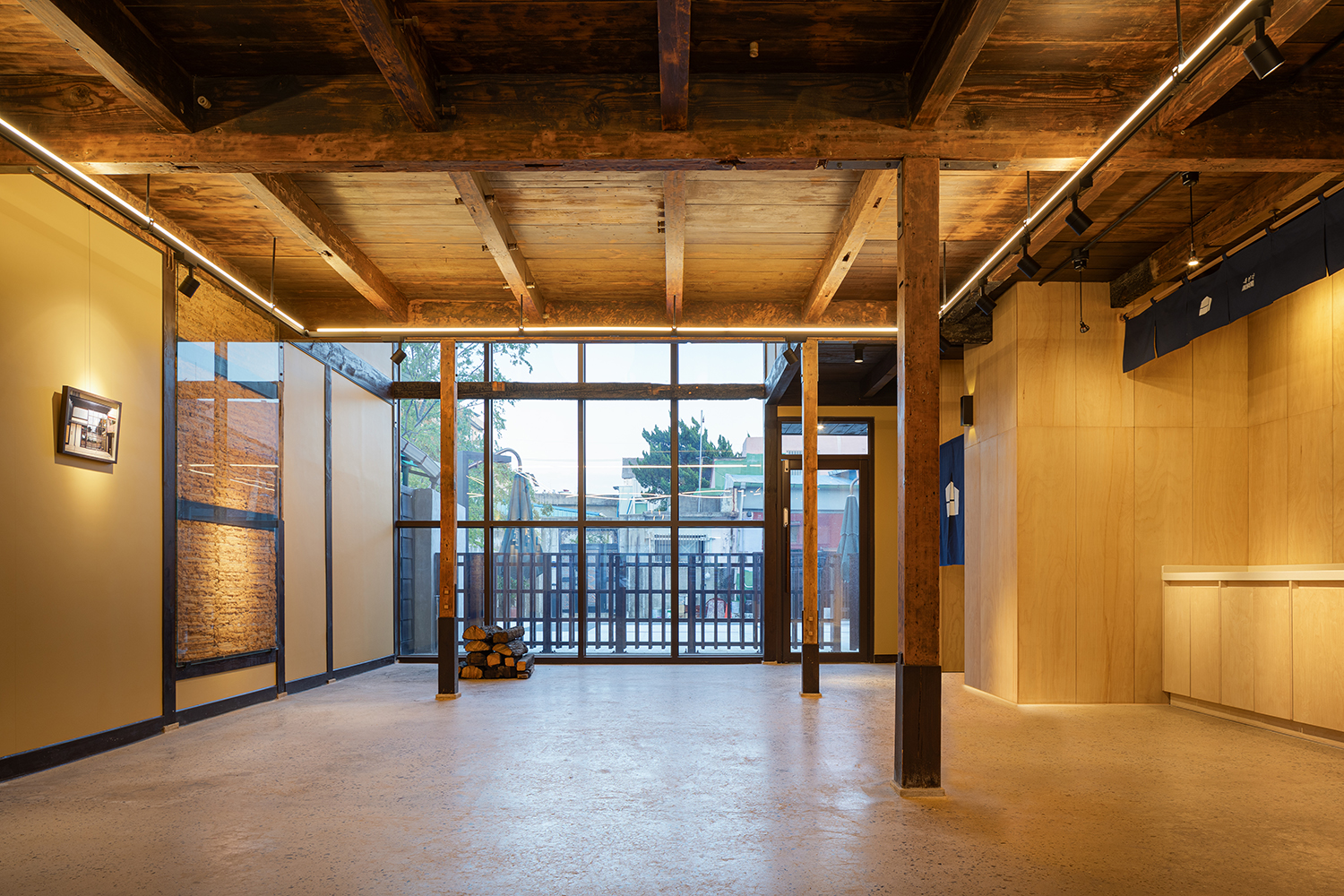
View from the first floor of HEUKLINGAK looking towards the rear park. The interior columns on the first floor were reinforced using traditional timber joinery (mortise-and-tenon extension) to preserve their original form as much as possible. The second-floor wooden floorboards were preserved to the greatest extent feasible, but the first-floor flooring, deemed to have little preservation value, was finished with concrete polishing.
Bang: I understand that the original HEUKLINGAK was a structure formed by the walls of two buildings attached together. Having assessed the building’s condition, what was the latter process, such as its design and construction?
Kim: Once the decision had been made to return the building to its original form, much deliberation took place over whether to divide it into two or keep it as one. While we were hesitant to proceed, in 2021, Mokpo City notified us that part of the rear of our building was encroaching upon the land of the park behind it and ordered that part to be demolished. We were at a loss as to how to handle the part that would be removed if we decided to demolish the part of the building that transgressed the site boundary. The restoration in 1924 recorded in the earliest documents and the current design in 2022 were happening simultaneously. At that moment, I had the thought that tradition is the act of sending something from the past into the future. To decide what to send to the future from HEUKLINGAK, I visited Kyoto, a city where the past and the present coexist. Inspired by the Kyoto Apple Store (2018), which introduced modules to reinterpret tradition in a contemporary way, we applied this concept to our work. We erected 1m-long modular glass walls on the elevation cut away during demolition, and knocked through interior walls to merge the two buildings into one. This enabled the front elevation from 1924, faithfully realised in timber (a material of the past), and the rear elevation of 2022, reinterpreted using glass and steel frames (materials of the present) to coexist as two sides of the same coin. The roof was divided into three distinct zones, each with a different material, such as the part originally covered in Japanese-style roof tiles in 1924, the part clad in slate during the 1958 expansion, and the part newly added in 2022. Inside, the different members and elements, such as columns, walls, and floors, are also distinguished according to these three different time periods. Thus, a landscape in which multiple eras coexist has been created.
Bang: I personally felt that the second-floor ceiling, with its exposed, burnt structural timber, was the most symbolic feature, conveying a sense of time at HEUKLINGAK. The characteristics and construction periods of each member of the interior, from the soil walls and column structure to the flooring and other elements, were labelled, creating the sensation of entering a museum.
Kim: During the selective dismantling process, we discovered that the damage to the roof on the second floor was worse than expected. We consulted a structural engineer to find out if the burnt structural timber could be retained. Fortunately, we confirmed that it could be used as structural members. We then proceeded with the design in collaboration with a on-site surveyor and designer for maintenance of national heritage. Following discussions with a national heritage maintenance engineer, we constructed the second floor to feature an exposed ceiling. The blackened, carbonised surface of the red pine inspired the name HEUKLINGAK.
Seo: Unlike in the hanok, which leaves the ceilings open to expose the rafters, Japanese residential architecture generally follows the principle of covering ceilings. Consequently, the meticulousness and ornateness of ceiling finishes serve as significant indicators of technical skill and aesthetic sensibility. For this reason, exposing roofs is not favoured when restoring Japanese-style houses from the Japanese colonial period. However, HEUKLINGAK did not simply follow Japanese conventions, but it exposed the burnt timber of the second-floor roof, revealing the roof structure and creating a point of convergence between Korean and Japanese styles. In my opinion, the greatest achievement of the restoration was creating a sense of space with unique aesthetic that cannot be found in Japanese-style houses or hanok.
Photograph included in the Mokpo Photo Album Commemorating the 35th Anniversary of the Port Opening, published by Mokpo Sinbo on Dec. 25, 1932. (source: Mokpo City)Image courtesy of Kim Gyungin
Bang: It’s very unusual for an individual to collaborate with many experts on a restoration project like this.
Seo: Although HEUKLINGAK was remodelled by a private owner, it underwent a meticulous process to achieve a cultural heritage-grade restoration, unlike neighbouring buildings. While it may not be feasible to return a project like HEUKLINGAK exactly to the state it once was, its significance lies in demonstrating that ‘this level of restoration is achievable’ can be achieved locally. Every stage of the process, from historical research and selective dismantling to expert-led consultation, design, and construction, involved uncovering the building’s inherent value and meaning. When it comes to restoring or repairing modern historical cultural heritage sites, their meaning can change according to perceived ‘value’, and the most crucial concept in terms of discovering the value might well be ‘charm’. The 400-year-old Japanese construction firm, Takenaka Corporation, terms the restoration and utilisation of modern architecture ‘charm regeneration’. It may be difficult to logically explain the basis for substituting the work of reviving historical value with ‘charm’. However, the very perspective that ‘history’ and ‘charm’ share a common thread within the consensus of public communication felt charming in itself. Japan has five construction companies that have led the domestic construction industry for over a century.▼4 These are firms where simply compiling their own company histories would constitute a history of Japanese architecture. Having built castles, palaces, and temples on their own for 300 to 400 years, these firms possess the relevant architectural drawings and materials and recognise the importance of cultural heritage, each thereby maintaining a dedicated cultural heritage team. These firms undertake restoration and repair projects for national treasures and structures of national significance. Inevitably, their capability differs from that of our country’s small-scale cultural heritage repair companies.
Kim: The biggest difficulty we faced in our work was the lack of accumulated data and research on modern architecture. We had assumed that, if we commissioned a cultural heritage construction company or design firm, they would be able to handle it, but they said they lacked the necessary materials too. Consequently, we had to make many on-site decisions through extensive consultation with the construction company, starting with the process of making foundation stones for columns without design drawings. Learning how Japan systematically manages such materials at company and national levels creates a sense of disconnect.
While the front of HEUKLINGAK (top) faithfully restored the form of a traditional Japanese house (nagaya), the rear (bottom) incorporates a contemporary interpretation, featuring glass windows aligned with the house’s modular framework (1m-long column spacing).
Bang: In June and October last year, you published a book documenting the process of creating HEUKLINGAK and held an exhibition. Now that the exhibition has finished and the place is empty, what plans do you have for the next stage?
Kim: Both the publication and the exhibition were projects aimed at communicating the value of HEUKLINGAK. We hoped that local residents, experts, and other interested parties would visit, observe, and use it as a reference for remodelling or planning purposes. In line with the original intention of creating a space where visitors can experience Mokpo’s unique character, we are currently preparing an experiential accommodation facility where guests can enjoy Mokpo both day and night. We also intend to gradually explore ways to introduce people to experience Mokpo’s distinctive food culture, such as the Nine Delicacies of Mokpo and the traditional native fig, and to connect with surrounding hub spaces.
Seo: The Tokyo Station Hotel, which reopened after Shimizu Corporation restored the third floor that had collapsed during the Great Kantō Earthquake, and the Mitsubishi Ichigokan Museum, which was faithfully restored by Takenaka Corporation after the original structure, which was built in 1894 and demolished in 1968. Both cases achieved commercial success through restoration that revived the ‘charm’ of buildings they had constructed. HEUKLINGAK must also go beyond merely being well-restored and exert influence as a prime example of successfully settling in Mokpo and achieving commercial success. This may sound grandiose, but only then will both the public and the administration be moved.
Bang: The sentence at the end of your book, ‘The public sector may be precise, but it struggles with subtlety,’ remains in my memory. I hope that the efforts that have been perfected through subtlety will shine brightly and be used as a springboard for others to rise to the challenge and create second and third HEUKLINGAKs.
_
1Machiya (町家) is a traditional Japanese wooden townhouse that functions as both a residence and place of business (storefronts). Nagaya (長屋) is also traditional Japanese long housing complex which serves as rental accommodation. It is characterised by each household having its own entrance from the street.
2 The style in which the second floor is set back is known as zushinikai (厨子二階), and an elevation that rises flat and upwards is called honnikai (本二階).
3 These are buildings in which Western-style materials have been added to the timber elevations of machiya or nagaya, primarily to improve fire resistance.
4 The five construction companies that have led Japan’s construction industry for over a century are Shimizu Corporation, Obayashi Corporation, Takenaka Corporation, Kajima Corporation, and Taisei Corporation. They are referred to as ‘Super-Genecon’, an abbreviation for ‘Super General Contractor’.
You can see more information on the SPACE No. February (2026).
Kim Gyungin
Kim Gyungin is a landscape and spatial expert who has researched the influence of the environment on human cognition, thought, and behaviour. She graduated from Seoul National University’s Graduate School of Environmental Studies and received a Doctor of Engineering degree from Kyoto University in Japan. Since then, she has spent over 25 years working on the theme of ‘people-centred space’, including urban, public, school, and elderly spaces. As a landscape expert, she purchased and restored HEUKLINGAK, the modern building in Mokpo’s old city centre, presenting it as an example of how architectural preservation can revitalise urban memory and street landscapes.
Seo Dongchun
Seo Dongchun is a Professor in the Department of Architecture at Mokpo National University. Having obtained his Ph.D. in Architectural History from the University of Tokyo in Japan, he now conducts research on the architectural and urban history of East Asia based on comparative analyses of Korea, China, and Japan. His primary research themes are the comparative study of modern Korean and Japanese architecture and the comparative study of open port cities in East Asia, as well as the concepts of historicity and regionalism in architecture. His publications include Between Revivalism and Westernization, and his translations include Comparative Architectural History of Japan and Korea, and A Story of Japanese Architecture.


 Black-and-white photograph showing the surface of burnt roof structural timber resembling scales.