SPACE April 2026 (No. 701)
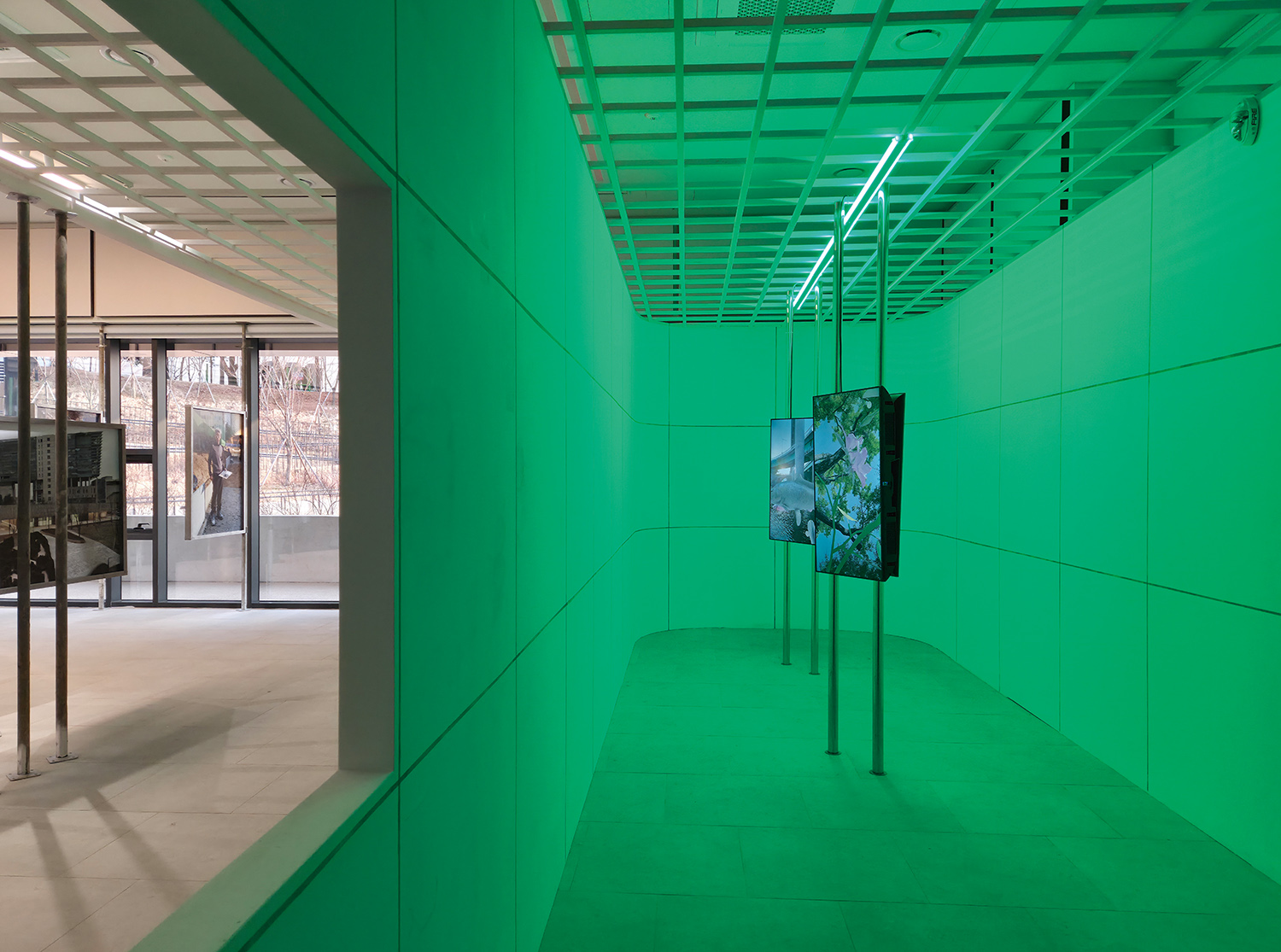
Installation view of SSMAP 2024–2026 CHAPTER. 1 (left) by Kim Taedong and Seoseoulpedia–AR Moving Images (right) by Shin Jisun. SSMAP 2024‒2026 CHAPTER. 2 is scheduled to be unveiled in Part 2 of the exhibition. ©Bang Yukyung
Seo-Seoul Museum of Art
Mar. 12 – July12, 2026
The Seo-Seoul Museum of Art (hereinafter Seo SeMA), which is Seoul’s first new media focused art museum and first public art museum to be established in Seoul’s southwestern region, opened its doors on the 12th of March. It has been a decade since the project was first announced in 2015. On its opening day, each exhibition hall of Seo SeMA – which was designed under the concept of a ‘Museum in a Park’ – was packed with huge crowds amid intense media coverage. Aside from the exhibition of construction records at the lobby and outdoor space, performances and large-scale commissioned works that reflected the museum’s focus on new media were showcased in outdoor and basement spaces. We examined how Seo SeMA’s exhibition and museum space mirrored its key interests toward ‘new media art, local culture, and accessibility’.
An Exhibition Built Upon the Strata of Relationships, Space, and Time
The exhibition of construction records titled ‘Mnene Topos’▼1 is an archival project that reflects on the museum’s building process and retraces the temporal narrative and memory of Seoul’s southwestern region. Five artists (teams) that work across media such as photography, video, and augmented reality participated in this exhibition. The exhibition begins inside Studio 1 (which is located at the end of a narrow corridor in the lobby on the first floor) and, by utilising the museum’s interstitial space, extends into the outdoor area. The first space to be encountered is a brightly green-lit room of moving images (augmented reality) designed by Shin Jisun. The artist drew upon the history of Seoul’s southwestern region – which has undergone transformations such as the conversion of rural areas into urban industrial zones, the restoration of the Anyangcheon Stream, the development of G-Valley, and the construction of large-scale apartment complexes – as well as the memories of its past inhabitants. Seoseoulpedia, which is a five-part series, focused on the ecological environment – such as the mountains that have steadfastly held their ground amid the rapidly changing urban landscape, the fish that returned after the restoration of the once-polluted Anyangcheon Stream, and the trees that protected the village – while also reconstructing the narrative of an individual who lived in the neighbourhood via a mockumentary. The photographic works of Kim Taedong and VNR▼2 are presented in the adjacent space separated by a single wall. Kim Taedong not only documented each phase of the construction process of the museum building via photographs but also displayed large-scale portraits of the workers involved in the project to disclose the narrative of labour accumulated within the museum. One distinctive feature of this exhibition space is that it has been partitioned using temporary construction structures, enhancing the sense of being on-site.
The exhibition of construction records also extends to the museum’s outdoor spaces including the building’s exterior walls and the lawn courtyard. Two works from VNR’s The Grand Tour series have been installed on the wall facing the escalator leading from the lobby to the basement and on the shutter at the loading dock entrance. Meanwhile, Shin Jisun’s Seoseoulpedia series feature QR codes affixed to the pillar of the museum’s café and four locations on the building’s exterior, allowing visitors to experience virtual images overlaid on the real-world landscape. VNR’s work, which used the visual glitches created from manipulating construction photography data to make a pattern, was affixed to the glass walls of Studio 1, visually mediating the exhibition space and the surrounding landscape. ContempoLocal’s Illusion Sign_Anyangcheon, installed on the lawn courtyard, employed the format of a road sign to reveal the points where the flow and speed of the Anyangcheon Stream intersect with urban life. By contrasting the Anyangcheon Stream – where the water current has accelerated due to flood control projects – with the Western Trunk Road which is notorious for its chronic traffic congestion, the work implicitly conveyed the paradox that while detours and delays may slow one down, it also helps one to go far.
In this way, the exhibition of construction records brought visitors to explore every part of the museum. As the curator explained, by using ‘interstitial spaces’ – such as Studio 1 at the lobby (the smallest space in the museum), the lobby, the building’s exterior walls, and the loading dock shutters – the exhibition encouraged visitors to closely examine the building’s interior and exterior from spaces that were previously overlooked. This strategy, which encourages visitors to wander in and out of the museum in a self-regarding way – as a kind of performer – in line with ‘the narrative upon which we currently exist’, seems to align with the performativity and temporality of new media art pursued by Seo SeMA.
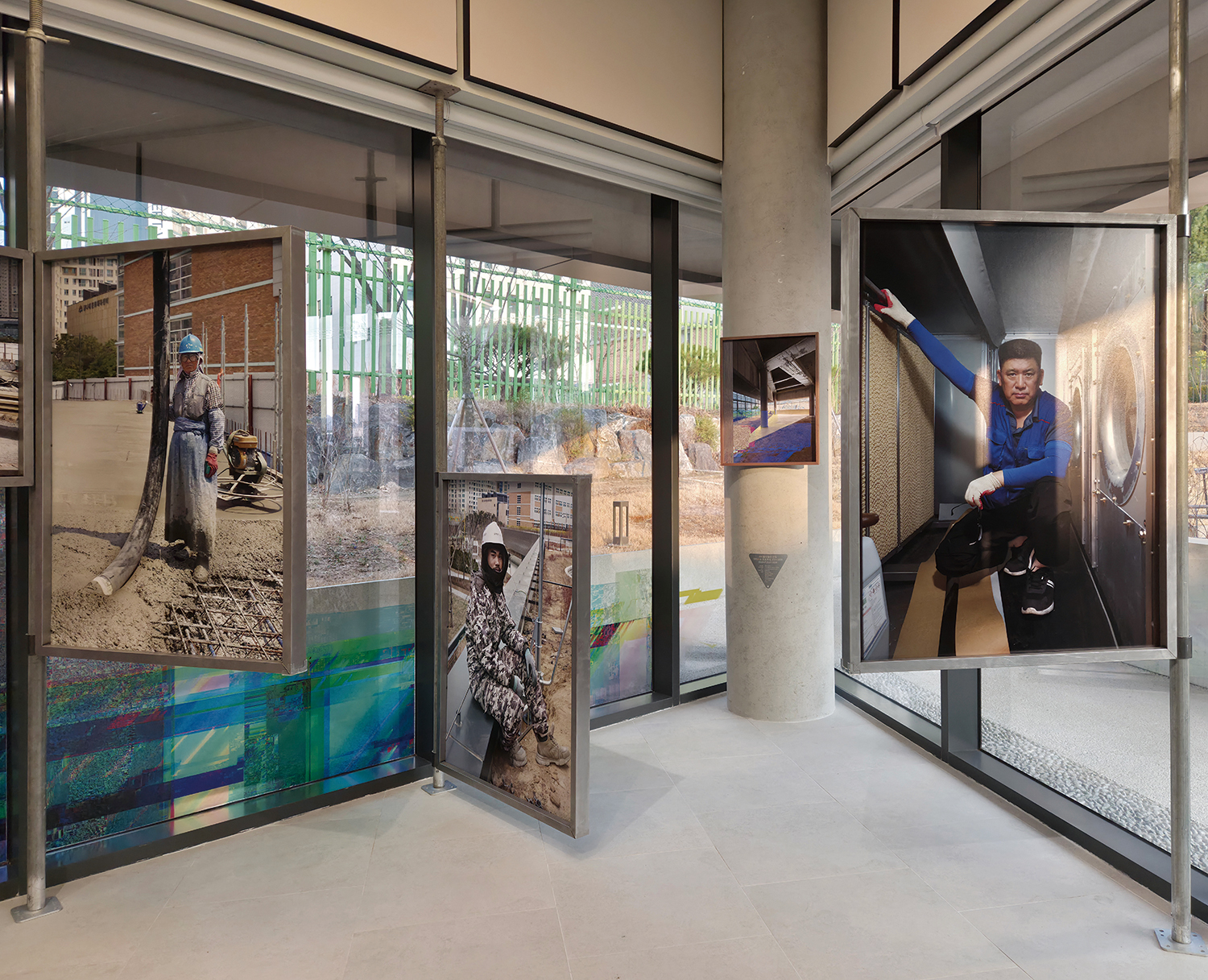
Installation view of the archival images by Kim Taedong and SSMAP 2024–2026 by VNR ©Bang Yukyung
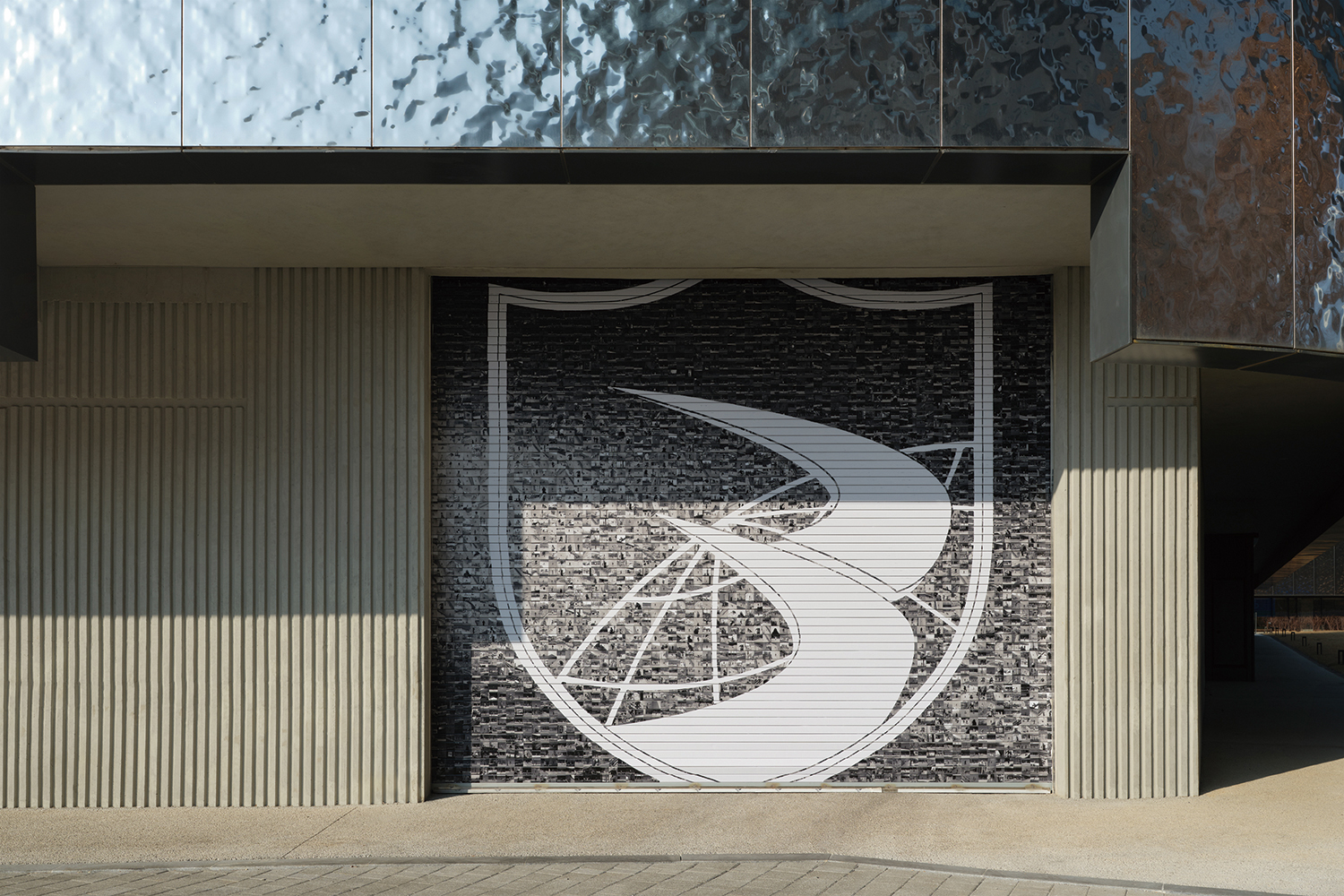
VNR, The Grand Tour-002, site-specific vinyl installation, 450 × 540cm, 2026. Installed on the shutter at the entrance to the museum’s loading dock, this work is a compilation of 10cm-square images selected from the archive of photographs taken during the museum’s construction, specifically those featuring people. The white motif in the centre represents the emblem of The 3rd Air And Missile Defence Brigade, which was stationed in the Geumcheon-gu area. Image courtesy of Seo-Seoul Museum of Art
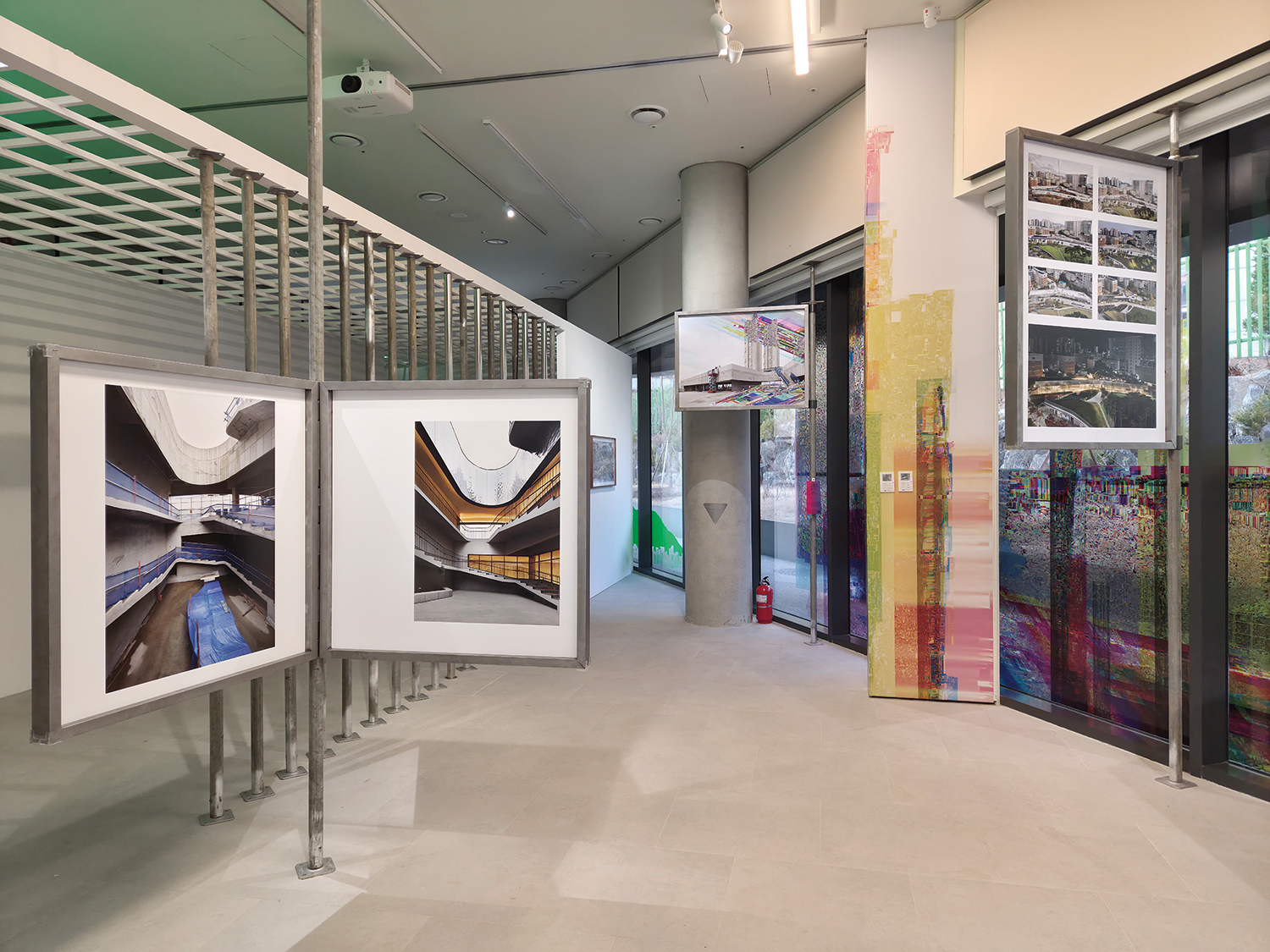
Installation view of SSMAP 2024‒2026 by Kim Taedong and VNR ©Bang Yukyung
‘The Museum of Everyday Life’ as Idea and Reality
The way this exhibition of construction records invites visitors to move inside and outside the museum can be taken as a strategic response to the museum’s spatial characteristics. Seo SeMA was built within Geumnarae Central Park, which was created after the relocation of The 3rd Engineer Brigade. The site is adjacent to a subway station and surrounded by the Geumcheon District Office, apartment complexes, and an elementary school, making it a bustling area with heavy footfall. The winning proposal of the 2020 International Invited Design Competition designed by THE_SYSTEM LAB (Principal, Kim Chanjoong) advocated for a ‘museum of everyday life’. The intention was to ensure that the park’s walking paths naturally connect to the museum’s interior. To appear less imposing, the building was designed with one above-ground floor and two basement levels to keep the height low, while the long, single-storey mass – which directly matches the flow of the walking paths – was designed to be traversed by various circulation paths that are connected to nearby walkways. As for its key feature, the lower façade of the first floor was entirely glazed, allowing locals walking in the park to view the artworks by looking down through the windows. Hwang Soo Hyun’s SE GYE, which was one of the performances presented as part of the special opening exhibition, made full use of these architectural characteristics. During the latter half of the performance held in the B1 exhibition hall, the screen covering the upper windows of the exhibition space – which was visible from the walking path – closed and opened to create a dramatic scene where the performers and audiences seem to transition from a space of darkness into reality.
While there were instances where the exhibition’s narrative and spatial design resonated well with reality, numerous points of divergence could also be found. In the case of the exhibition of construction records discussed earlier, visitors encountered various inconveniences when attempting to follow the exhibition route from the lobby to the outdoor space. This was because the route was too long and visitors were not provided with sufficient guidance to locate all the works scattered about the outdoor space. Standardised signage was installed for the works displayed outside. However, it was difficult to locate the signs, and with several pathways connecting to surrounding walkways, the intended viewing order of the works could not be grasped intuitively. Furthermore, unlike the relatively spacious basement, the first-floor lobby was excessively narrow, and because its space was partly shared with the adjacent café, it was confusing to determine the exhibition’s starting and end points. Due to such extrinsic factors that disrupted the ‘immersive experience’ of the exhibition, the exhibition of construction records – aside from the works concentrated within the indoor space (Studio 1) – did not come across as a single cohesive exhibition. Consequently, the connection between the works was severed, the narrative was prevented from expanding, and the exhibition was reduced to a ‘small exhibition’. Losing one’s way in a city, a park, or an art museum can be an exciting prospect that may lead to unexpected discoveries. However, there is a fundamental difference between deliberate wandering in search of discovery and actually getting lost. The lack of consideration regarding certain details, which should have been carefully examined from a visitor’s perspective when organising the exhibition that makes use of the space, was disappointing.
The limitations encountered across the exhibition site suggest several challenges that Seo SeMA must overcome to operate as a ‘museum specialising in new media art’. Above all, it remains unclear how the complexity of new media exhibitions will align with the museum’s vision of being a ‘public-friendly museum’ with low barrier entry. In a press release, the Seoul Museum of Art explained that ‘according to its collection classification system, new media encompasses artworks involving video, sound, and lighting, as well as performances, intangible conceptual art, internet art, coding art, and software-based works.’ This statement raises several concerns. For example, how can new media works – which rely on immersive experiences isolated from the outside world – be effectively presented in an open exhibition space? Will the glass walls, which are meant to remain visually unobstructed, end up being covered up with curtains or screens? Regardless, amidst the bustling scenes of children and adults mingling in the park and countless visitors passing through the walkways on the opening day, it was clear that the ‘museum of everyday life’ had already achieved half its success. It did not come off as an eye-catching and imposing building but as a familiar backdrop to a normal everyday scene in the park where people walk their dogs and catch their breath on the rooftop. Although the initial chaos from the opening exhibition still lingers, I hope that it will, with creative and appropriate practices, firmly take root as a museum of everyday life.
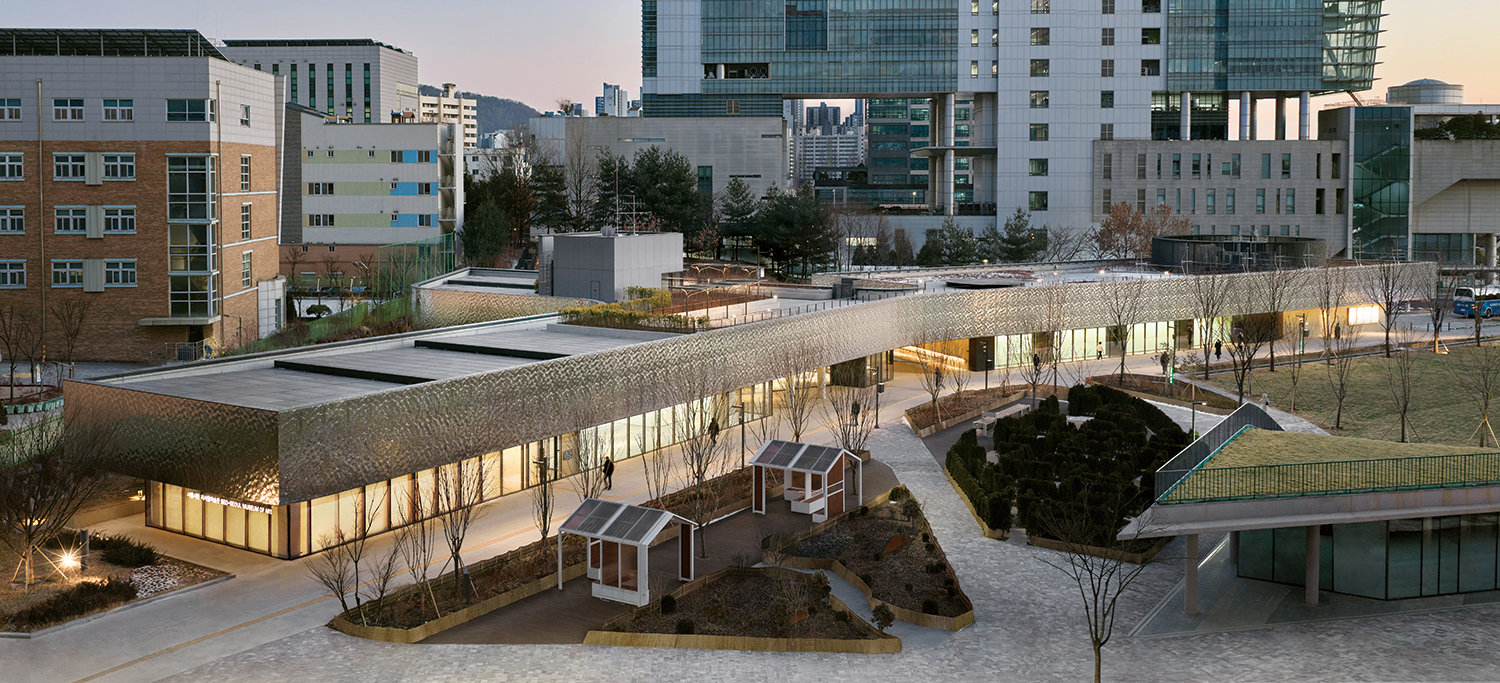
A photograph by Kim Taedong showing the completed Seo-Seoul Museum of Art. Image courtesy of Seo-Seoul Museum of Art / ©Kim Taedong
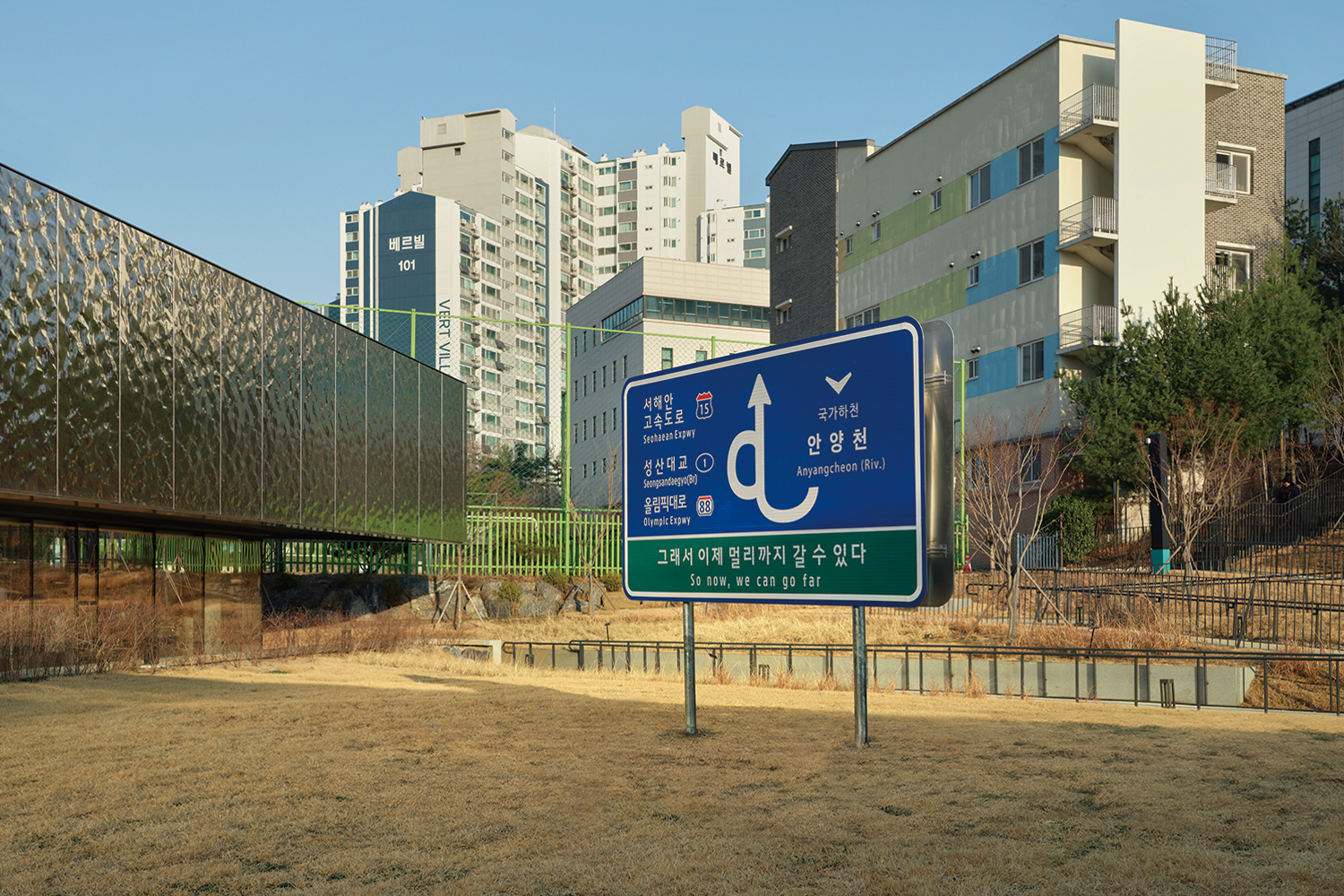
Illusion Sign_Anyangcheon by ContempoLocal is installed in the lawn courtyard. On the reverse side of this signbord is the phrase: ‘Here, we learned how to move slowly.’ Image courtesy of Seo-Seoul Museum of Art
_
1 Currently, only the Part 1 of the exhibition of construction records have been unveiled. In the Part 2, which will open on Apr. 28, the exhibition will be expanded to the basement level. The Part 2 will feature archival photographs of the construction process by artist Kim Taedong as well as an introduction to Carving of Conception Dream by Moojin Brothers who are currently involved in a local participation programme. The Seo-Seoul Museum of Art Inaugural Exhibition consists of three parts: following ‘Mnene Topos’ and ‘SeMA Performance: Breathing’, ‘The Transparent |Adolescent| Machine of Western Seoul’ will open on May 14.
2 VNR is a collective comprising Kim Taedong and Kim Chunsoo, whose practice bridges straightforward photography – which captures reality as it is – with experimental work that deconstructs and reassembles photographs. In Studio 1, works featuring photographs that juxtapose colour bands and distortions (glitches) created by manipulating the original data from the construction archive image, alongside works that extract only the glitch patterns and affix them to the glass windows, were exhibited with Kim Taedong’s photographs.