Regenerating the Future of Old Places: Lee Euijung
photographed by
Kim San (unless otherwise indicated)
edited by
Kim Hyerin
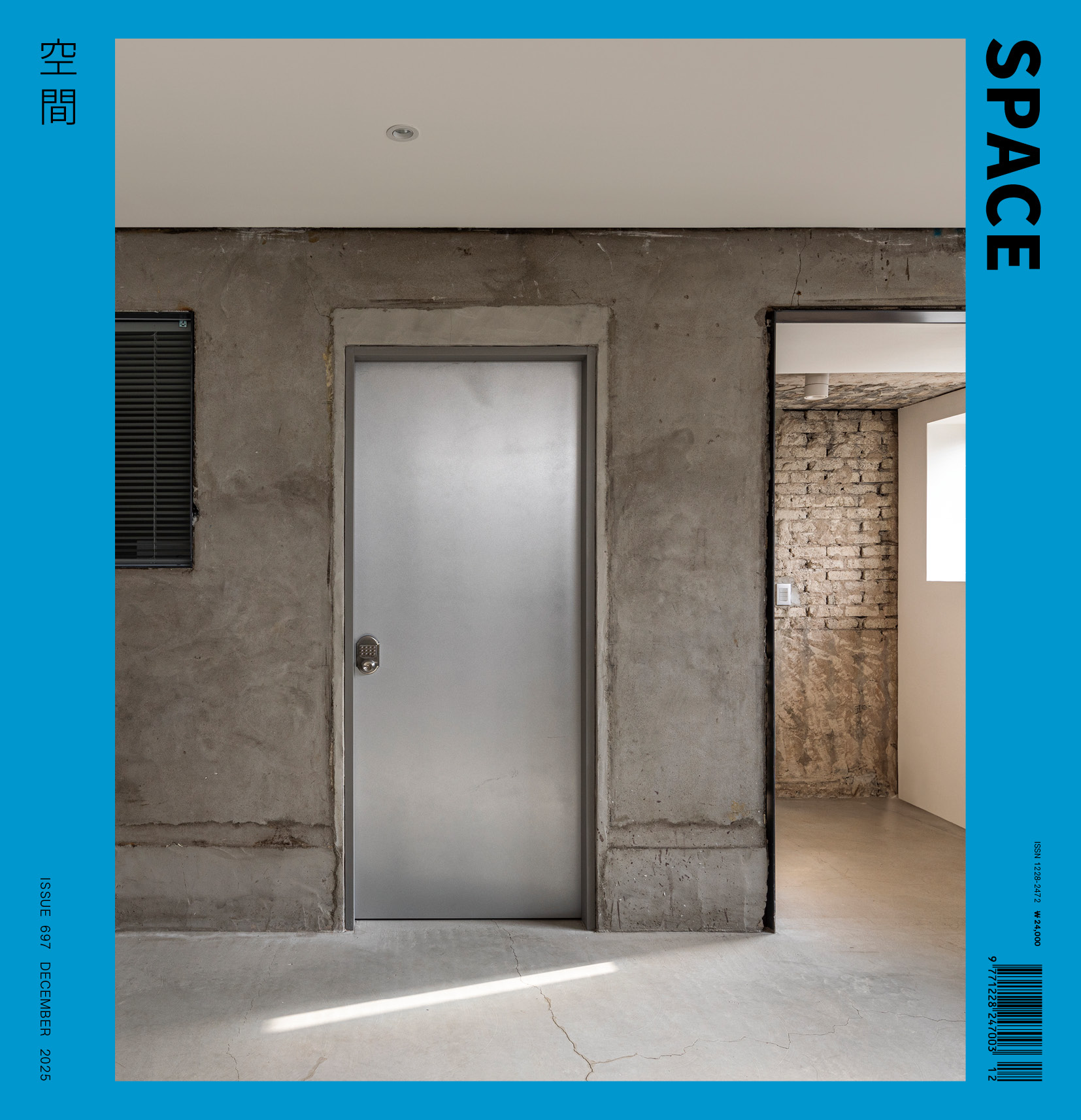
SPACE December2025 (No. 697)
I AM AN ARCHITECT ‘I am an Architect’ was planned to meet young architects who seek their own architecture in a variety of materials and methods. What do they like, explore, and worry about? SPACE is going to discover individual characteristics of them rather than group them into a single category. The relay interview continues when the architect who participated in the conversation calls another architect in the next turn.
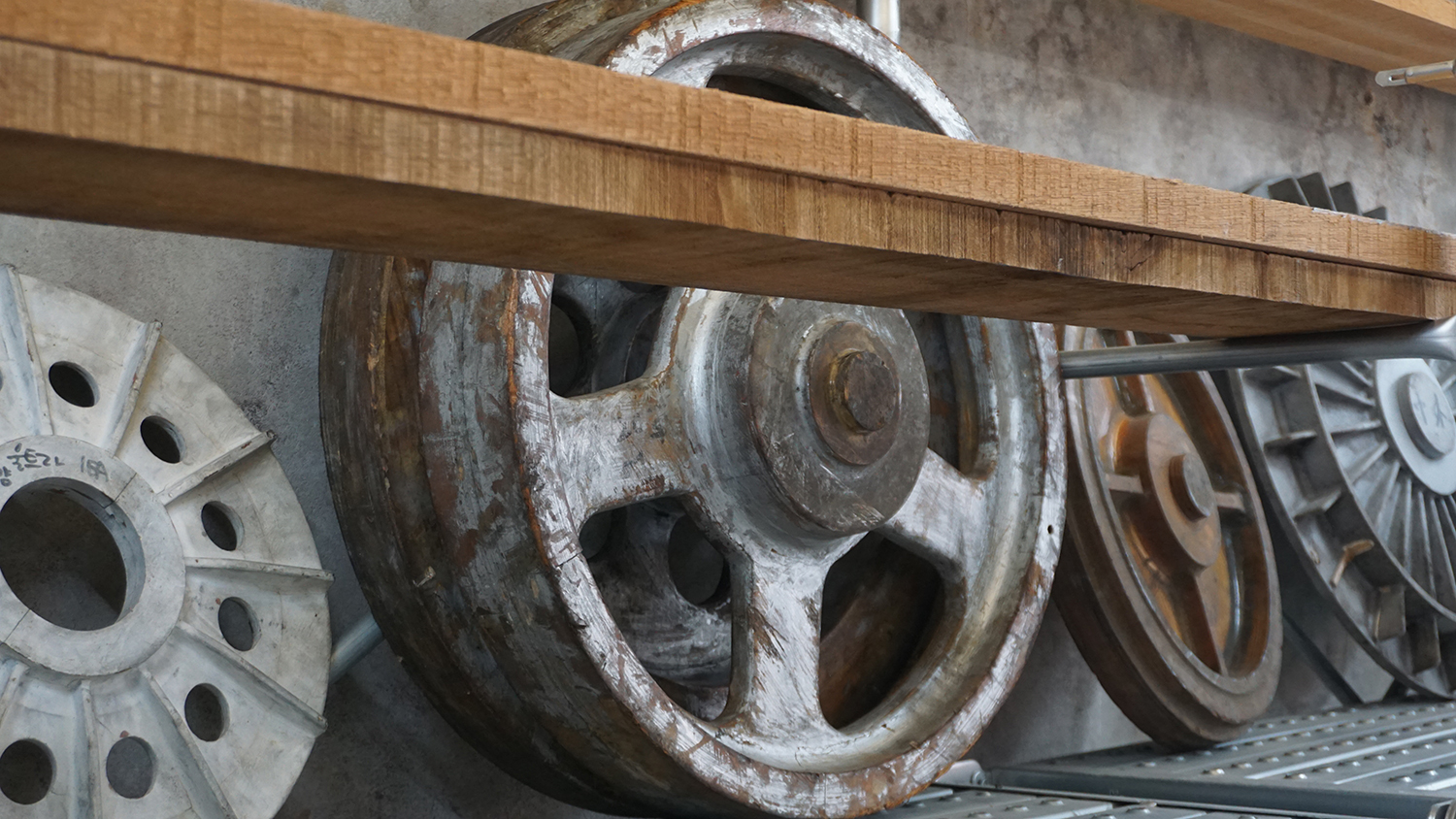
A wooden pattern used to cast the flywheel of a press machine, collected from the Samyang Holdings factory as part of the Bucheon Sosa industrial complex research activities.
interview Lee Euijung principal, Architectural Regeneration Studio × Kim Hyerin
Preserving the Traces of Time
Kim Hyerin (Kim): Your office is called Architectural Regeneration Studio. That is a very straightforward name! (laugh)
Lee Euijung (Lee): I studied architecture in Japan, and later practiced at Naramura Toru Architectural Studio, an office based in the Traditional Village Kurashiki. Local architects there had formed an association called the Kurashiki Architectural Studio. Also, many people are not familiar with the term ‘regeneration’ and often think of it simply as home repair. So, when I founded my own office in 2015, I wanted to convey the idea of refining architecture as one would craft a piece of art, rather than merely repairing it. That’s why I added the word ‘studio’ to the name.
Kim: What are the differences between regeneration architecture in Japan and Korea?
Lee: In Japan, it seems that sentiments and values held from the past have continued to the present day. Like Korea, Japan also faced the problem of decrease in population in old downtown areas due to rapid urbanisation during its period of high economic growth, but Japan’s architectural regeneration and urban revitalisation projects were not carried out only for economic reasons. There was a movement, originating from ‘folk art (mingei)’, to discover and promote the value inherent in each region, which gradually expanded to include architecture and urban revitalisation. These were citizen-led movements focused on what should be preserved and left behind in their own communities. Korea, on the other hand, as policies were largely initiated by the government, tended to be operated rapidly and systemically, more like an industry, without local engagement. As a result, it was difficult for conscious local residents to participate in meaningful ways.
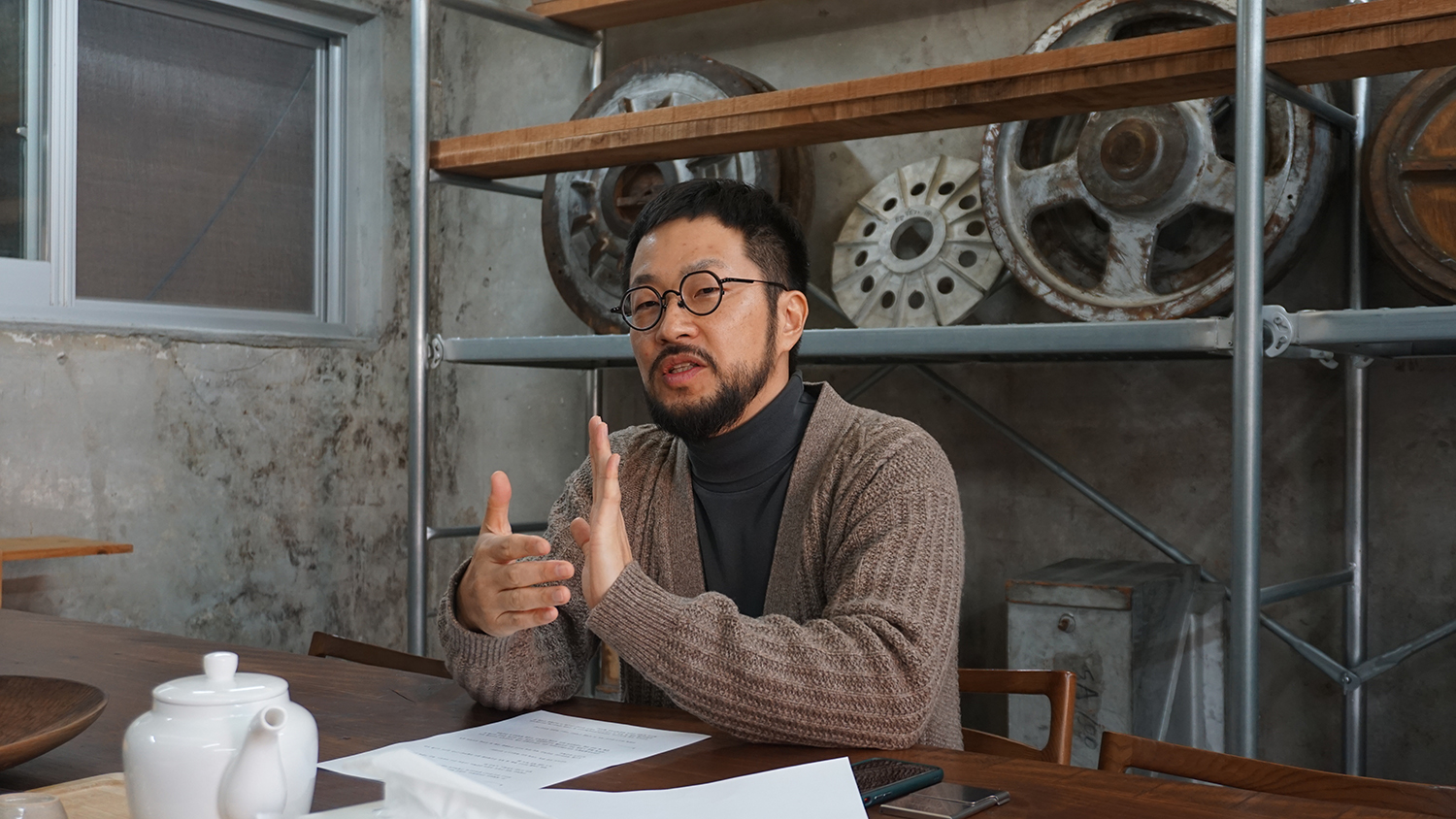
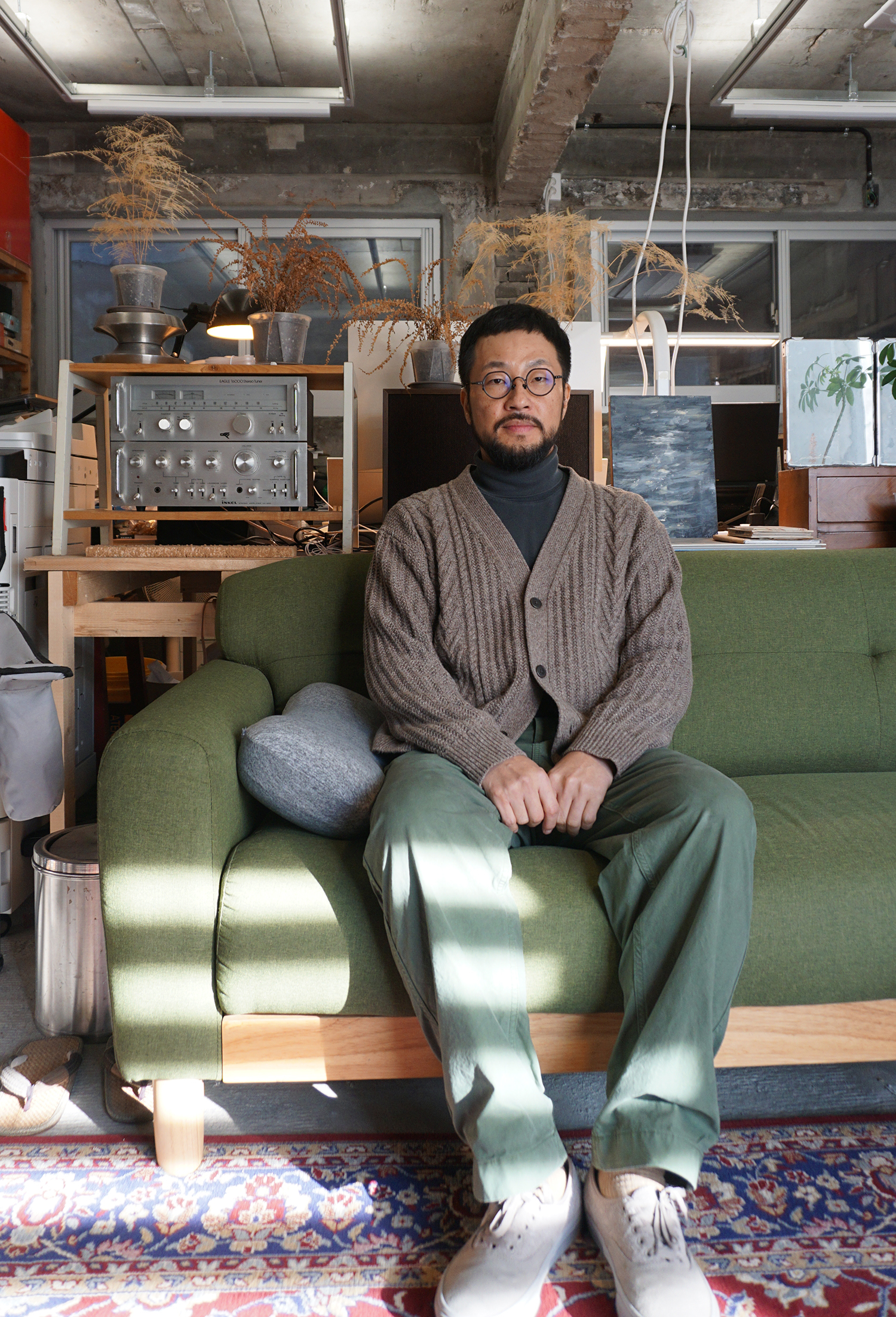
Lee Euijung
Kim: You’re interested not only in architecture but also in urban regeneration. Lee: I majored in preservation of architectural cultural heritage and traditional villages during my master’s studies. However, the way we handle cultural heritage typically involves restoring it to a certain point in the past. It’s rarely preserved as a livable or usable space, often ending up as something frozen in time. I started to feel that the architectural meaning fades away from that point. Personally, I believe that space loses its charm when the traces left behind by people living their lives are erased. Through practice, I learned how to design while preserving those traces, by repairing and working with old buildings. I was especially interested in wooden houses and structures; working on such old local buildings is not just about designing a single building. It connects with many other aspects. Most old villages are stagnant, have low activity, and feature aging populations. Through architectural projects, I observed how renovating buildings and introducing new content could revitalise neighbourhoods and reconnect people’s communities. This naturally led me to discover and participate in local preservation and research activities, as well as in the work of related to civic groups and NPOs. To truly revitalise a community, it takes more than a completion of a single building. It requires collective empathy, encouragement, and effort from people who care about the place. The term ‘regeneration’ has become popular recently, but what’s really happening is more like local revitalisation. My focus now is on how to approach that revitalisation architecturally, in ways that are suited to each region.
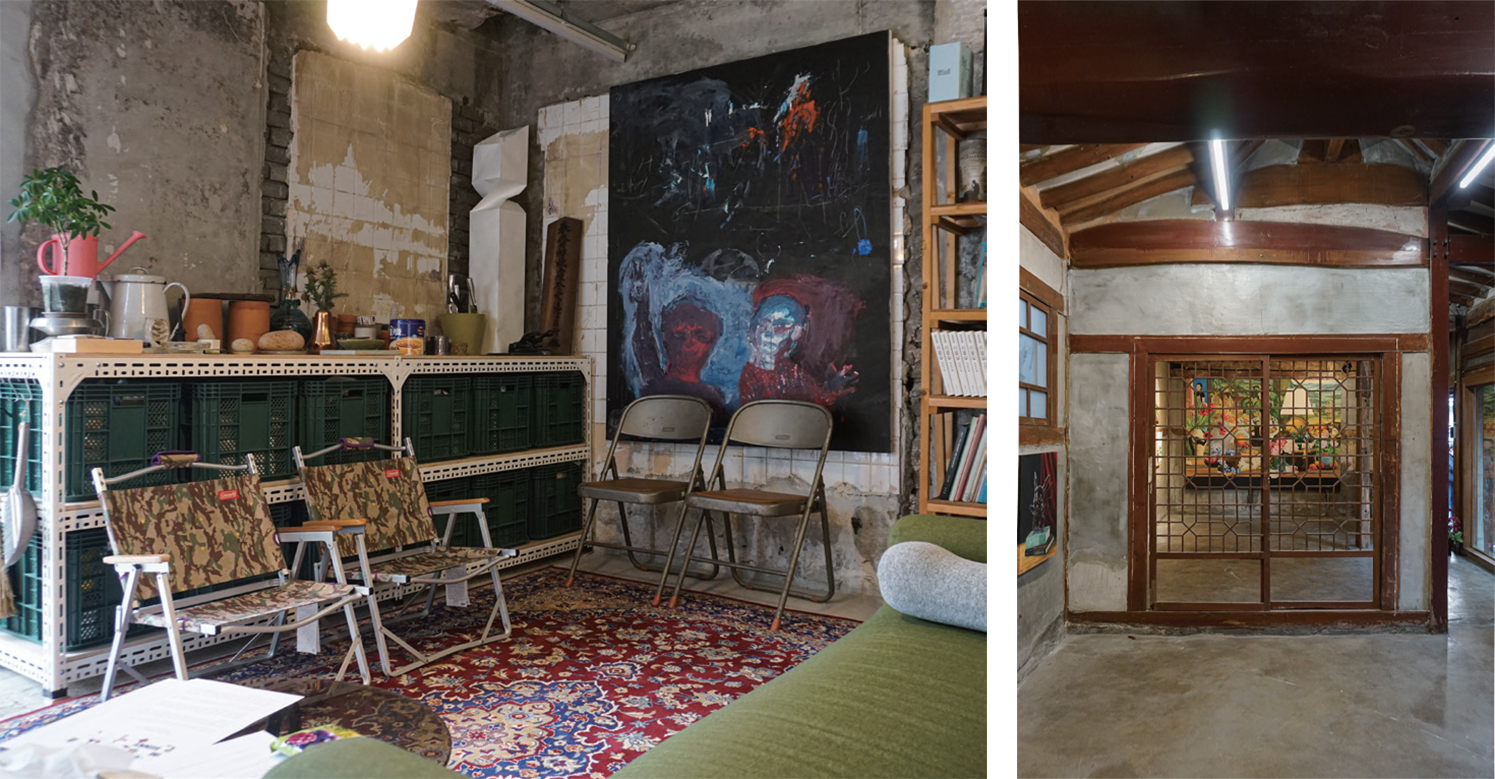
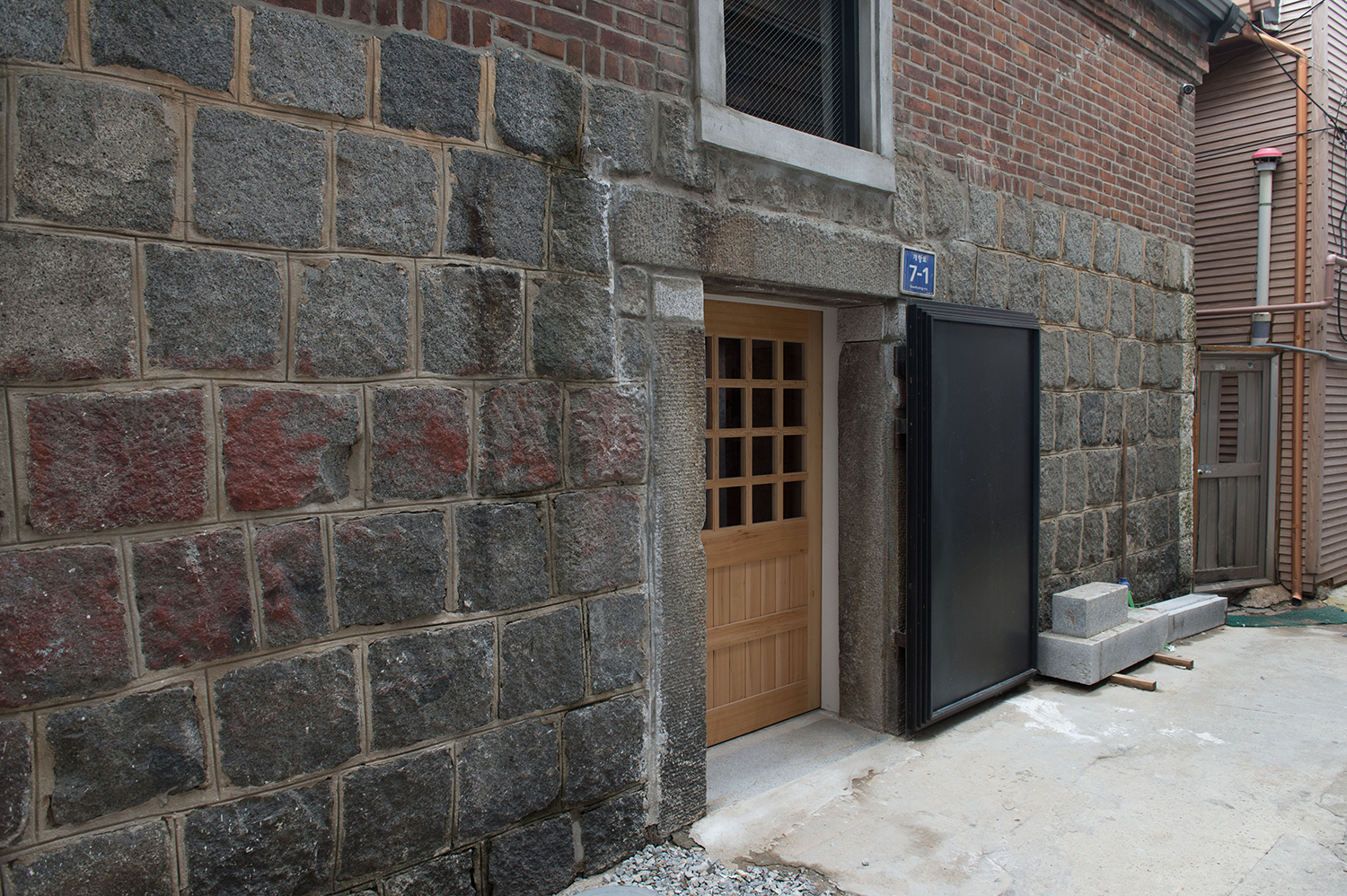
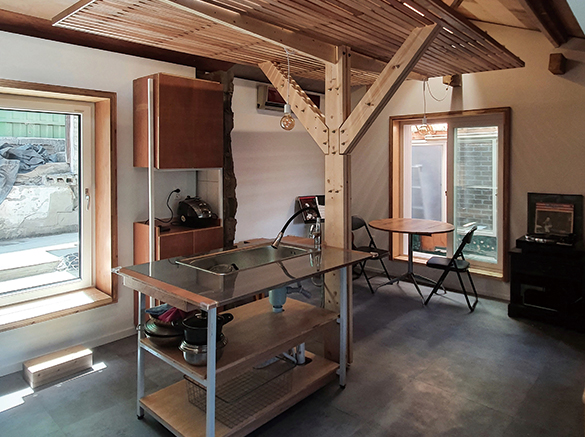
Office of Architectural Regeneration Studio(왼쪽), Exhibition space, Buyeon(2020, 오른쪽)
Discovering and Connecting the Value of a Place
Kim: You spent about two years working as a researcher on urban revitalisation and regeneration projects at the Korea Land & Housing Corporation (LH) and the Architecture & Urban Research Institute (auri). Was there a particular reason you chose this path before establishing your own practice?
Lee: Since my focus was on regeneration architecture, there weren’t many offices with which I was a natural fit. Still, I needed to work somewhere. While searching, I found that LH was just starting up its own urban regeneration projects. Later, I was involved in identifying and reviewing projects for old downtowns across the country, evaluating proposals submitted by local governments. This inadvertently gave me the opportunity to visit old downtowns all over the country. Through that process, I came to understand the kinds of projects each region wanted and their backgrounds.
Kim: You don’t have any personal ties to Incheon. What made you choose this area?
Lee: When I toured old downtown areas across the country as a researcher, I found cities that were much more attractive or promising than Incheon. However, I could see that those places would change very quickly, and in fact, they did become commercialised and rapidly transformed. Rapid change isn’t always bad, but, at the time, I wasn’t ready to jump in. From my perspective, you first need to understand the region, build relationships with local residents, and grow alongside the community in order to do regeneration architecture. But in many of those cities, everything was already being completed and neatly packaged before I could even begin to engage. From the outside, Incheon seemed slower to change in that sense. Also, old buildings are widely distributed not only in Dong-gu, Incheon where my office is located, but throughout the city, so I boldly decided to try working here, even without commissions.
Kim: There’s currently no official website for your office. How do your clients contact you?
Lee: I currently serve as a general coordinator (MP) for a regeneration project in Seo-gu, Incheon, and I’m also active in Gyeongin Collective. Through these various activities, people seem to reach out to me little by little. Also, the way I work requires a certain level of alignment with the client. Unlike new construction, there’s often a need to explain the process. Some think of repairs as making the space completely new, while others question why I leave traces of the old, or why I would spend money to preserve something that looks worn. To grasp why those traces matter, and how they can eventually give the building lasting value, I need clients who already have at least some understanding of regeneration architecture.
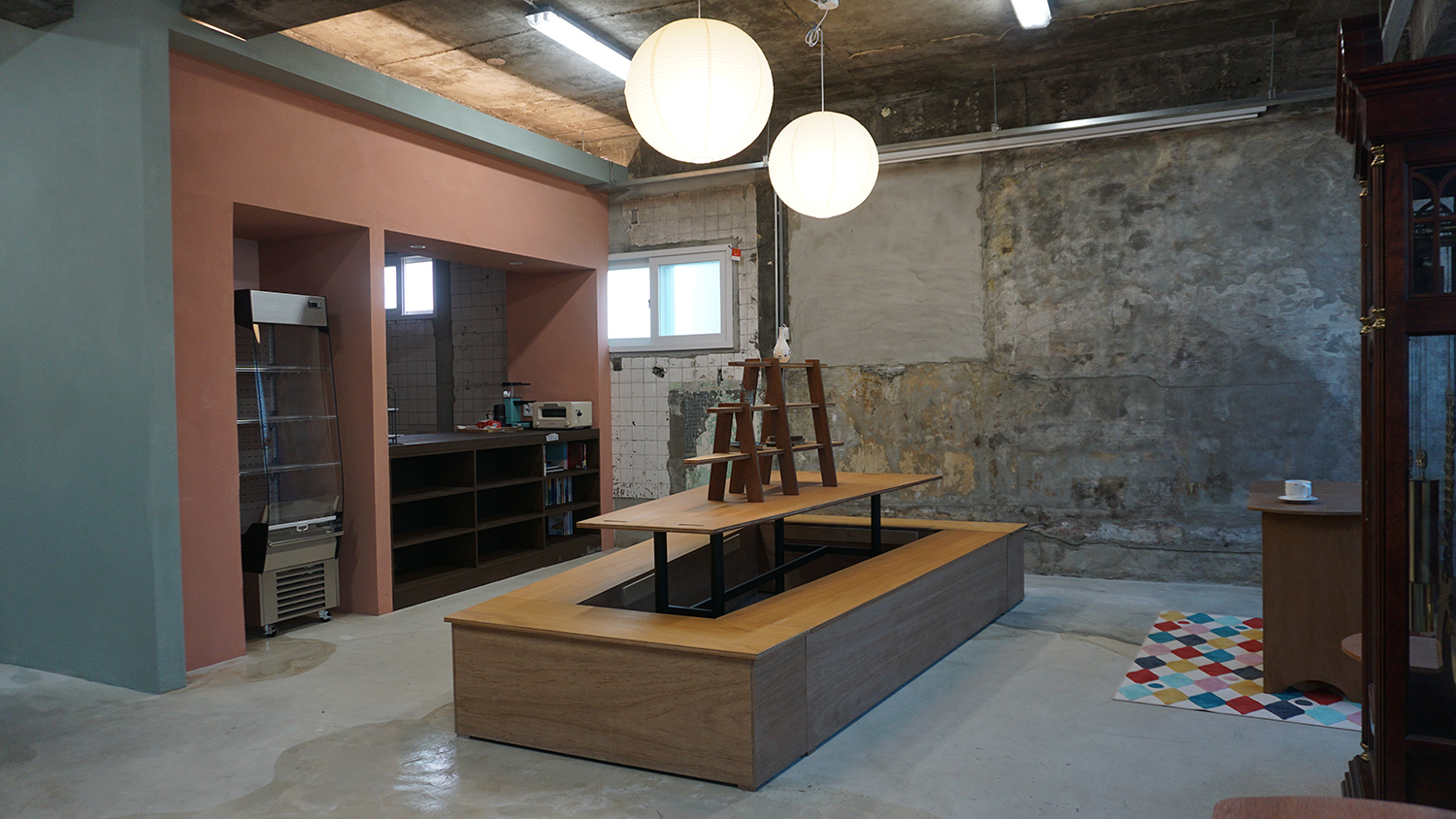
une véritable fantaisie (2025), the furniture shown in the centre is the ‘Hwasu flat bench’
Kim: What types of projects do clients mainly enquire about?
Lee: Mostly, I get enquiries about spaces that are hard to use or fix, such as old inns in narrow alleys inaccessible by cars, urban hanoks turned into garbage dumps in redevelopment areas, or spaces left neglected because they were deemed to have little cultural or heritage value. (laugh)
Kim: You opened your office in 2015 and still operate by yourself. Lee: My initial ambition was to have more staff members and
lots of projects. However, when you work on regeneration architecture outside of Seoul, people in the region usually think of it simply as home repair. To expand the size of the office, I would have to compete quantitatively with other local interior offices. I realised that would not be the way of doing the work I intended. So, I decided on working all by myself, which gives me more freedom to collaborate with people from other fields. I also archive, organise exhibitions, and publish.
Kim: How did you begin working with Gyeongin Collective?
Lee: My interest in local neighbourhoods led me to research and archive houses in certain neighbourhoods in my free time. I also documented old and demolished factories during that time. I wanted to share the memories of those spaces, so I contacted architecture collectives, but at that time, there weren’t many who were interested. So, I decided to start projects with artists I knew well. Since 2022, we’ve been researching, publishing, exhibiting, and archiving redevelopment areas and factories together.
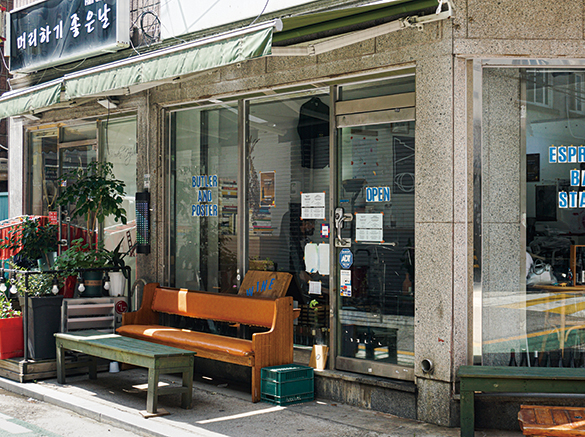
Exterior of Achive Café Bingo (2015), now operating as Backstreet 415
Rebuilding the Time of a Place
Kim: Tell us about the specific processes behind regeneration architecture.
Lee: Most old buildings lack drawings, and the structure goes through multiple alterations over a long period of time. To understand those layers of change, cultural and historical meaning, I begin by visiting a site. I measure the building and create drawings to analyse the space. Since I’m personally interested in the history of local areas, I also look for documents, old photographs, maps, and other non-textual records. In other words, I study not only space but the place itself. I try to incorporate these historical narratives into my design concepts. Another focus is aligning with the client’s direction and the purpose of the building, since the space needs to be used for a long time. I interview and discuss matters with clients to keep developing the designs.
Kim: What things do you pay particular attention to in regeneration architecture?
Lee: I try to be especially thorough about structural issues. In Incheon’s old city centre, there are many wooden buildings. When these wooden structures are remodeled, there are cases where the existing structure is ignored. Parts of columns are removed, and beams are cut. I investigate these conditions carefully and reinforce them where necessary. Also, modern heating systems, which are added later, often damage lower wood columns. If not reinforced and ventilated properly, it could bring problems later on. Also, in pre-modern wooden buildings, the structural system that supports the roof could be seen directly in the space—whether in the way the beams are arranged or by the columns themselves. I see that as part of the building’s identity. So, I try to avoid removing those elements for the sake of spatial or interior design. Whenever possible, I try to restore them in their original form.
Kim: When designing cultural spaces such as Archive Café Bingo (now Backstreet 415, 2015) are there particular aspects to which you pay closer attention?
Lee: Ultimately, these are spaces for people. I want visitors not just to see a ‘café’ or ‘bookshop’, but to sense the depth of local history and culture. In fact, the space should be closely connected to its context. In surveys and measurements, I examine not just historic features but also how the space lives on in people’s memories, and I try to capture those scenes.
Kim: What exactly do you try to capture?
Lee: In the case of Incheon Inn × Ruby Salon (2017), a renovation project of a 1960s guesthouse, the windows had been fitted with sheet films resembling stained glass. I could have replaced them with clean ones, but because I had interviewed people who remembered those windows, I decided to keep them. Even if a part of the building isn’t structurally important, I sometimes preserve the space for the sake of memory. The building’s original layout had a central corridor and small side rooms on the upper floors. I kept those spatial divisions to retain the character of the space. I also left elements like bathtubs to express the identity of the former inn.
Lee Euijung
Kim: What kinds of projects are you currently working on?
Lee: One recent project is une véritable fantaisie (2025), an independent bookstore and café. The client and their family have lived for a long time in the old downtown of Dong-gu. The building had an old pharmacy on the first floor and a residence above it, and they wanted to transform the second floor into a bookstore where people could gather. Because the client spent their childhood in this neighbourhood and their community is rooted here, I designed it as an open, neighbourhood-friendly space, almost like a local hub. With a limited budget, I designed and built the furniture myself, including the ‘Hwasu flat bench’ that can be used as both table and bench. I’m also beginning a new project involving the reuse of an abandoned factory. There are many factories on the outskirts of Incheon’s old downtown, and as various industries have shifted, many of them have become vacant. I’m preparing to regenerate one of those empty industrial spaces.
Kim: Do you have any plans to expand into other fields as well?
Lee: Inside and outside of Incheon, artists and designers tend to be the first pushed out of their workspaces. Their studios tend to emerge in affordable, easily accessible places, but those are also the places that turn into trendy places fastest and soon turn into commercial areas. Then, gentrification pushes them out. My work is about discovering places in which people can settle and prepare, or connecting those in need with new spaces and operating them. Under the name Juckso, meaning ‘a place that suits us’, I’ve worked this way for two years. I persuade d the owner of a house in a redevelopment area to let me clean and repair an abandoned house, transforming it into the Buyeon (2020) for exhibitions. The basement of my office building now runs as an exhibition space, Gongso (2024). I hope to develop more projects that allow people to directly inhabit and expand the potential of these spaces.
Starting in 2026, ‘I am an Architect’ will expand its recommendation system beyond the current relay format.
You can see more information on the SPACE No. December (2025).
Lee Euijung
Lee Euijung is an architect who views architecture not as mere spatial design, but as a cultural medium that registers the traces of time and people’s memories. As the head of Architectural Regeneration Studio, he focuses on regenerating and documenting modern and contemporary buildings and local architectural assets that are disappearing, mainly in Incheon. Through community-based initiatives such as Dongincheon Explorer, Gyeongin Collective, and Juckso, he continues to share the interpretive role of architecture with the communities who inhabit these places.