


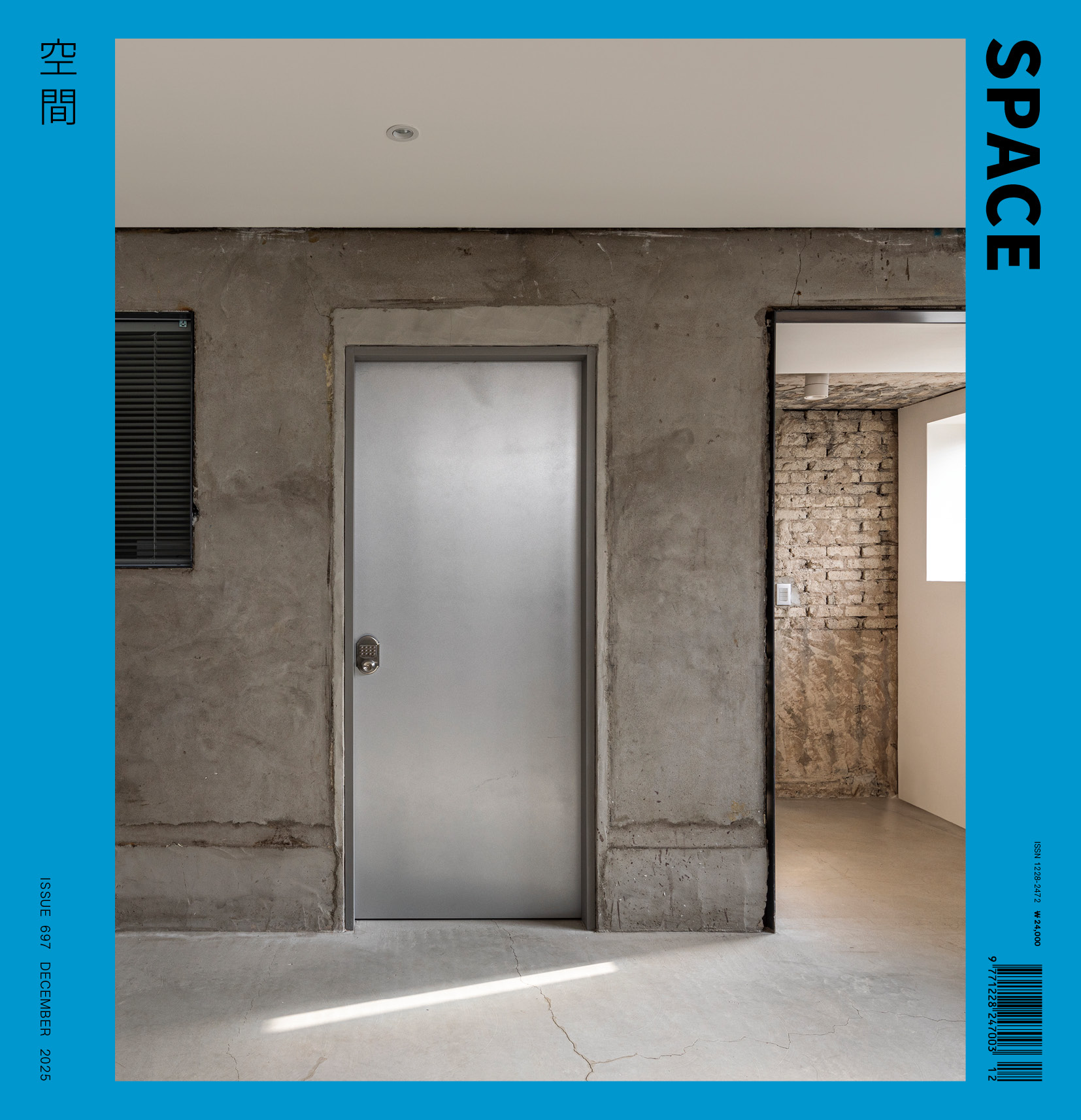
SPACE December2025 (No. 697)
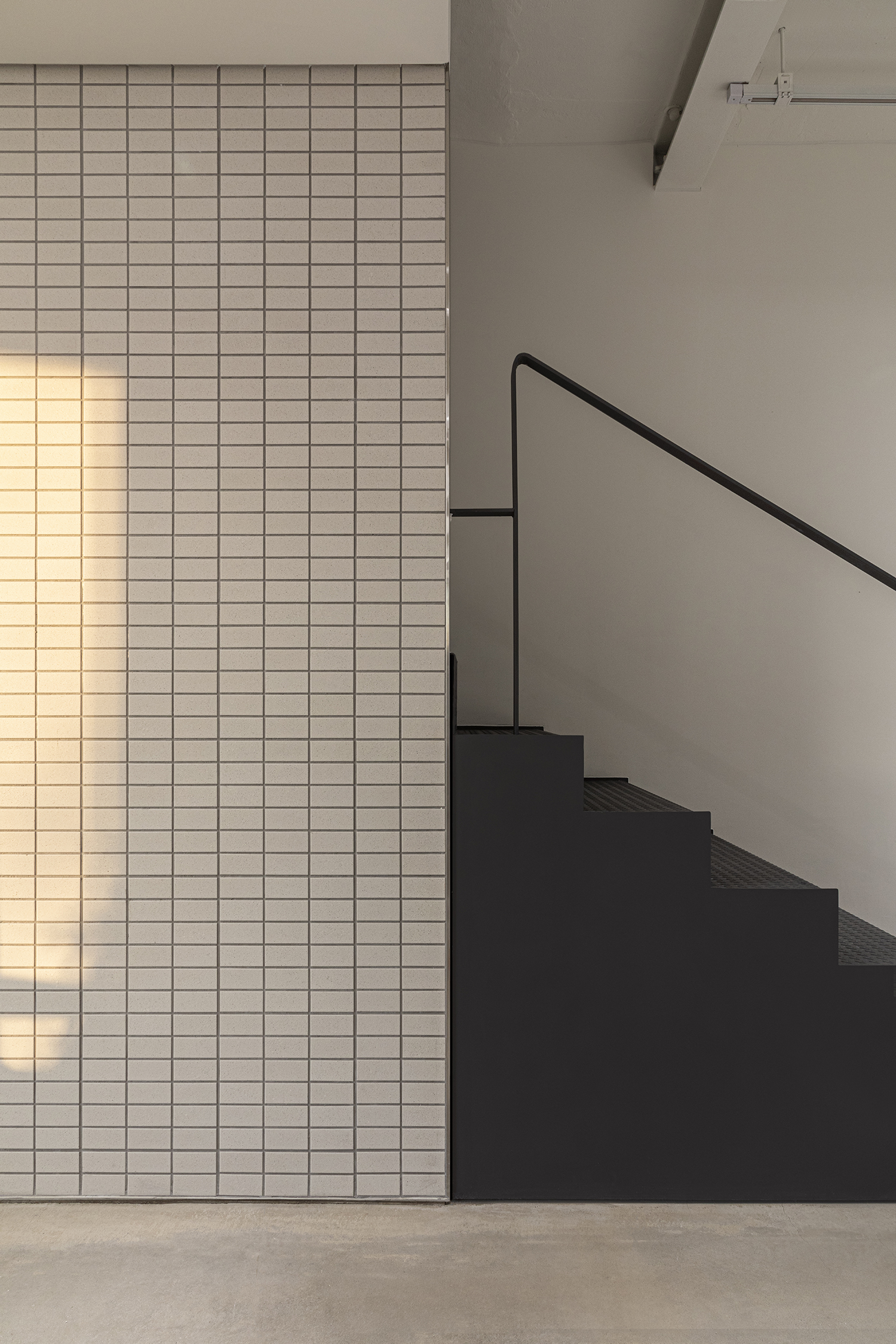
Slow Clay Studio(2024)
DIALOGUE Cho Yoonhee principal, GUBO Architects × Hong Jihak professor, Chungnam National University × Lee Sojin principal, Leeon Architects × Lee Joongwon professor, Sungkyunkwan University × Kim Jeoungeun × Bang Yukyung
GUBO’s Way of Working
Kim Jeoungeun: After returning from studying abroad, the two of you founded GUBO in 2015 and have worked together for a full ten years. I’m curious about how you’ve collaborated, whether your roles are distinct, and if there have been any changes in your responsibilities.
Hong Jihak: We usually manage to come to agreements well, so since the office opened, we have discussed every decision together. Designers tend to be independent by nature, but because I trusted Cho completely – enough to discard my own ideas if Cho rejected them – coordination was possible. When I joined the university, things gradually changed. Some office matters require immediate responses, so Cho mainly handles time-sensitive tasks, while I take on planning works that aren’t constrained by timing.
Cho Yoonhee: Nowadays, after Hong organises the planning in the early design stage, I mainly handle the execution and supervision to ensure it is realised well. Our tasks are separated, which reduces conflict.
Hong Jihak: Since Cho handles the challenging work on-site, I take a larger share of design competitions, whereas for private projects, Cho manages the post-delivery process.
Lee Joongwon: That might explain why, when asked to pick memorable projects at the end of the tour, your answers differed. Hong chose Sinteuri Playground, while Cho picked Slow Clay Studio. Each of you seems to value different aspects.
Cho Yoonhee: Hong particularly likes Eco-Space Yeonui and Sinteuri Playground from our joint projects. Perhaps he chose them because they realised the architectural order he values.
Hong Jihak: That’s an accurate analysis! I spend a lot of energy on the abstract, conceptual stages, so I care about the completion of that aspect. Sinteuri Playground was the project I worked on most intensively and also felt the greatest sense of accomplishment after completion. Unlike me, Cho interacts more directly with clients on site, so she tends to feel more attachment when the project’s dynamic energy satisfies her.
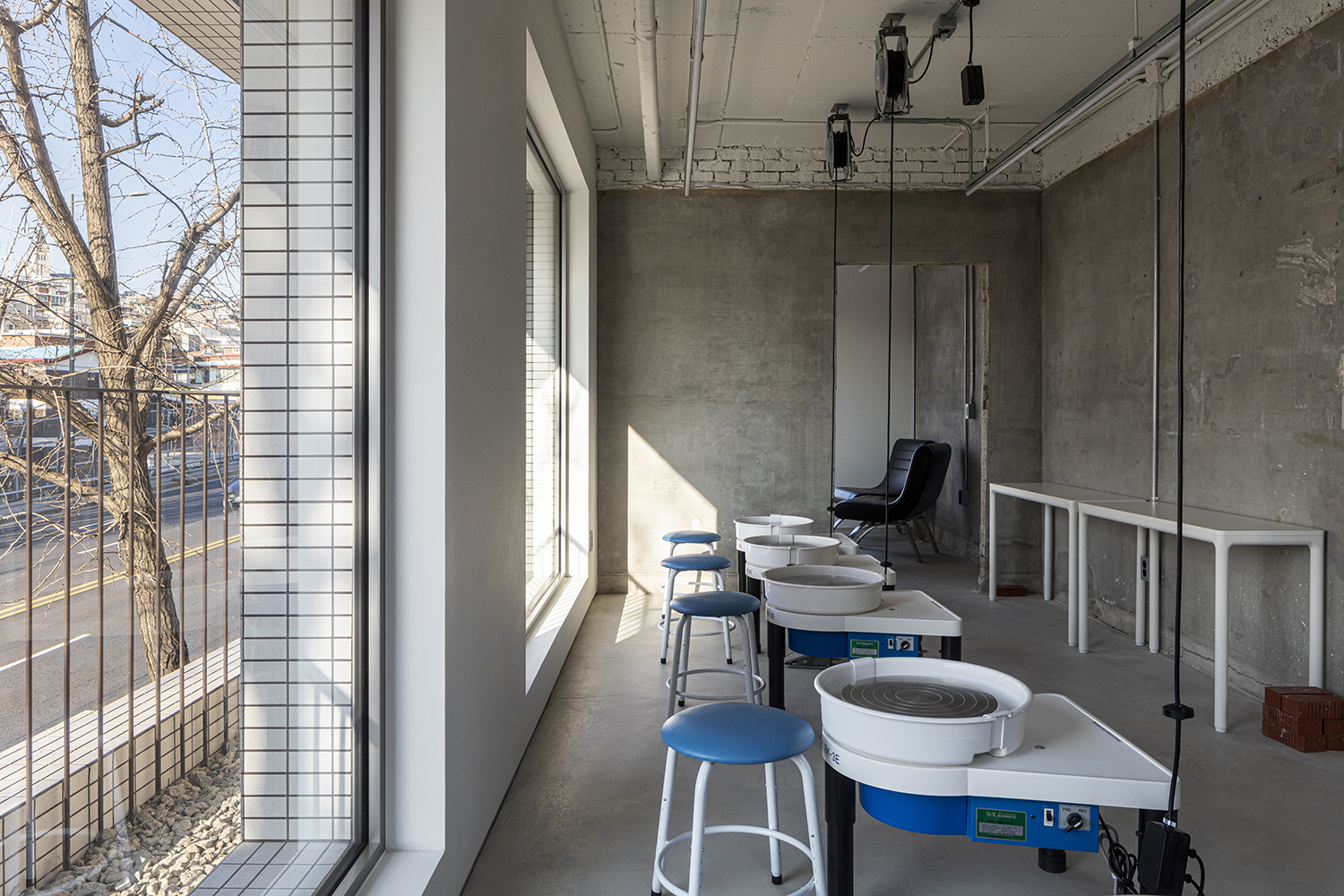
Slow Clay Studio(2024)
Kim Jeoungeun: The FRAME in the April 2024 issue featured GUBO, but during the recent site visits, I felt that the aesthetic, finishing, and logic of your buildings has developed a stage on from that point in time. Observing commercial-residential projects like Aurium suggests to me that there have been changes in design fees and conditions. I sense this even in recent works that balance public and private commissions—do you have a system for adjusting the ratio of public to private projects, or criteria for selecting which projects to take on?
Lee Sojin: Looking at myself and those around me, most firms tend to lean toward either public or private work. Striking an appropriate balance is really difficult, but GUBO seems to manage the ratio well.
Hong Jihak: In fact, this balance is the result of deliberate effort. Even when the office is busy with private projects, we intentionally participate in design competitions. What can be experienced in private projects is distinctly different from what can be realised in public ones. I always feel that if a firm specialises only in one area, it misses out on half of an architect’s capabilities. So even if it’s physically demanding, we stubbornly take on both.
Kim Jeoungeun: You previously mentioned that public projects allow for abstraction, consistency, and autonomy, whereas private projects are more tailored to the client. How do the outcomes differ between these two areas?
Hong Jihak: If a private project is ideally executed – meaning the architect retains decision-making authority – there are far more options available. The range of possibilities expands significantly depending on the architect’s intentions. Public projects, on the other hand, are constrained by specific criteria, the Public Procurement Service system, and predetermined budgets, while private projects have both lower and upper limits open. Public work is good for testing conceptual ideas, but it also requires adhering to standards—neither too much nor too little. Focusing exclusively on public projects can dull design sensibilities, whereas working only on private projects can trap one in repetitive routines.
Lee Sojin: I think it’s partly because GUBO’s private projects are mostly neighbourhood living facilities. (laugh) It’s hard to generalise.
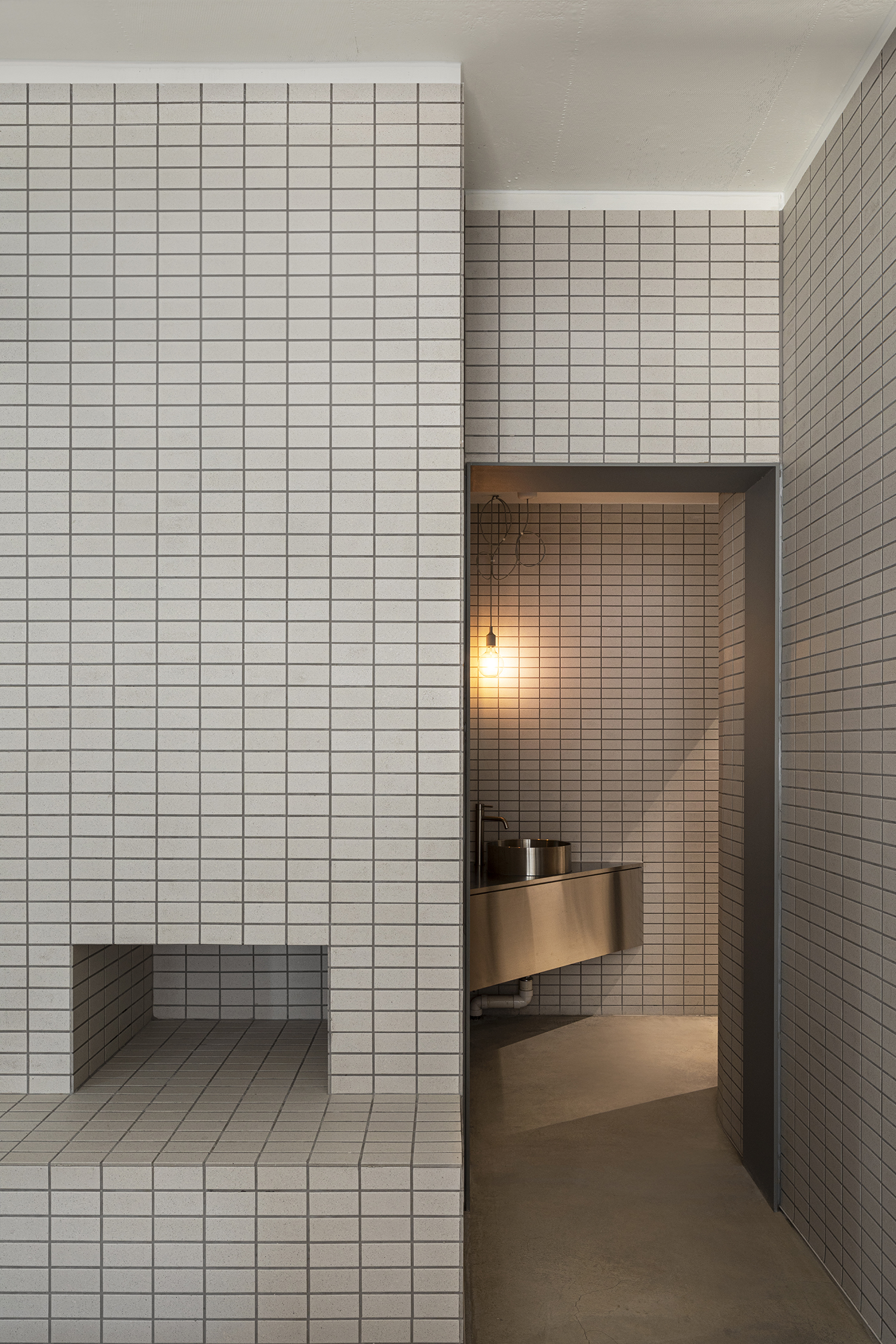
Slow Clay Studio(2024)
Kim Jeoungeun: You compare public and private projects—what does GUBO consider to be the value of public architecture?
Cho Yoonhee: When thinking about what constitutes good public architecture, I also feel it’s somewhat unfair to place the responsibility for less successful public projects entirely on the architect. Contemporary Korean architects are trained and can be said to carry a certain DNA of public-mindedness. Yet the process of selecting designs through competitions and then realising them remains unchanged. If the system itself doesn’t change, no matter how good an architect’s ideas are, it’s just like repeatedly trying to break a rock with an egg. I tell my staff, ‘Let’s keep going out and fighting,’ but in reality, those who go end up returning almost like bloodied, defeated soldiers. As my team puts it, ‘You never gives us any weapons, yet always tells us to go fight.’ But the truth is, I don’t know any other way—I’m out there on site, fighting and struggling with them myself.
Hong Jihak: I would add that using well-made public architecture is important, but the act of creating it collaboratively with public funding and multiple stakeholders is equally crucial for the city. The process of making public buildings must be healthy and enjoyable to anticipate meaningful change.
Cho Yoonhee: In Korea, clients are overly obsessed with procedural fairness, often sacrificing the quality of the results. To allow more people to enjoy and experience better public architecture, fundamental changes are needed in both project commissioning and the overall system.
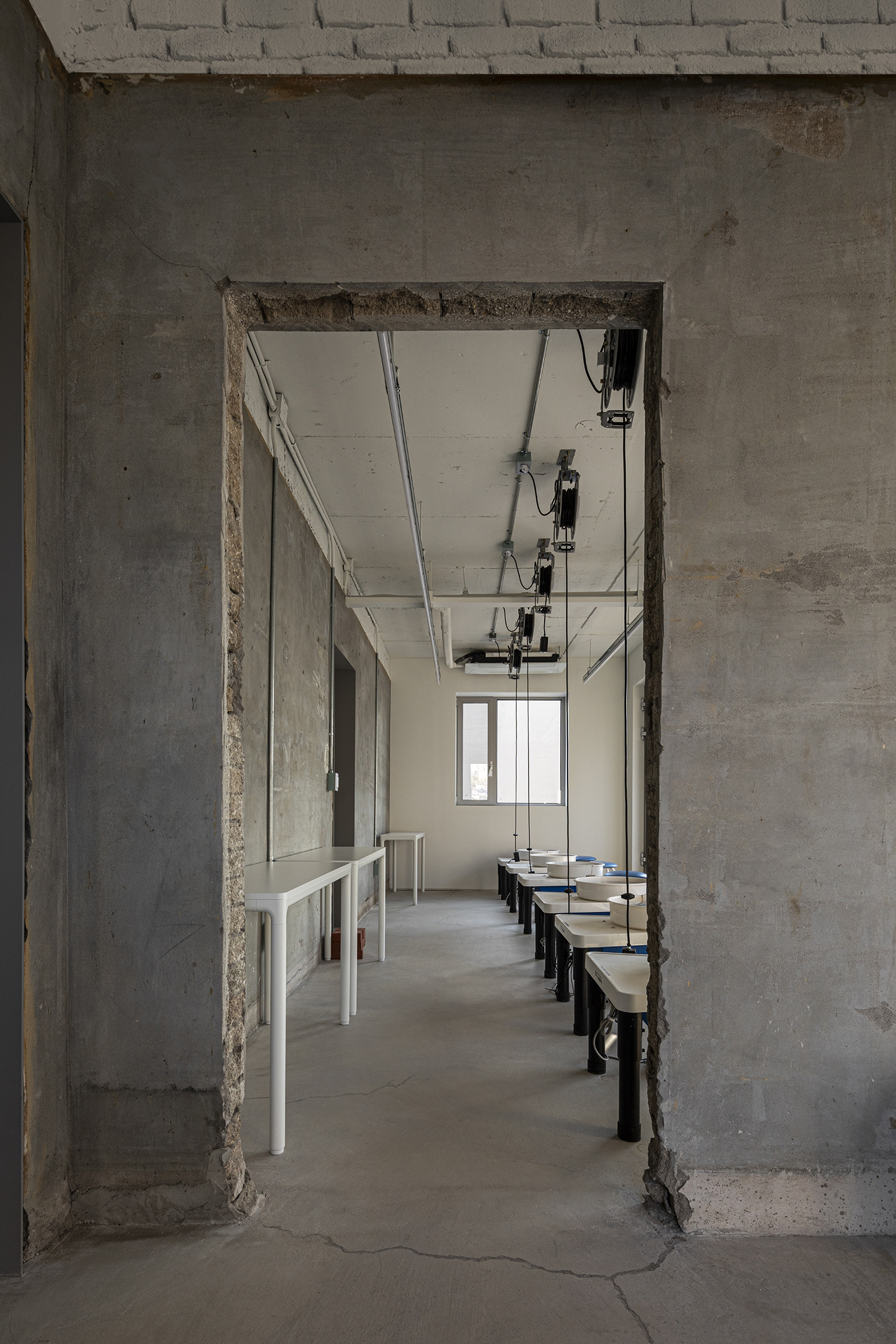
Slow Clay Studio(2024)
Bang Yukyung: I imagine you, Lee Sojin, also have thoughts on public architecture as a senior figure. You must have had many experiences where things didn’t turn out as intended.
Lee Sojin: I’ve lowered my expectations regarding construction outcomes. Seoul is still manageable, but the situation becomes serious in the provinces. Precision aside, construction often proceeds without even referring to the design documents, making the drawings practically useless. With public architecture, I can’t immediately change anything by myself, so I have to take the long view. Above all, establishing good precedents is the most important thing in public projects. Meeting a capable contractor, creating a strong precedent, and using that as a basis for someone else to improve—that’s how progress happens. That’s why, in each project, I aim to accomplish just one additional thing. The quality of smaller public architecture that people experience daily should improve, not just large-scale projects funded with substantial public money. Only then will citizens feel pride, because public architecture is a measure of a country’s cultural level.
Cho Yoonhee: Even in private projects, we’ve attempted various challenges—interacting visually with the city, donating land, physically connecting circulation paths. But now, I think we interpret publicness differently. Constructing one proper building that doesn’t cause nuisance could also be seen as practicing publicness—like the ‘urban alley evangelism’ Lee Joongwon mentioned.
Lee Joongwon: It’s an expression I used in a book some time ago, meaning that if you construct a new building well, it’s like laughter spreading—the surrounding buildings improve as a result. I’m grateful to be mentioned in this way.
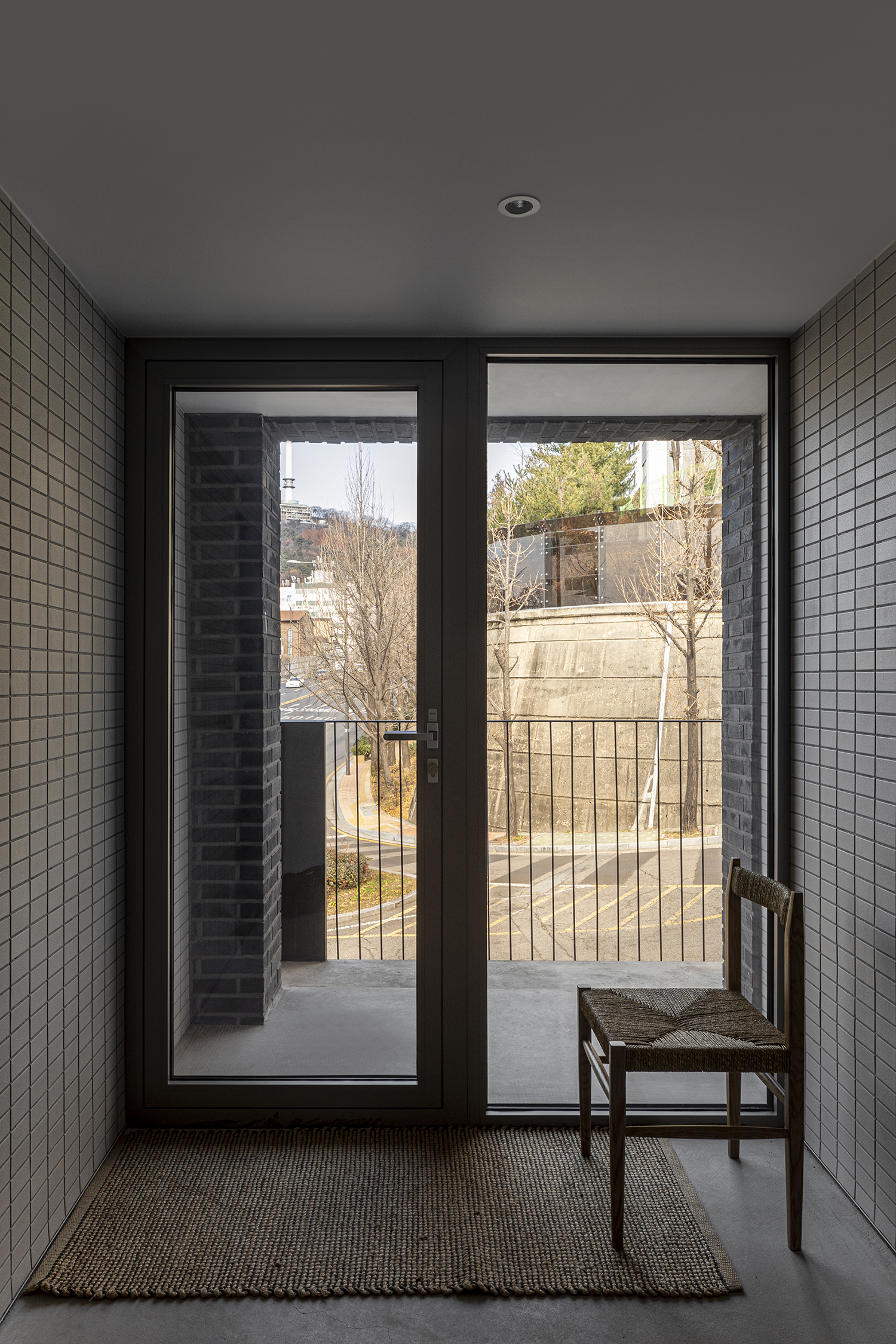
Slow Clay Studio(2024)
Loose Precision
Bang Yukyung: During the tour and preparing this discussion, I reflected again on GUBO’s idea of ‘Loose Precision’. It seems to remain an important theme for you. What was the issue or awareness behind it at the time?
Cho Yoonhee: We used that expression because, in trying to ensure that both private and public projects were constructed according to the design, we eventually reached our limits. Some things are inherently uncontrollable, and our attempts to control them became frustrating. So perhaps we need to let go of the desire to control everything. If things cannot be controlled, what should we do instead? That was the question we were asking ourselves. It was an acknowledgment that while we pursue precision, circumstances in execution inevitably lead to some looseness.
Lee Joongwon: If something cannot be controlled, does that mean precision must also be sacrificed?
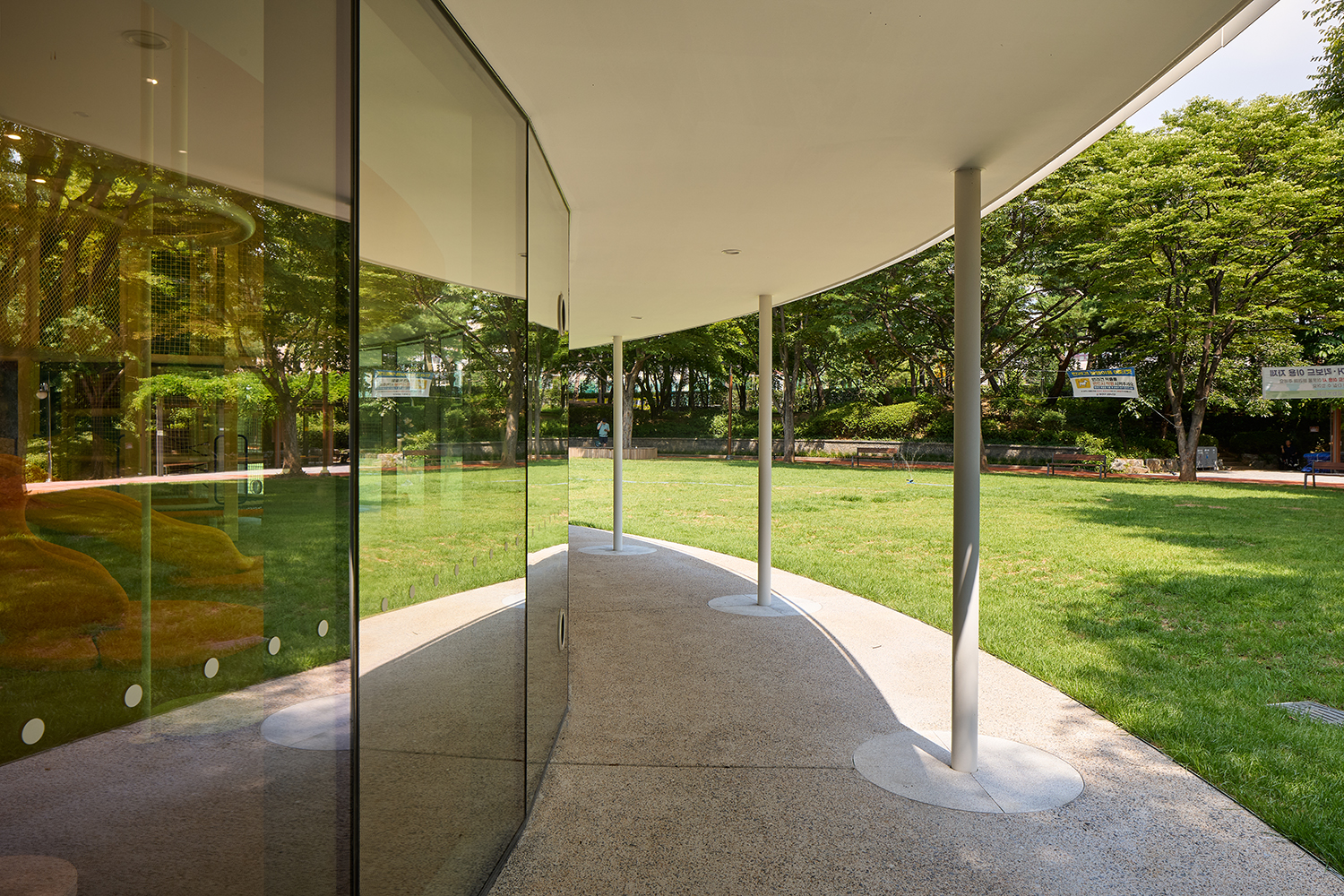
Sinteuri Park Indoor Playground(2025) ©Roh Kyung
Kim Jeoungeun: Reflecting on that essay, several questions came to mind. Exceptional craftsmanship is not the ultimate value, so what is the goal or value we aim for through ‘loose precision’? In the Korean construction system, what architectural value lies in an attitude where the architect pursues precision but does not attempt to control everything, allowing for some margin of error? Is this an attitude meant to navigate the Korean context, or could it be elevated into a key concept that our architecture should aspire to? Perhaps the answer lies not with the architect but with the critic.
Hong Jihak: I think this discussion relates to generational discourse. For earlier generations of architects, like the 4.3 Group, debates about the conceptual meaning of architecture and its social impact were important. We seem to have more freedom in that regard. If the imperfect system in which our architecture is produced can itself be considered a form of ‘Koreanness’, then the question of how to practice architecture under these conditions is a shared challenge for our generation.
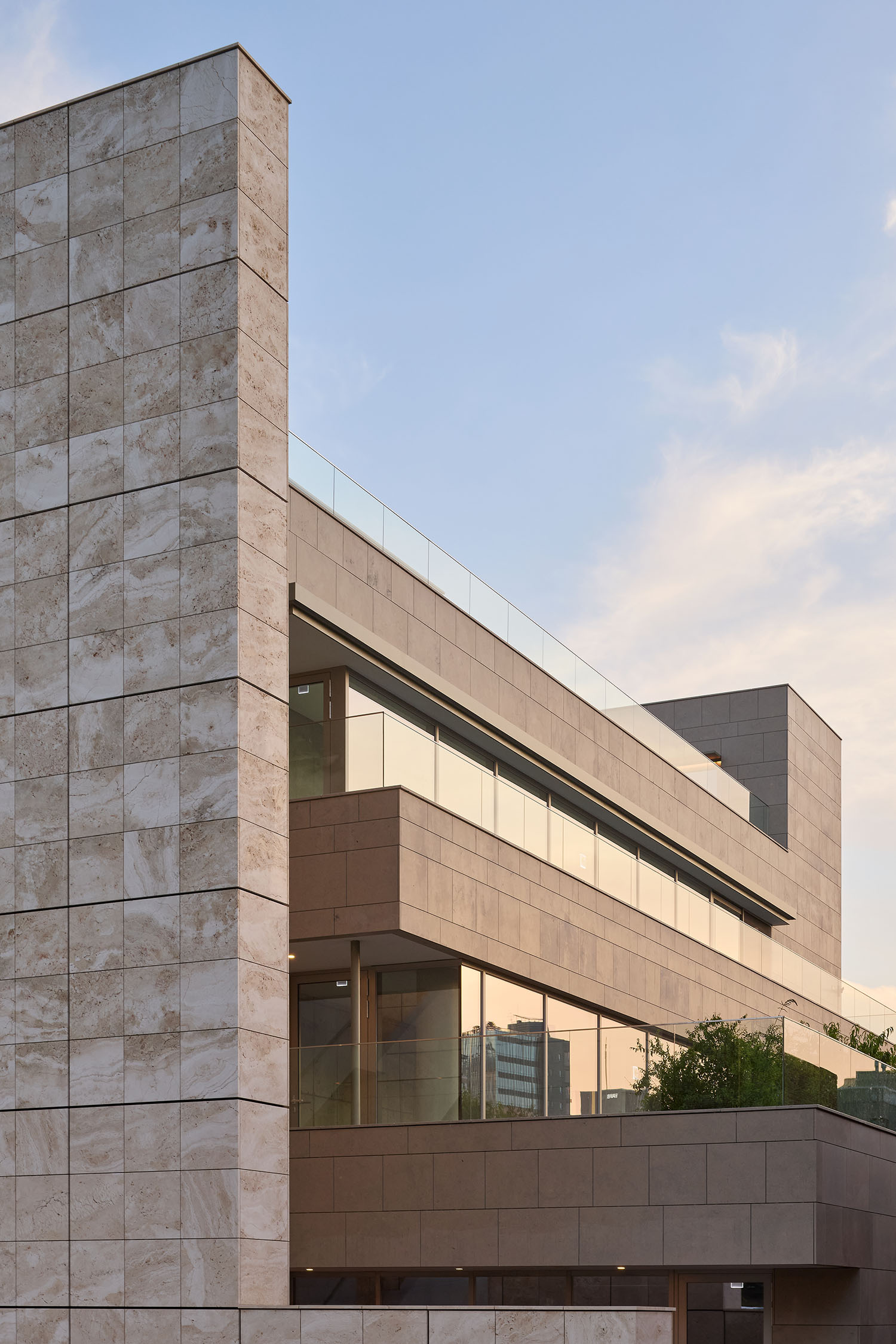
Aurium(2025) ©Roh Kyung
Ten Years and Beyond
Kim Jeoungeun: Since we’ve heard about the path you’ve taken so far, I’d like to ask about your future plans. I’ve also heard that you want to expand the firm—what kind of future is GUBO preparing for?
Hong Jihak: We currently have 11 staff members, and with the new hires coming soon, that will bring us to 13. Lately, running the office has made me realise why there aren’t many ateliers of 13 – 15 people. To control project quality in an atelier system, the principal has to oversee everything personally, which naturally limits the number of projects that can be handled. Ideally, each project team would consist of 3 – 5 people to allow direct communication with the principal. But if we increase the number of projects, the system would need to change, adding middle managers between the principal and the staff. As the size grows, the type of clients we deal with would also change, and to maintain proper control, the firm would need to scale up to 20 – 30 people. Right now, we’re at a crossroads: should we grow to 30 people, where the principal’s role shifts, or stay small? At the same time, I’ve wanted to experiment to see what kinds of projects are possible at this size.
Kim Jeoungeun: What kind of work could you handle with a team of 15 people?
Hong Jihak: It would allow us to take on large-scale projects in an atelier-style setup. It’s a sort of ‘two-pronged’ approach—we’re considering creating an organisation that can simultaneously manage smaller projects and larger corporate-scale projects.
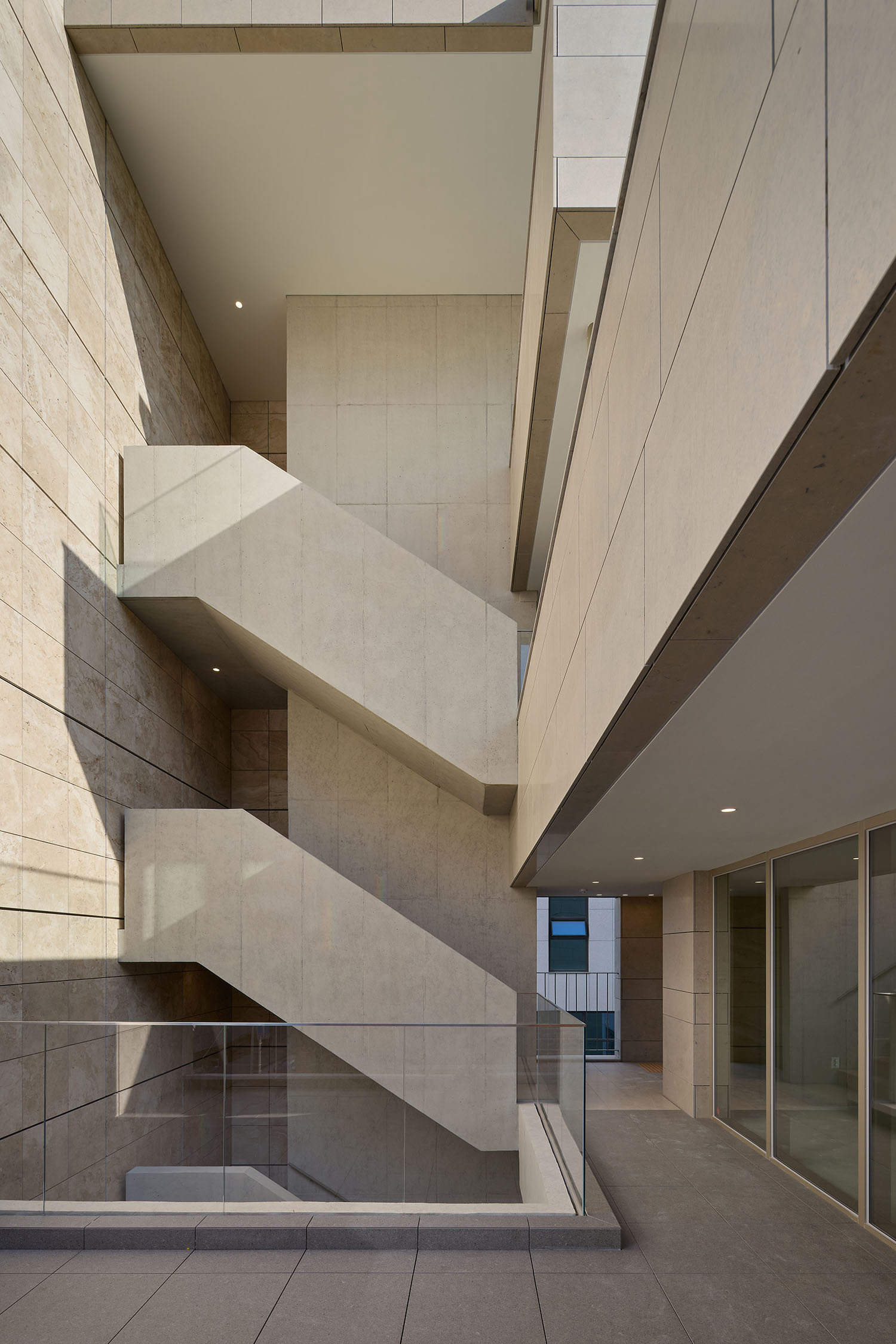
Aurium(2025) ©Roh Kyung
Kim Jeoungeun: Cho, you mentioned wanting to grow the team. Are you considering changes in project types, clients, and the principal’s role as well?
Cho Yoonhee: I believe increasing staff is necessary to handle projects of varying scale. We didn’t refuse incoming work, and the workload grew. At some point, I felt quality control wasn’t sufficient. Chasing construction sites and handling aftermaths prevented me from investing enough time in design—a vicious cycle. What I care about more than size is how to build and lead a healthy design team. My dream is to create an architectural design collective where people enjoy working together, produce excellent architecture, and receive appropriate rewards. Even now, when I seek advice on office management, I contact Lee Sojin. I’m deeply impressed by the way she focuses on people, not just work. I feel she operates on a different level.
Hong Jihak: Lee Joongwon was a mentor and support when we returned to Korea and started the office. Through this discussion, you has asked us to address incisive questions about our work, giving us a chance to reflect. We’re grateful for that opportunity.
Lee Joongwon: Congratulations on GUBO’s 10th anniversary. I’m genuinely looking forward to the next ten years.
You can see more information on the SPACE No. December (2025).
Cho Yoonhee
Cho Yoonhee has been working in architectural design since she co-founded GUBO Architects in 2015. After graduating from the Department of Architecture at Seoul National University and MIT, Cho built her career at IROJE architects & planners in Korea and Höweler + Yoon Architecture in Boston, U.S. Cho’s interest lies in building urban cities from the pedestrian perspective of an average person. She has worked as a Public Architect for Seoul Metropolitan Government and won the Korean Young Architect Award organised by the Ministry of Culture, Sports and Tourism in 2021.
Hong Jihak
Hong Jihak, after periods of research and building his career at SAC International, HAEAHN Architecture, and Center for Advanced Urbanism (CAU) at Boston, co-founded GUBO Architects in 2015. Hong studied Architectural Urbanism at MIT and received his PhD on the theory of Architectural History at Seoul National University. Hong is currently working as an Associate Professor in the Department of Architecture at Chungnam National University.
Lee Sojin
Lee Sojin, architect and urban designer, graduated from the Department of Architectural Engineering at Yonsei University and continued her studies at UPA 7 (Paris, Tolbiac). Lee’s first professional experience was at the Renzo Piano Building Workshop, and she has completed a wide range of architectural and urban planning projects of various scales under the mentorship of her partner architect Yves Lion for 10 years since 1997. Lee now works as the Principal of Leeon Architects. She served as the appointed Public Architect of Seoul Metropolitan Government (2012 – 2016), and has received the Korea Young Architects Award (2012) and the Grand Prize (2014) and Excellence Prize (2022) in the Seoul Metropolitan Architecture Awards, along with numerous other public architecture awards.
Lee Joongwon
Lee Joongwon is a Professor in the Department of Architecture at Sungkyunkwan University. He serves as the President of the Korea Association of Collegiate Schools of Architecture and is a partner at iSM Architects. His major publications include What makes us Happy at the Apple Store? (2025), Story of Seattle in Seeing Architecture (2025) and he has authored six other books.
7
FRAME
Dialogue
GUBO Architects
Cho Yoonhee
Hong Jihak
Lee Sojin
Lee Joongwon
Sinteuri Park Indoor Playground
Bathhouse Iljuk
Slow Clay Studio
Aurium
public architecture
neighbourhood living facility
remodelling
precision
looseness
abstraction
concreteness
geometry
proportion
order
management
reality