SPACE February 2026 (No. 699)
Interview Søren Pihlmann Principal, pihlmann architects × Park Jiyoun
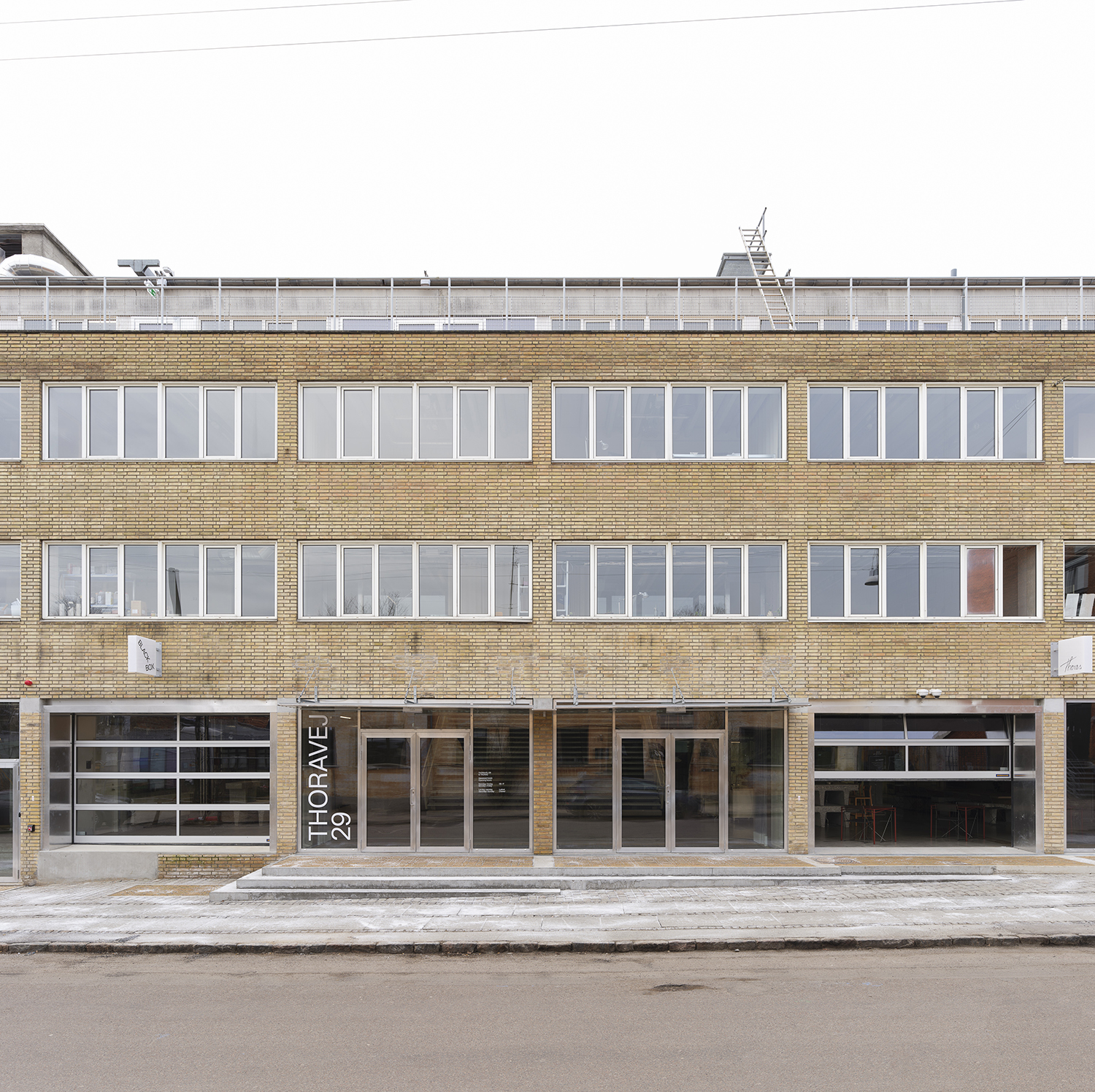
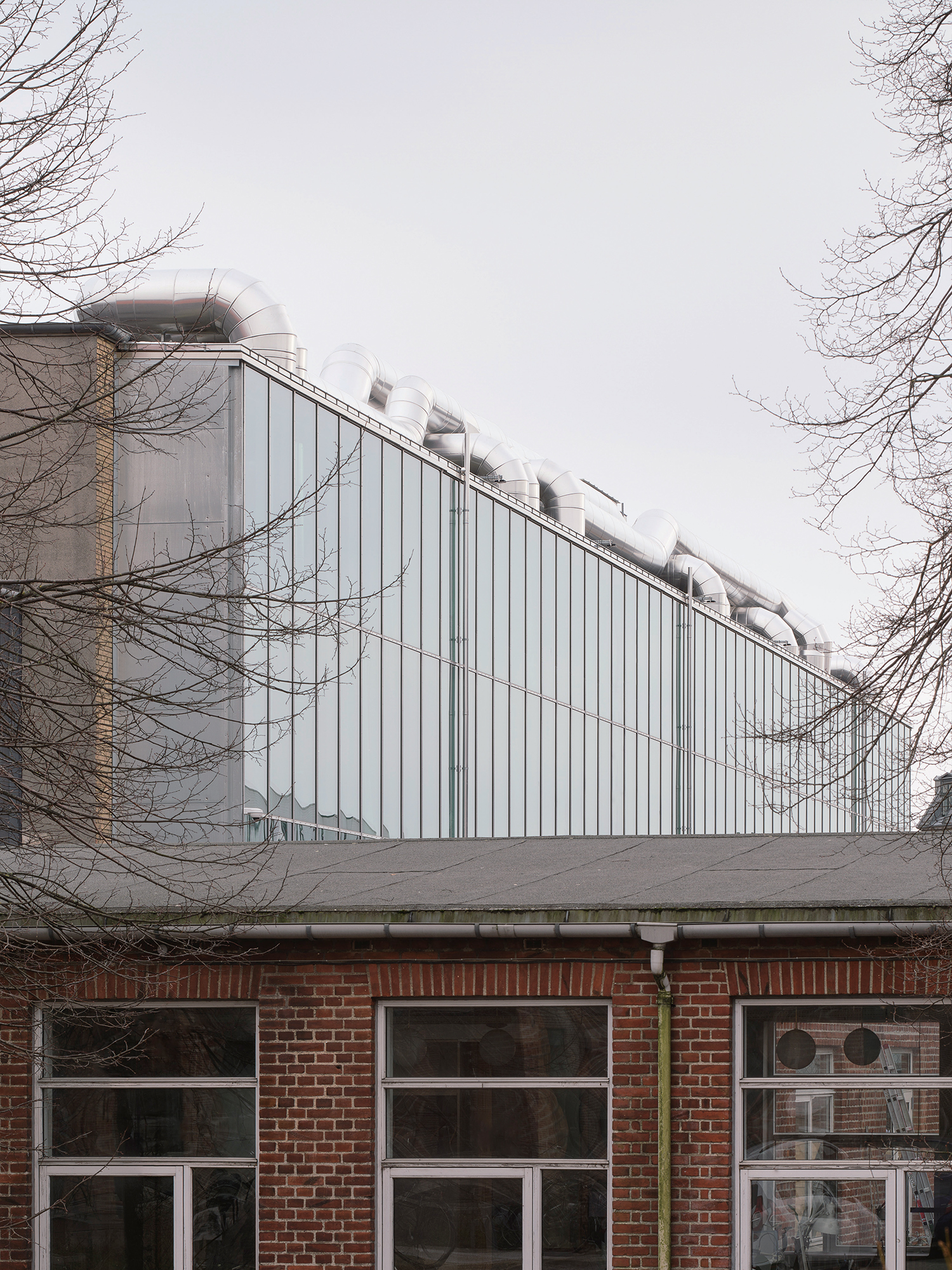
Park Jiyoun (Park): Thoravej 29 is the renovation of a building which was originally constructed as a factory in 1967 (until recently, it was used as a support centre for people with disabilities) into a multi-purpose community facility. 3D surveying, scanning, and past photographs and blueprints were used to analyse the existing building. What defining characteristics of the existing building did you uncover in each of these studies?
Søren Pihlmann (Pihlmann): The 3D survey, archival drawings and photographs were not used to reconstruct an original state, but to understand the building as an accumulated system. The scans revealed geometric tolerances, deviations, and structural redundancies that are typically flattened out in drawings. This made it possible to identify elements with hidden potentials as opposed to obvious functions. This is where the building starts to read less as ‘a plan’ and more as a production system. The archival material provided insight into production logics and load-bearing principles, while traces found on site revealed how the building had already been adapted over time. Together, these sources described the building less as a finished object and more as a working structure shaped by use, modification and maintenance. It became a spatial guide, not as nostalgia, but as evidence of how the building already learned to adapt.
Park: Given the change in the building’s purpose, you must have required diverse materials to realise its new functions and spatial concepts. However, you chose to reuse 95% of the existing materials. Did you manage to fulfil all requirements with just the existing materials?
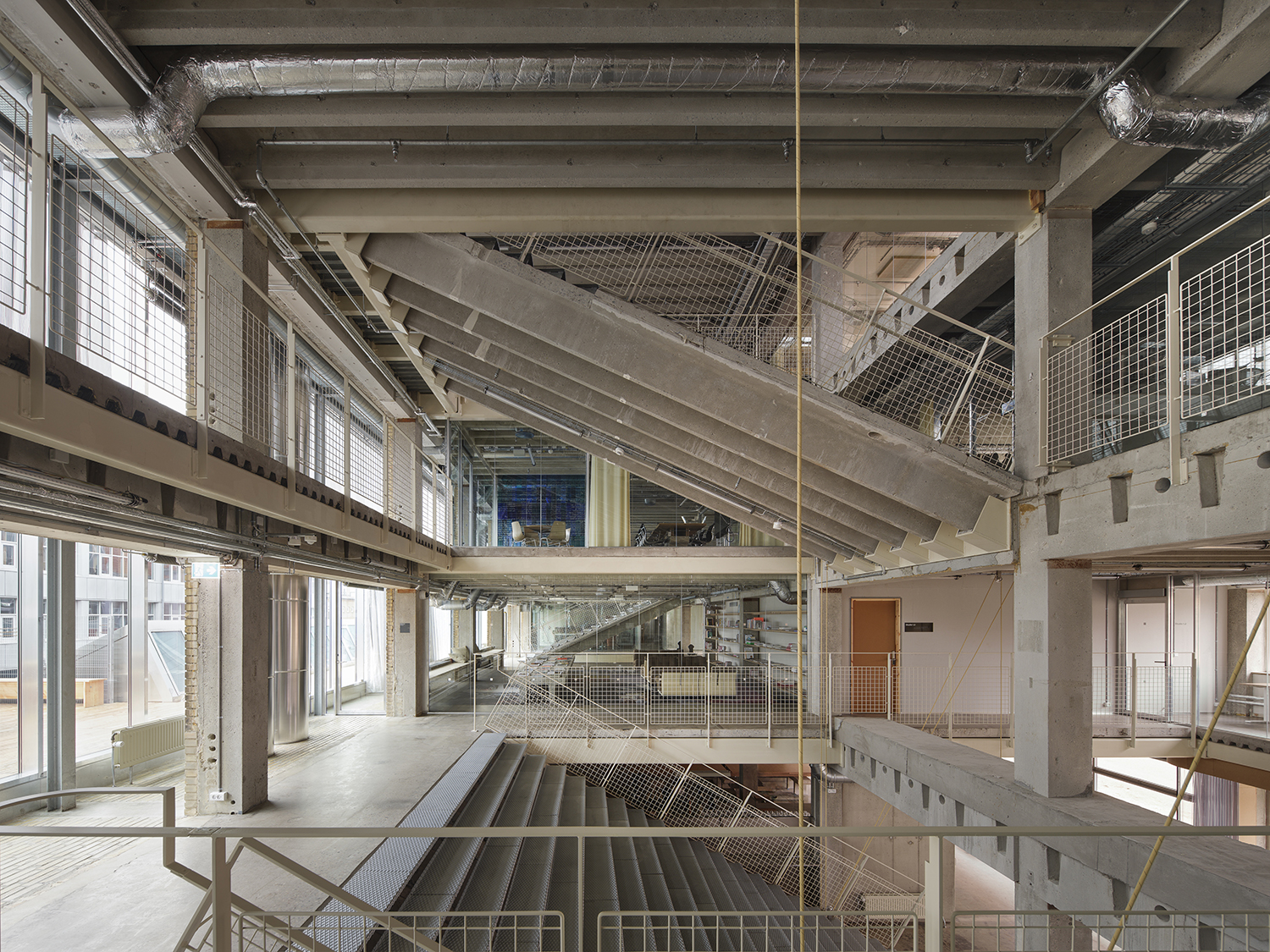
Pihlmann: Not entirely, but we came quite close. The ambition was never to force a closed system, but to test how far the existing inventory could be stretched before introducing new material. In practice, this required developing project-specific methods rather than relying on standard solutions. The methods were not extremely high-tech by default, but the approach behind was probably the most innovative, and forced new solutions. Repositioning the slabs was complicated even though the machines used were industry standards, but preparing the operation by constructing a scaffolding and hoisting system making it possible to manoeuvre the heavy slabs in place within very limited space was complex.
Park: Is the 95% figure achievable in all buildings or is it specific to this project?
Pihlmann: It depends on the building type, construction logic, degree of degradation and regulatory context. In Thoravej 29, the original industrial structure, its material robustness and generous dimensions made this level of reuse possible. That said, I think it is important to stress that a project is not necessarily better nor more sustainable because you achieve a very high reuse figure, that would be to simplify quality in a superfluous way.
Park: How is the reusability of materials determined? In connection to this, what materials comprise the 5% that was not reused and why could they not be reused?
Pihlmann: A hard line is health. Some existing layers require controlled removal or treatment due to hazardous content. For example, paint was tested for PCB (polychlorinated biphenyls) and required sandblasting, and floor layers such as linoleum were removed for the same reason. Reusability was assessed through a combination of physical testing, structural analysis and pragmatic judgement. Others, which were worn-out or did not fit programmatically were kept on site despite not knowing immediately how to be reused. After experimentation was conducted and the project proceeded, we found ways to reuse much of it, while few were deemed unsuitable or even impossible to re-apply in a way which would not be a mere gimmick. This primarily consisted of plasterboards which are unfortunately really hard to reuse in a meaningful way, but also some damaged electrical parts, plastic or glass elements and certain technical installations.
Park: You actively engage in the demolition process by devising cutting methods that preserve the maximum strength of materials. What are some of the key considerations during the demolition process?
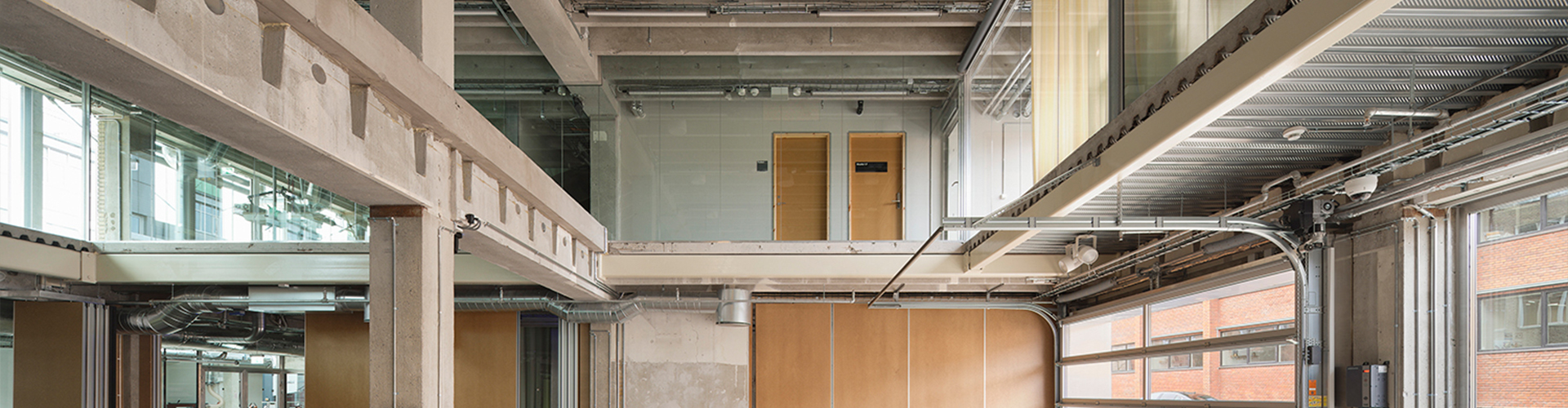
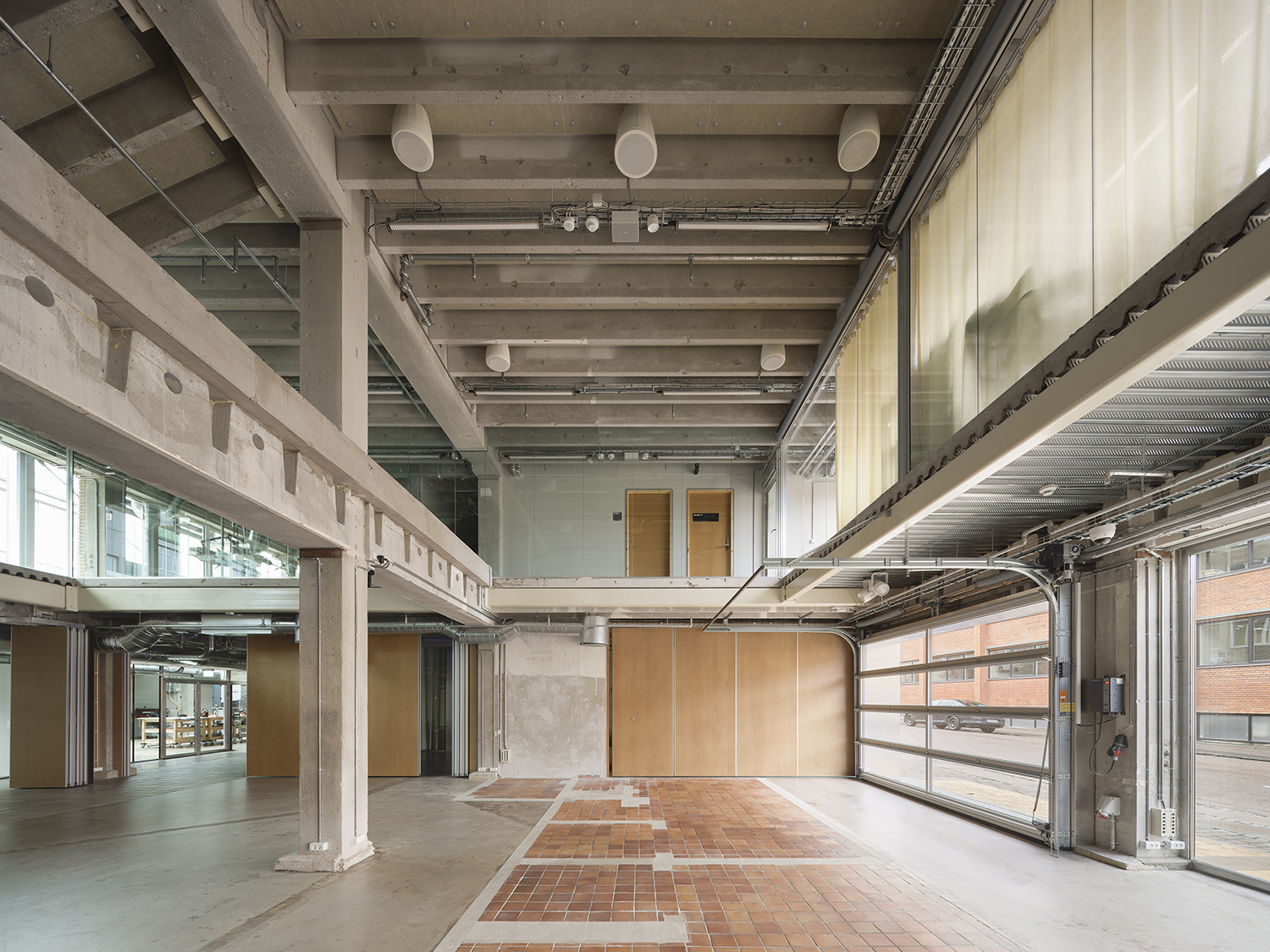
Pihlmann: Demolition is a design phase for us. We needed new types of spaces, double height for example, as well as vertical connections, which in the original building was limited to two small and enclosed staircases at each end of the quite long building. After that, the first consideration is structural behaviour: cut in ways that preserve span capacity, reinforcement direction, and usable lengths. With prestressed concrete this becomes very specific. We used drilled fittings before cutting to maintain pre-tension, so the slab could be repurposed without compromising stability.
The second is sequencing and logistics: you need tolerances, mock ups, storage, and a clear chain of custody from ‘cut’ to ‘reinstalled’. The work around the double-T slab stair, including testing and mounting of treads and guardrails, is exactly that kind of measured process.
The third is site impact. Minimising heavy machinery and avoiding unnecessary new concrete also reduces on site energy use and diesel consumption, which the life cycle analysis highlights as part of the project’s performance.
Park: The materials were either left as-is, resurfaced, shredded and compressed, or repositioned and reinstalled. You then explained that those decisions were made in reference to the inherent physical properties of each component rather than conventional or aesthetic value. Please clarify what you mean by ‘physical properties’ with an example.
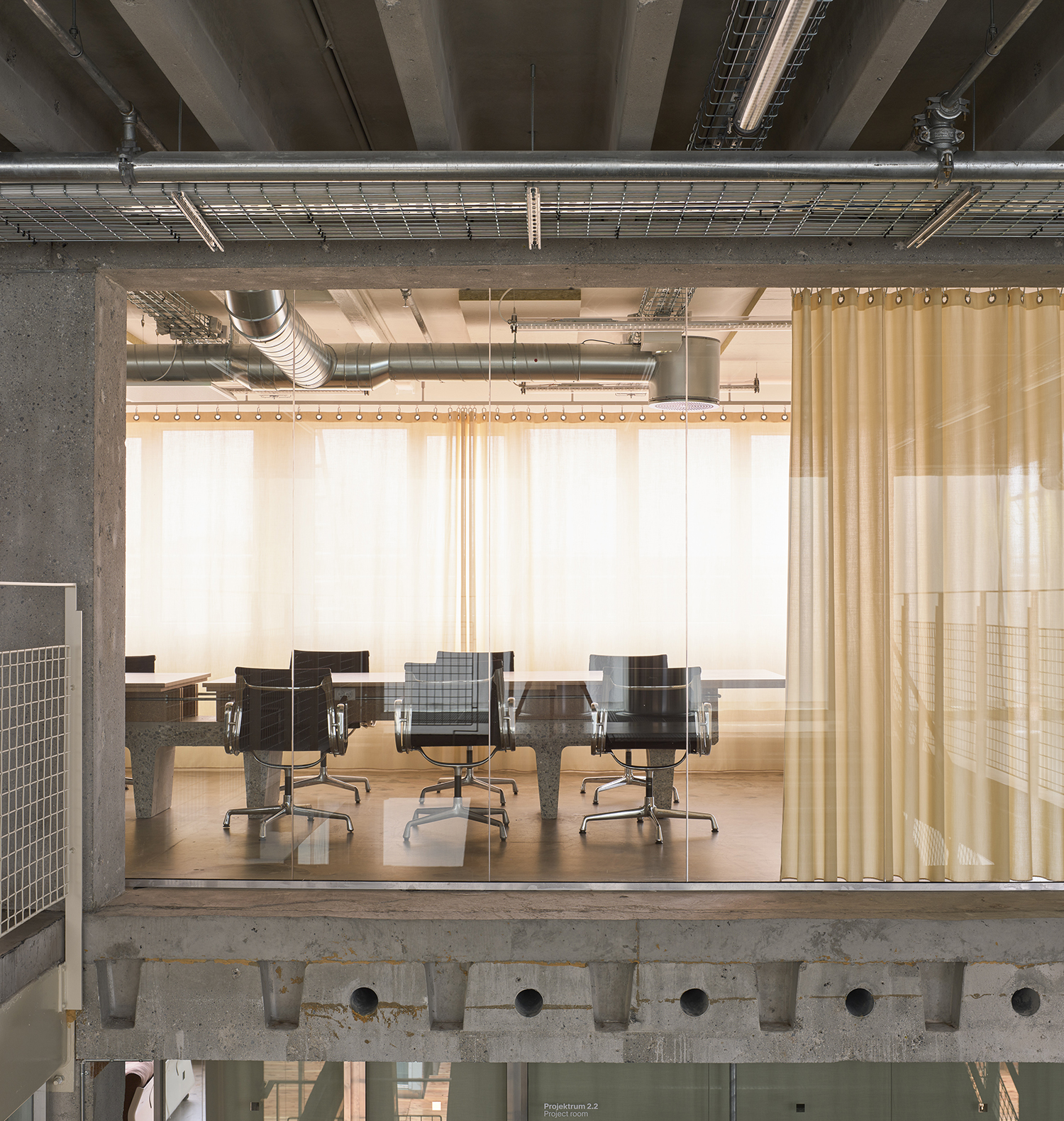
Pihlmann: By physical properties we refer to measurable and operative characteristics such as compressive strength, span capacity, surface hardness, weight or patina. These properties guided reuse decisions more than original designation or symbolic value. The staircase is one example, our aim was not to construct the most beautiful or iconic staircase possible, but simply to take advantage of the physical properties of the slab; its ability to carry load over large spans. In this case, in order to fully do so, we had to introduce custom-made clamps which maintained the tension of the prestressed elements. So, it is a way of finding new potential, but also exploring which ‘activating agents’, in this case the clamps, which are needed to unlock these potentials.
Park: Some materials were repurposed into different uses. Please explain your key points of contemplation during this modification process.
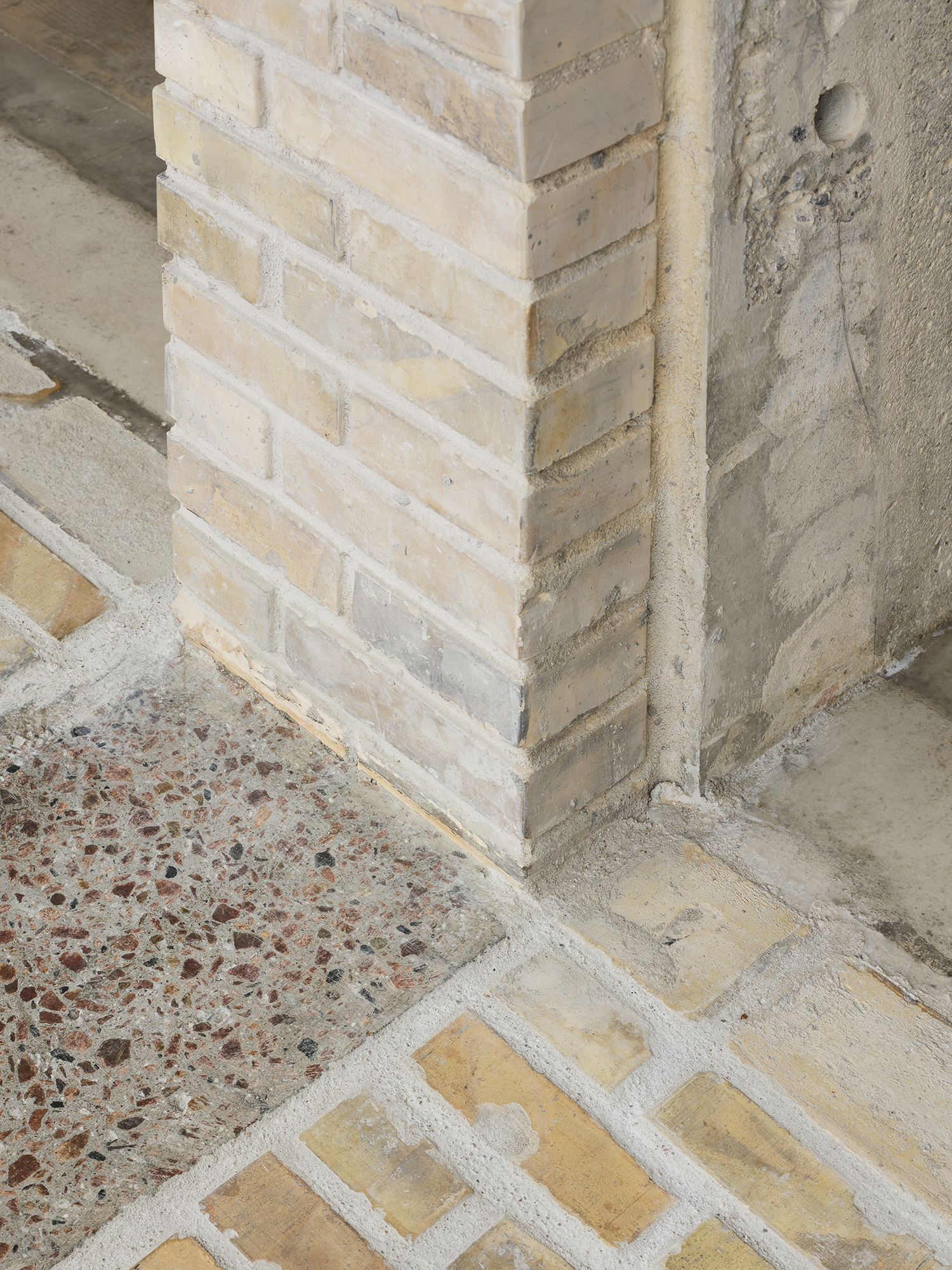
Pihlmann: The rule was: modify as little as required, but as much as needed for durability, safety, and maintenance. With bricks, we avoided the typical waste outcome. Bricks embedded in cement are usually discarded. Instead, we carved, flipped, and embedded them into new ground and floor conditions, keeping their movement minimal and their relation to the façade legible. The exterior ‘brick carpet’ is literally folded down from façade to terrain, and the absences where the doors used to be have becomes part of the act of reading. So, we form a pattern which relates to the past configuration of the building and at the same time present something new.
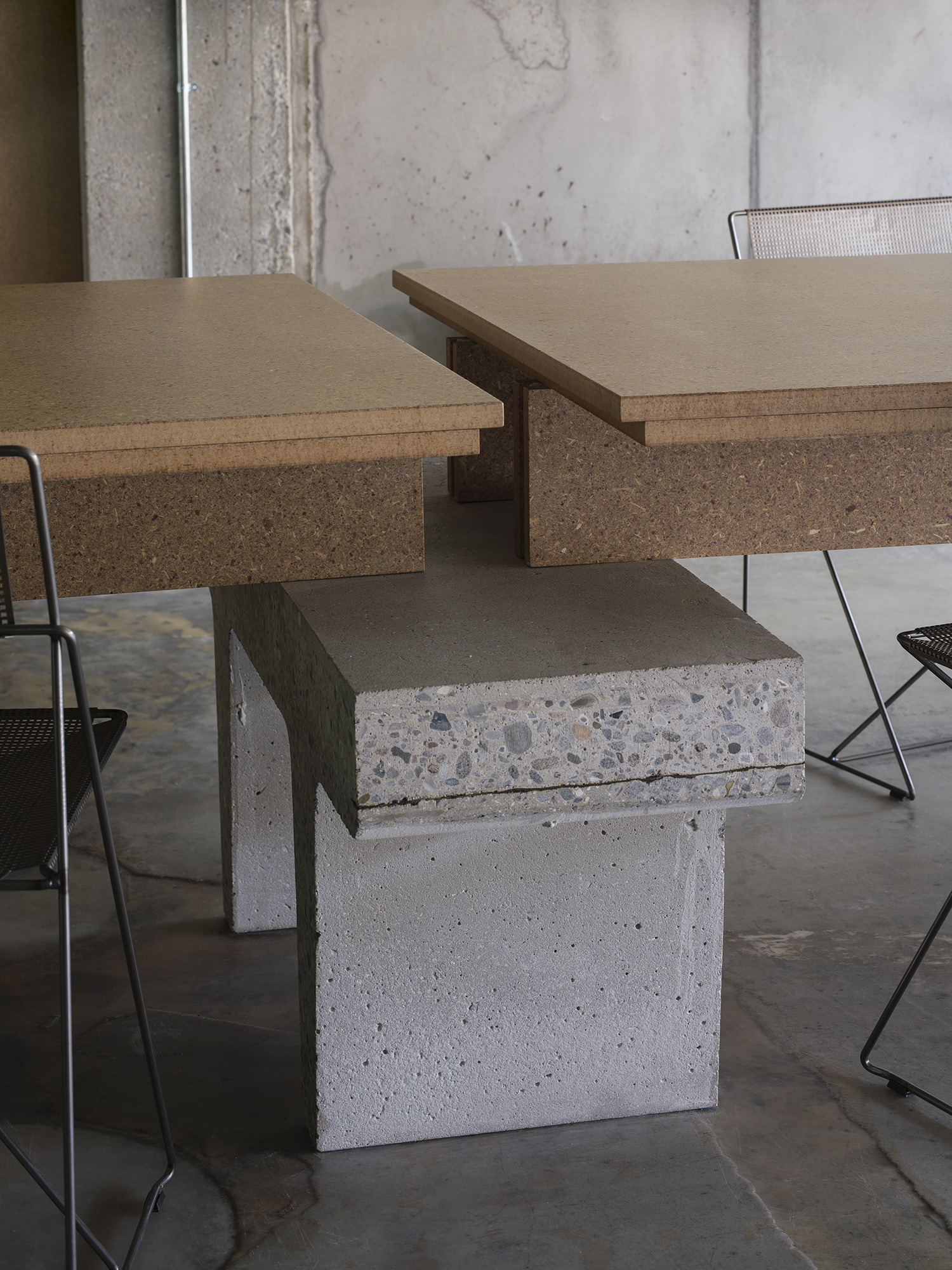
Park: Ventilation ducts, lighting fixtures, and even the metal ceiling panels were compressed into blocks and reused as furniture. What thought process was behind this block form and the decision to apply it across the furniture design?
Pihlmann: Shredding and compressing was our way of dealing with elements that had lost their functional integrity but still contained material value. It was a way of harvesting materials from an existing form, breaking it down to more of an elemental scale and building it back up to serve a new function. The majority of these wooden and metal elements, from which the material was sourced, had been rendered useless prior to the material transformation, otherwise they would have been reused in their original capacity. I think they are an example of the pragmatic playfulness that we like to employ. It might not be the most obvious thing to do, but if we are to reuse as much as possible, we also need to rely on odd solution which might not be very straightforward, to proof the point that it can be reused, it is just a matter of keeping your mind open. Once metal ducts, fixtures, and ceiling panels are compressed, they stop being ‘specialised parts’ and become stock: dense, stable matter that can be handled, stacked, moved, and assigned new use without pretending it is still a duct. In that sense, the block is a bridge between demolition and design, a way to bring materials back into circulation at an elemental scale.
Park: What I think as most distinctive and significant is how you used the existing slab as stairs, demonstrating the existing materials’ potential to be reused as elements for spatial composition. Also, it was interesting that the steel that structurally supports this concrete floor layer was tinted in light yellow. Architects typically either make their interventions prominent during renovations or deliberately conceal their presence by highlighting instead the building’s original authorship. This steel, while its colour does not make it particularly more conspicuous than the slab, nonetheless remains distinguishable due to differences in physical property. In what way did you want to showcase the architect’s intervention in this project?
Pihlmann: The reuse of the existing slab as a staircase was a way of treating material not as surface, but as spatial capacity. Once the structural behaviour of the slab was understood, it could be repositioned and recalculated to take on a new role in the spatial organisation of the building. Introducing a new steel structure to support this transformation was unavoidable. From a fire safety perspective, the steel had to be painted. Rather than considering colour as an independent design choice, we derived it directly from the building’s existing palette. The light yellow tone was sampled from patinated metal elements already present on site, such as radiators and lamps, whose colour had developed over time through use, ageing, and exposure to nicotine. Other colour options were not seriously considered, but of course a range of colours were discussed, just like every decision we make tends to be the result of thorough-going discussions. The intention was neither to emphasise the intervention nor to conceal it, but to make it legible. The new steel is distinguishable through its physical properties and structural role, while its colour establishes a material continuity with the existing building. In this way, the intervention is visible without becoming expressive, and present without competing with what was already there.
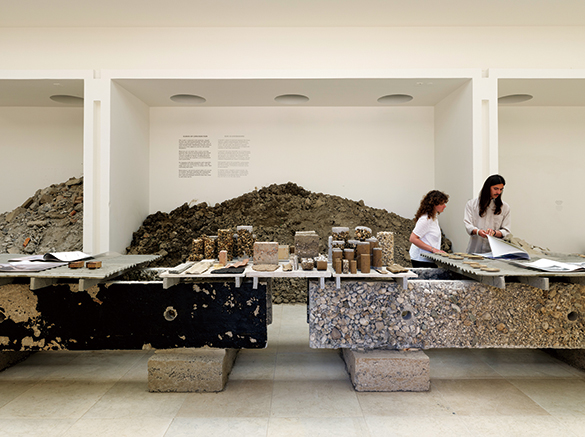
Park: With the Danish Pavilion exhibition ‘Build of Site’ at the 2025 Venice Biennale as an example, you have consistently emphasised the ‘reuse of materials’. For pihlmann architects, is reuse an ethical choice, a structural necessity, or an architectural attitude toward time?
Pihlmann: For us, reuse is an architectural attitude toward time. It acknowledges that buildings are already embedded in material, social and regulatory histories, and that architecture operates within these continuities rather than outside them.To me it is clear, that ethically we cannot keep extracting and discarding at the current scale. For me as an architect, reuse also relocates design away from ideal images and back to material reality: what is already here, what it can do, and what it resists. In that sense, reuse becomes a creative toolbox as much as a responsibility. I see materials as ‘on loan’ from the past, and the job is to keep them available for the future. That is why we invest so much effort upfront in analysis, and why method becomes inseparable from architecture. But most importantly, I do not think we would be able to make more interesting architecture with a clean slate – if such a thing exists when it comes to architecture – but rather that the unplanned, the unique and intriguing space rise from what is already there rather than a brilliant idea in the head of the architect.
You can see more information on the SPACE No. February (2026).
Architect
pihlmann architects (Søren Pihlmann)
Design team
Anna Wisborg, Carsten Buur Udbye, Isabella Priddle
Location
Copenhagen, Denmark
Programme
community hub
Gross floor area
6,224m²
Exterior finishing
yellow bricks on 3 façades, glazed panels on
Interior finishing
concrete
Structural engineer
ABC Consulting Engineers A/S
Mechanical and electrical engineer
ABC Consulting Engineers A/S
Construction
Hoffmann A/S
Design period
2021 ‒ 2022
Construction period
2023 ‒ 2025
Cost
16 million EUR
Client
The Bikuben Foundation
Søren Pihlmann
Søren Pihlmann is Founder of the Copenhagen-based office pihlmann architects, grounded in transformation and generative preservation, working with what is at hand. Existing materials, structures, and production logics emerge as operative conditions, informing making through directed curiosity. Value is produced through revaluation, allowing materials to retain traces of previous use. The work bridges the overproduced and the undervalued, framing architecture as a working state where adaptability is a present quality. Architecture is developed as a mode of inquiry grounded in use, maintenance and adaptation. Buildings are conceived as situated continuity. They remain open to conditions that cannot yet be anticipated.
8