


SPACE March 2026 (No. 700)
interview Vinu Daniel Principal, Wallmakers × Kim Bokyoung
Kim Bokyoung (Kim): Bridge House is an architectural work that synthesises two distinct programmes: a bridge and a house. What was the background to this project and what is its actual current use? I am particularly curious as to why a bridge was required on this specific location.
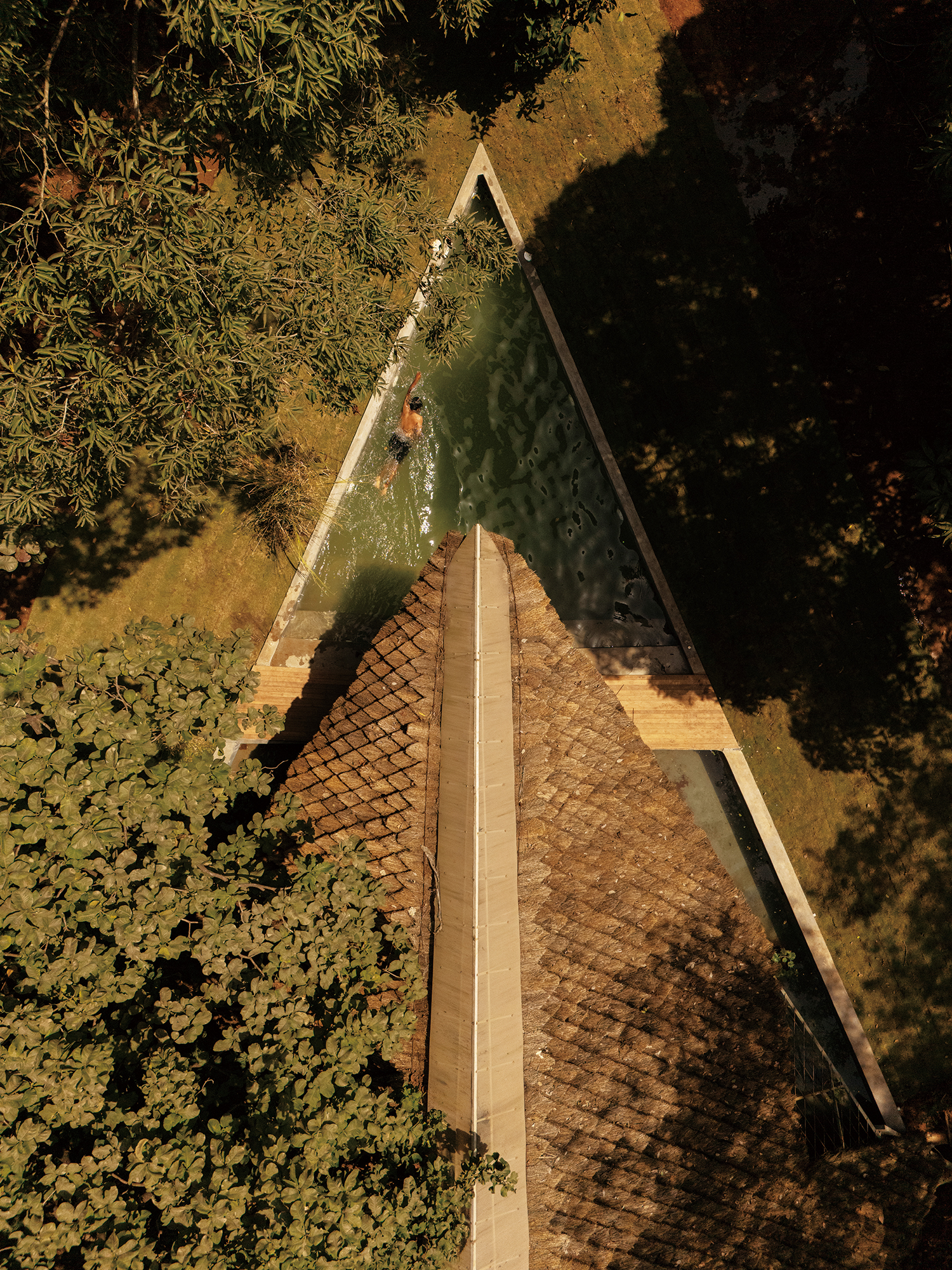
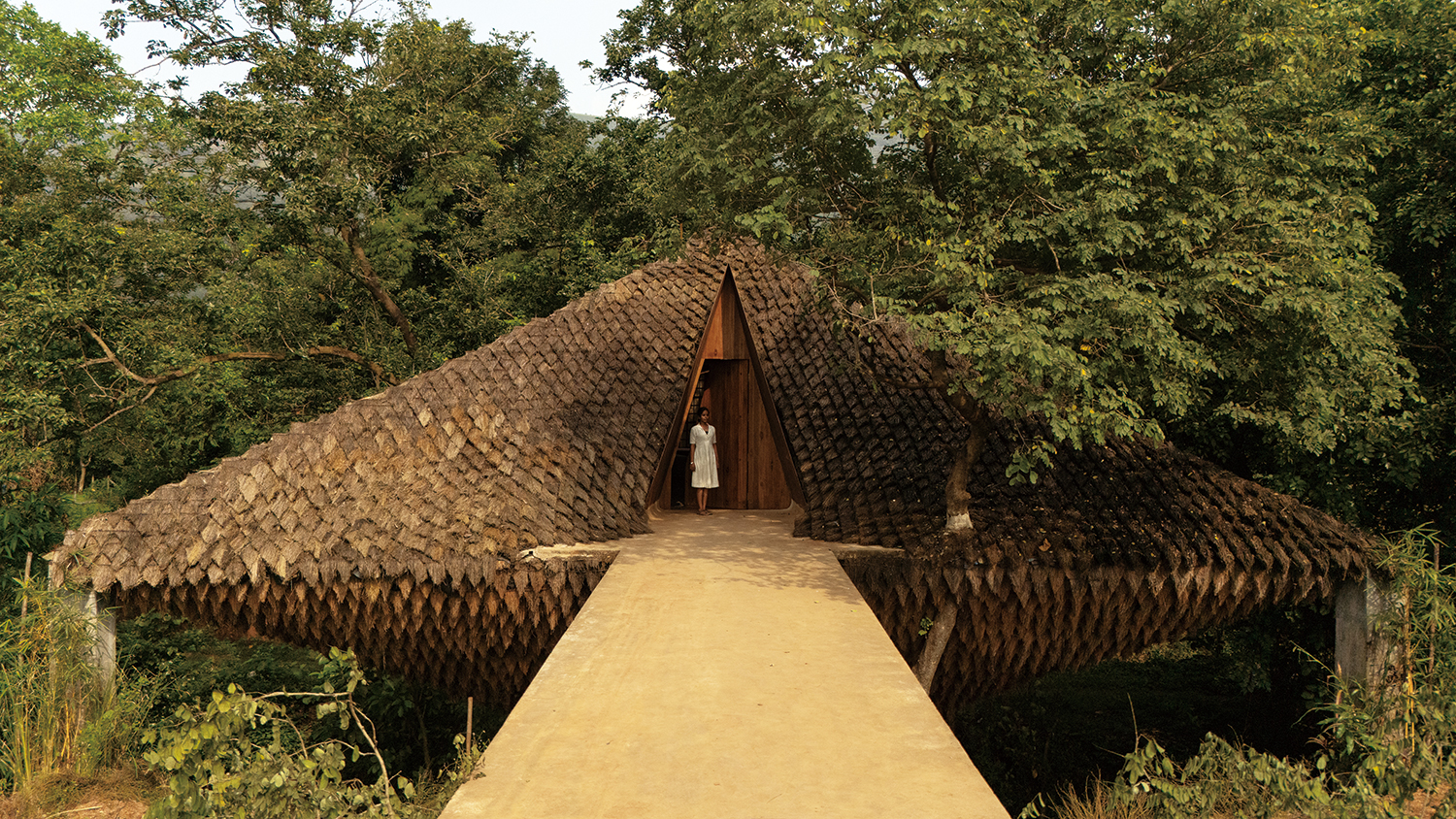
Vinu Daniel (Daniel): The government constructed a canal that divided the land into parcels and rendered one side of the site inaccessible, therefore a bridge was necessary to access the other parcel of land. What we did was combine the client’s two different needs for a bridge and house into one, keeping in mind the constraints: the two parcels of land had to be connected, but the foundations couldn’t rest within the 100ft (approx. 30.5m) width of the spillway; we could make a bridge, but there had to be enough clearance for a JCB to clean the two streams underneath.
Kim: Typically, a bridge is a form of public infrastructure; this integration inevitably precludes public access. The central span appears to function simultaneously as both the bridge passage and the primary living area. Given the challenge of reconciling the dual programmes of a bridge and a house, what were your primary criteria for the spatial configuration and the floor plan? How did you negotiate the overlap between the passageway of the bridge and the domesticity of a living room?
Daniel: We didn’t have to. The bridge is a private pedestrian one. So it just had to connect the two pieces of land over the stream and provide access to the other parcel of land. We just kept the layout of the living space very simple and limited in its furniture.
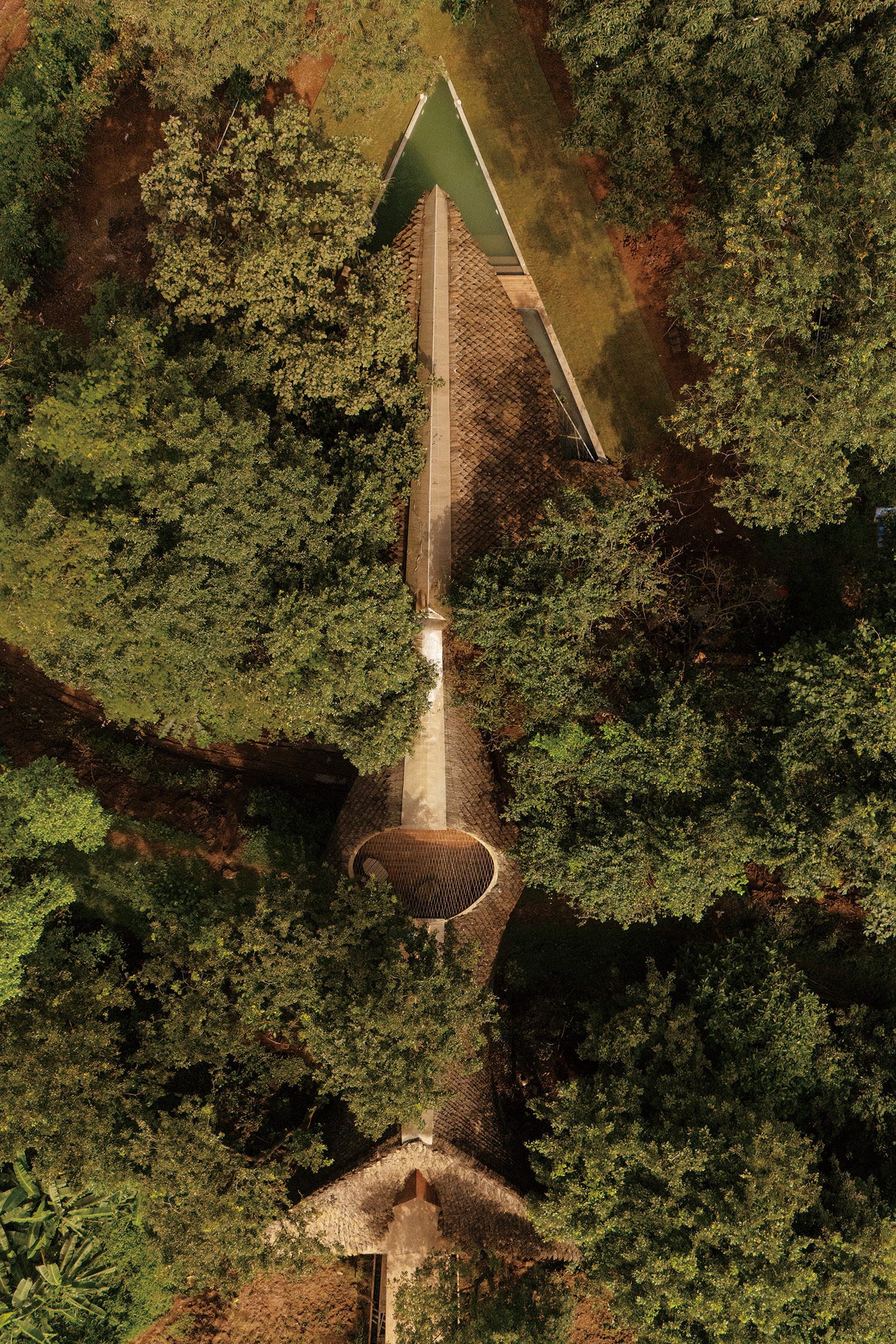
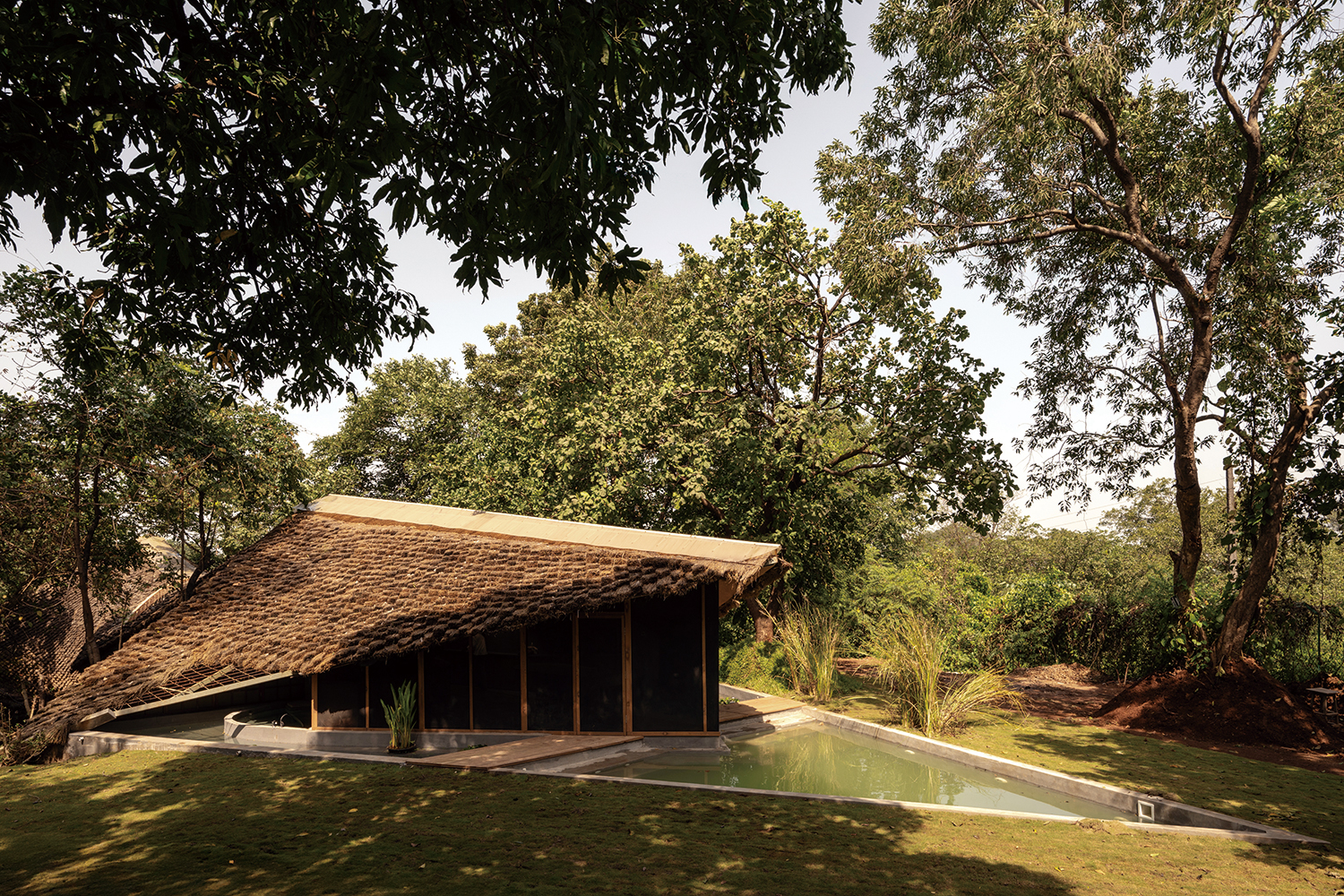
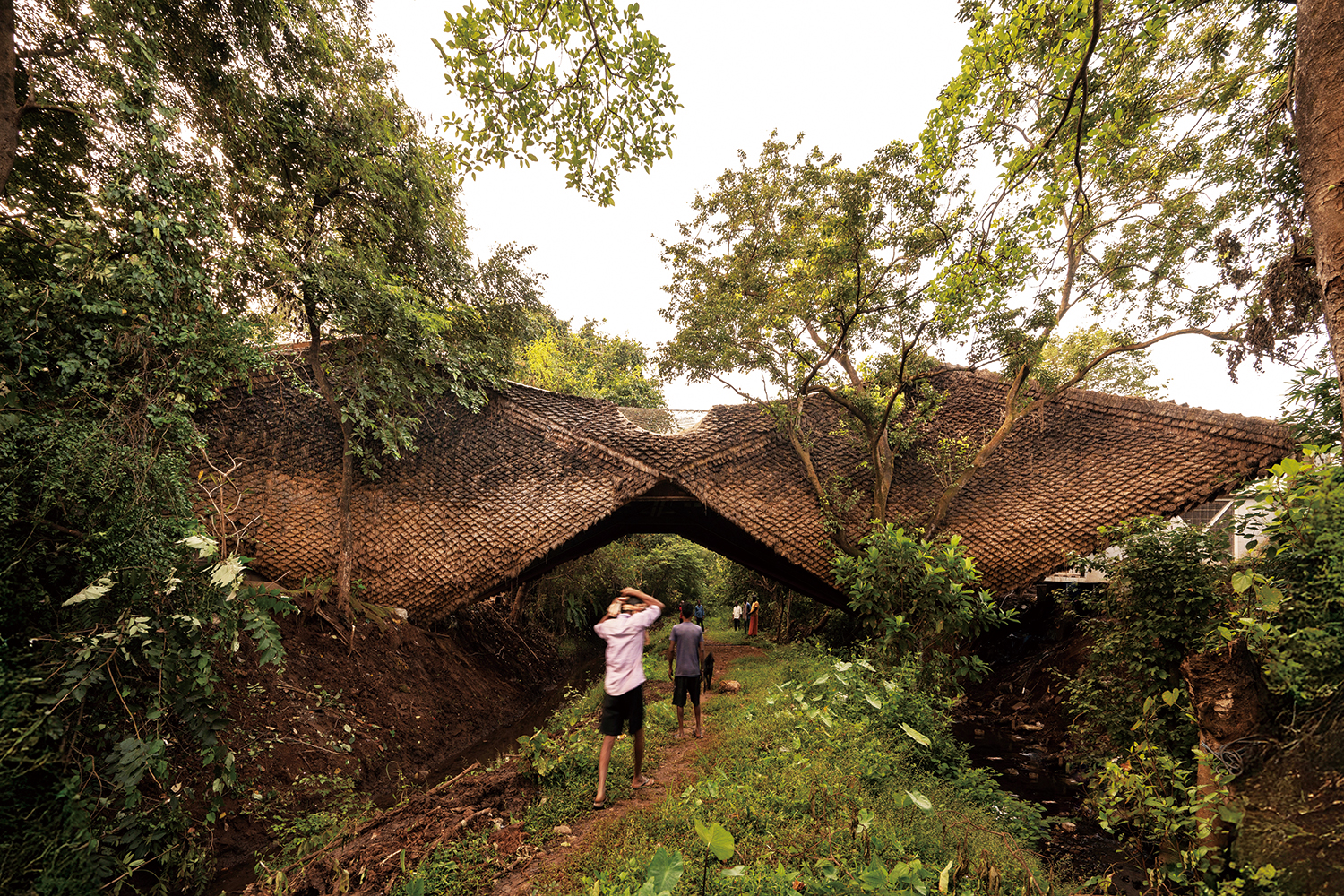
Kim: Bridge House is situated on a site bisected by a gorge and a spillway. This is not the first instance in which you have engaged with a terrain traditionally deemed ‘unsuitable’ for construction. What is the fundamental motivation behind your commitment to building on sites that tend to be avoided by the broader construction industry?
Daniel: The conventional practise of cutting and filling any ‘difficult’ site has to stop. We need to explore ways in which we can rethink the way we design, structurally and functionally, so that we don’t just permanently alter the terrain, watershed and vegetation of every site we come across. Architecture or building is an invasive process, but if we are able to be more conscious about our design practice, we can still allow natural eco-systems to coexist with comfortable human living conditions.
Kim: The approach of leaving minimal traces on the landscape is evident in your choice of structure and materials. Focusing first on materials, Wallmakers follows the principle of using materials easily available on-site or repurposing waste. You mentioned that within a five-mile (approx. 8km) radius of this site, wild grass was the only material available. Within these contextual constraints, what materials did you choose and for what reasons?
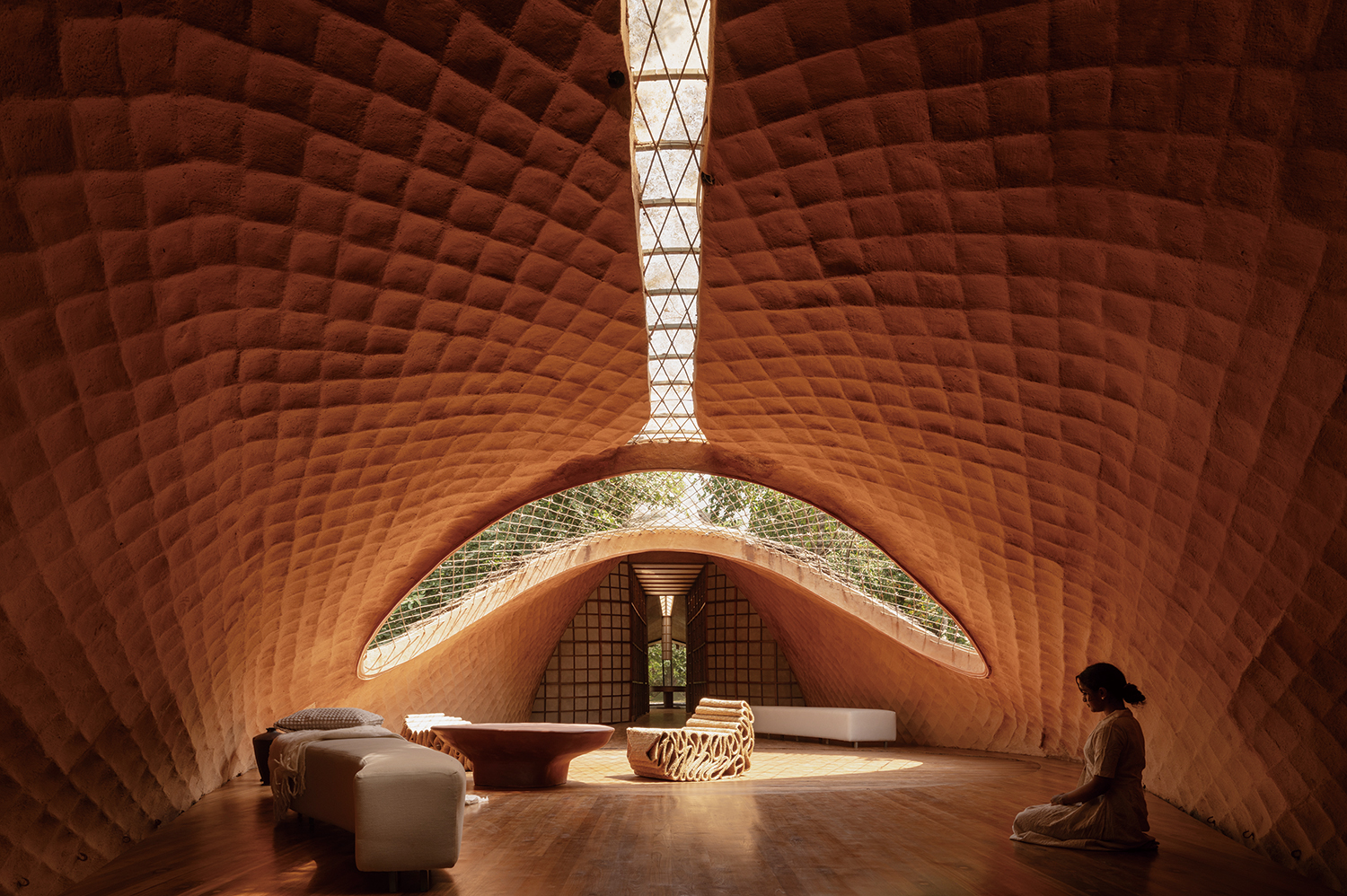
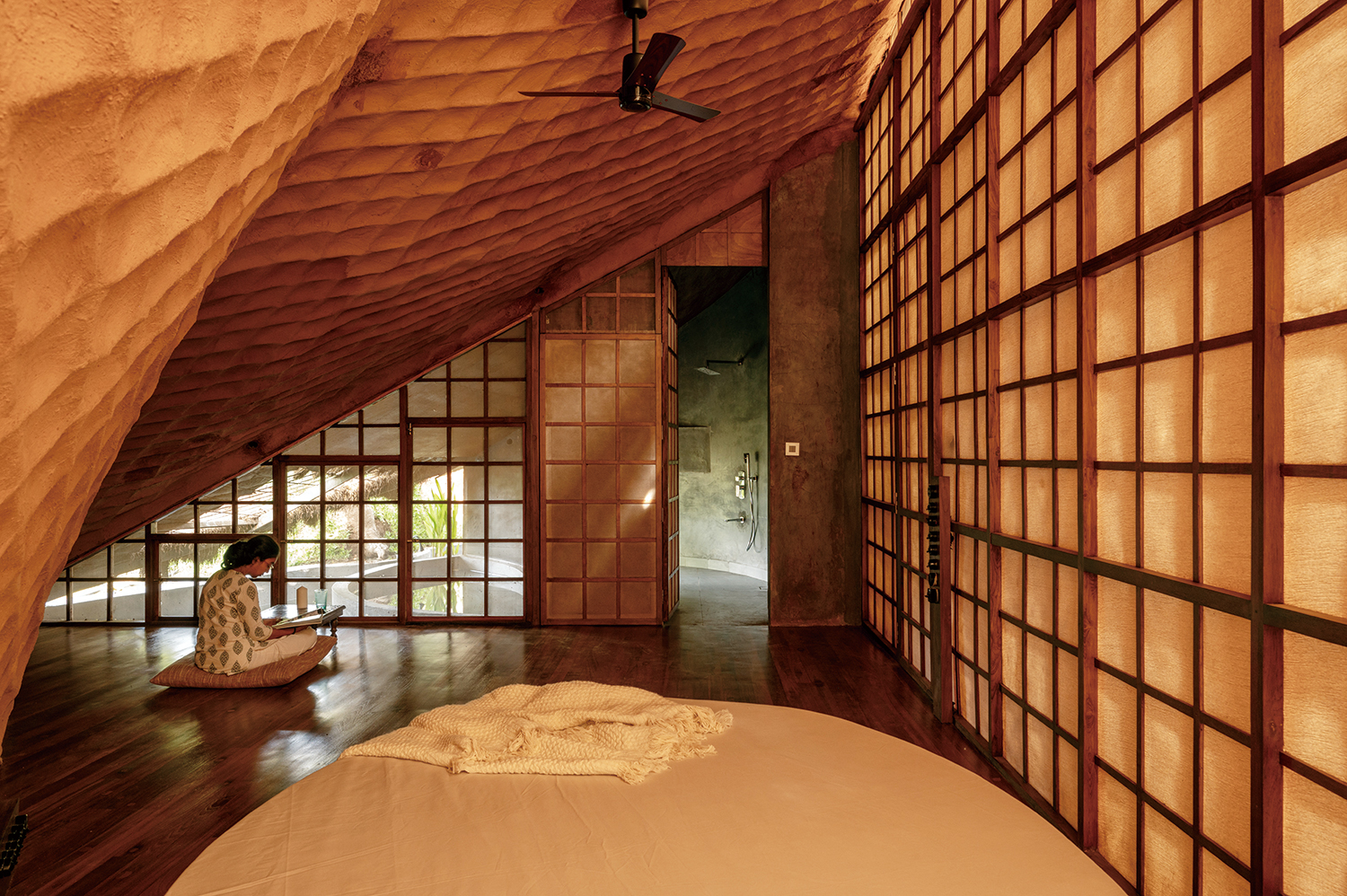
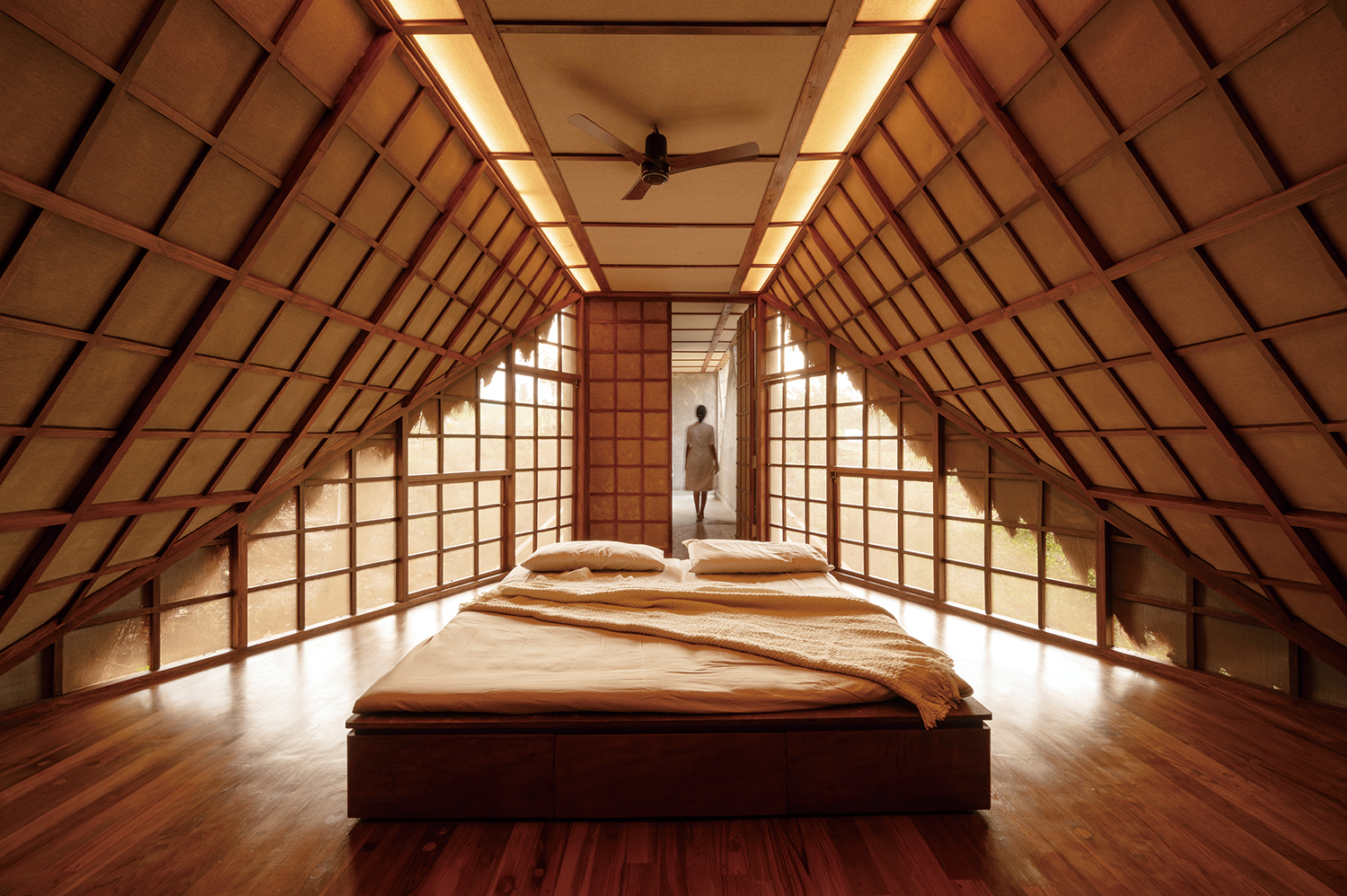
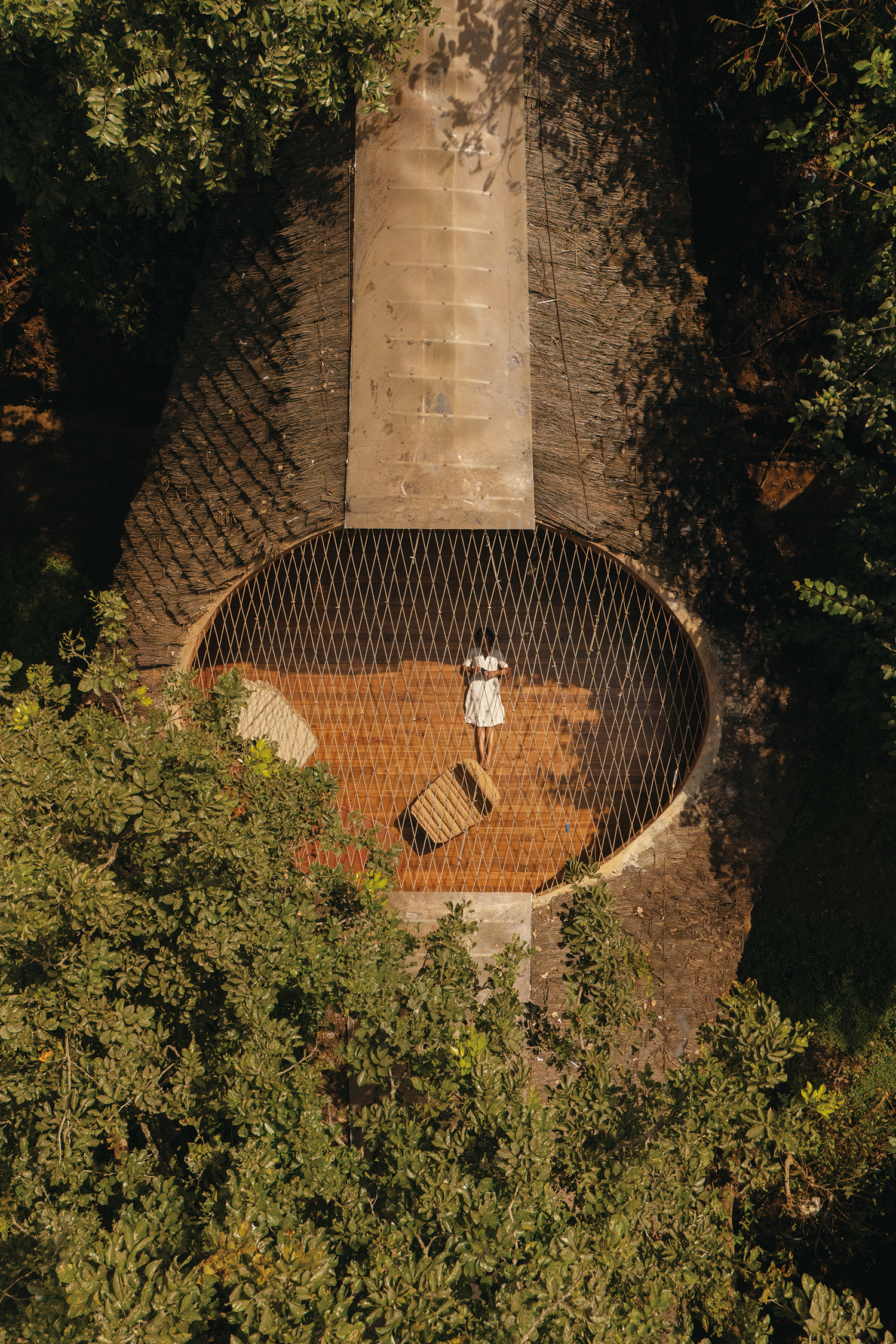
Daniel: This is our first foray into using thatch for our projects and we chose it because there were hardly any other materials available in the region due to the remote nature of the site. But with the help of local experts, we discovered a variety of wild grass that had better longevity once treated compared to other grass varieties. The thatch layer placement, inspired by the scales of a pangolin, provides thermal insulation and effective cooling and also allowed us to push for a long-span, lightweight structure with just four footings, ensuring much less intrusion into the natural contours of the land. The mud plaster layer further ensures that rodents or pests don’t burrow their way inside the dwelling (the prime reason for thatched roofs falling out of favour in spite of their insulation benefits) and added compressive strength to further stabilise the structure.
Kim: You adopted a structure supported by only four footings to minimise terrain damage. Beyond the preservation of the topography, what were the other structural constraints, and how were they resolved? As grass or mud alone would likely be insufficient to ensure structural integrity, did you also employ materials other than local resources or waste materials to address structural requirements?
Daniel: Yes, we have used minimal steel pipes for the outer frame of the two hyperbolic parabolas that form the bridge and also used a single layer of 6mm steel cables to achieve the form of the tensile structure.
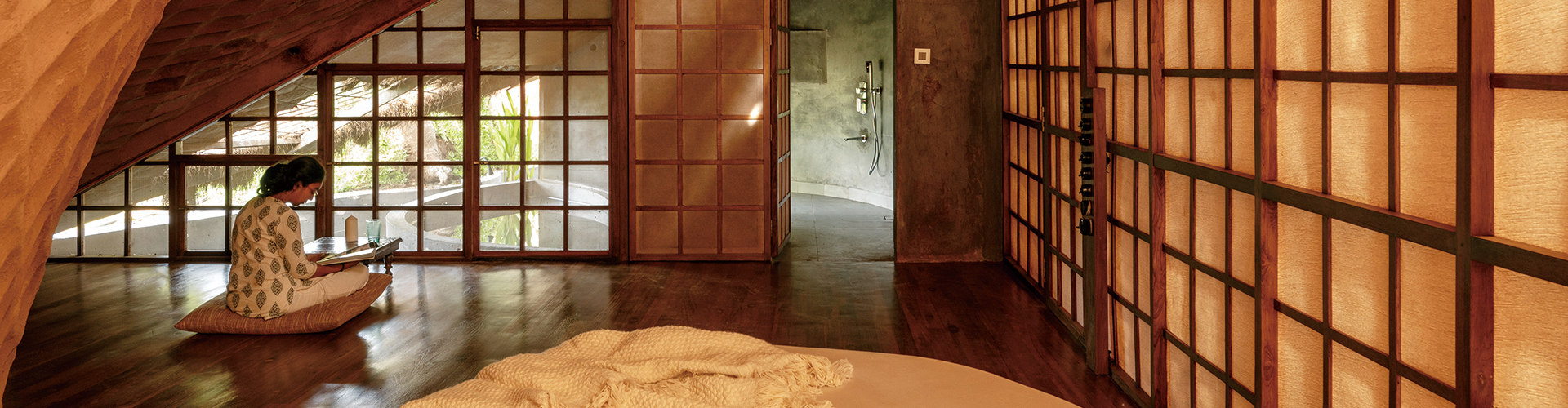
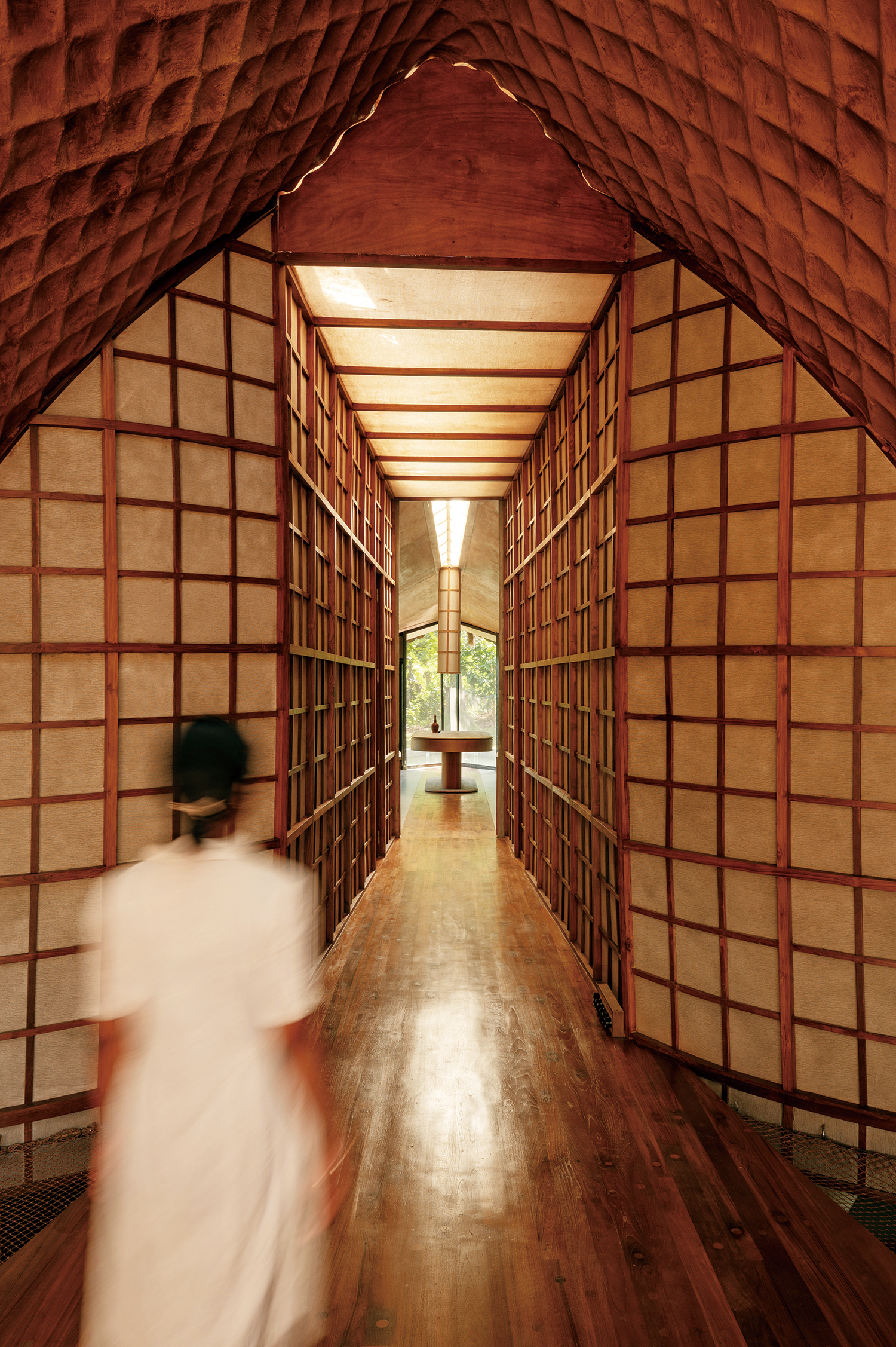
Kim: The suspension structure, devoid of central vertical columns, appears to float in mid-air. This impression is further intensified by a large oculus in the central living area that invites the sky and rain directly into the interior, while numerous openings in the three bedrooms provide framed views of the forest and stream. What were your intentions behind this spatial configuration? Considering Karjat’s distinct wet and dry seasons ‒ much like the monsoon season in Korea (jangma) ‒ I find it difficult to imagine how one can inhabit this house during heavy downpours. How do you imagine the residents will experience the space when it rains? By designing such an entirely open environment, what kind of life did you expect the residents to lead within the Karjat forest?
Daniel: The central courtyard that is open to the sky (but covered with a steel mesh to keep out pests and insects) allows the rain to come in. We thought that in a place like Karjat, which has heavy monsoons, the rain should also be a part of the living experience. Slits given in the wooden floor right below the oculus allow for the water to percolate through and fall into the stream below. The wood which came from the decks of abandoned ships is heavily weathered, treated, and hence unaffected by excessive moisture.
Kim: Your practice is particularly notable for its close collaboration with skilled craftsmen and welders. Within the context of Bridge House, were there any architectural details that were resolved through spontaneous, on-site improvisation? I would also like to hear about your experience of working alongside your collaborators on this specific project.
Daniel: Yes, there were four trees very close to the building, and there was a recurring bet between me and the workers who said that the trees would have to be cut. Of course, I won the bet and all four trees were saved.
Wallmakers (Vinu Daniel)
Preksha Shah, Ramika Gupta
Karjat, Maharashtra, India
residential
55,000ft² (approx. 5,110m²)
23,000ft² (approx. 2,137m²)
4,500ft² (approx. 418m²)
B1, 1F
30
8m
RC foundations (4 isolated footings), steel frame
thatch and mud composite (walls, roof)
reclaimed timber flooring, jute screens (internal
Steelcrete Solutions
Shivaranjini Construction
Jan. ‒ Mar. 2020
Jan. 2021 ‒ Oct. 2025
Ashish Shah
EarthwormX