SPACE February 2026 (No. 699)
A Smart Village Experimenting with the Role of Architecture in the Smart Era
Busan EDC Smart Village (hereinafter Smart Village) is a living laboratory conceived under the concept of ‘a city that lives with technology’. While technology rapidly advances everyday life, its speed often disregards human rhythms. Rather than placing technology at the forefront, we repositioned it as the background to life and restored the place of human beings at the centre. The Smart Village is an architectural proposal that seeks this point of balance.
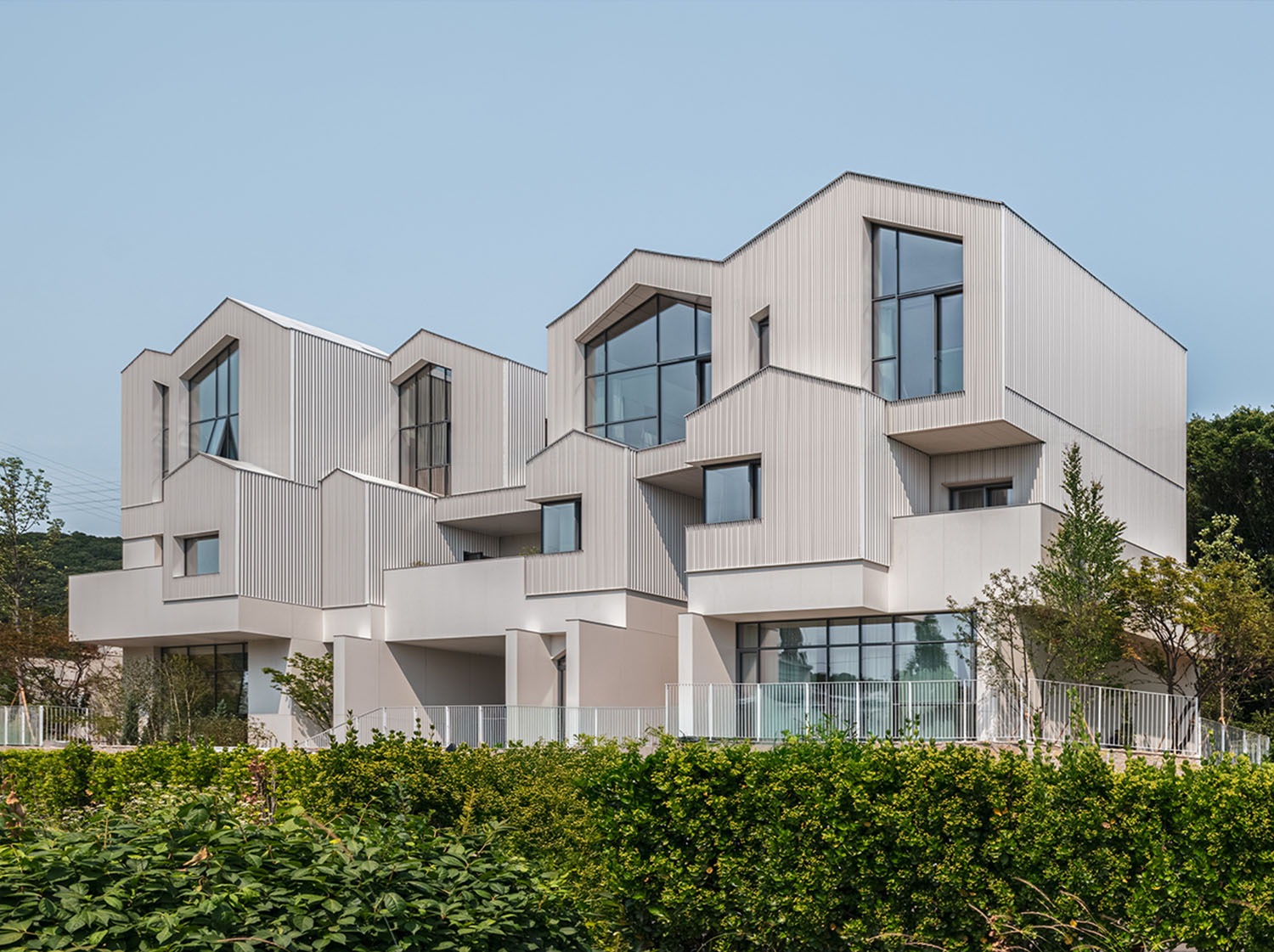
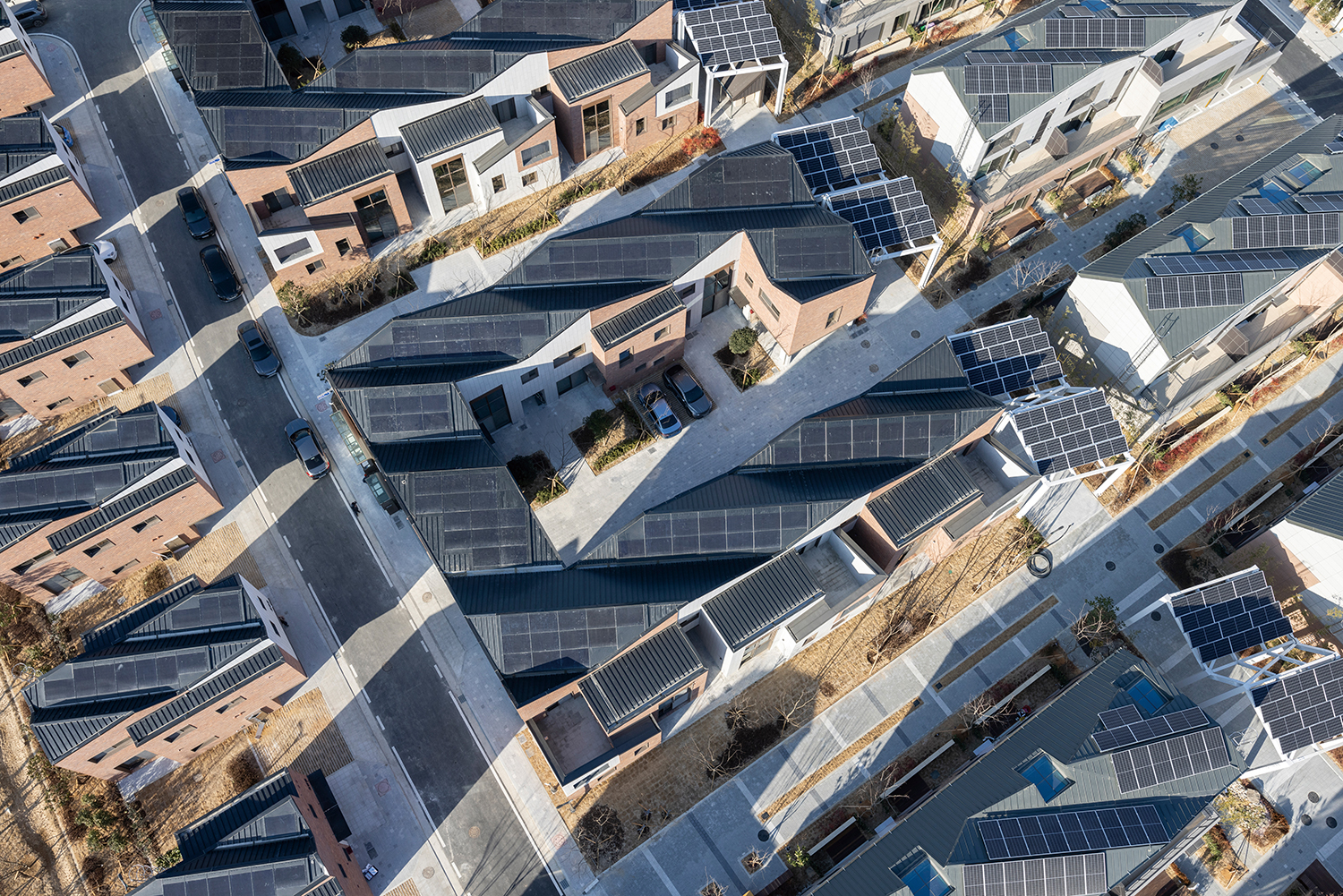
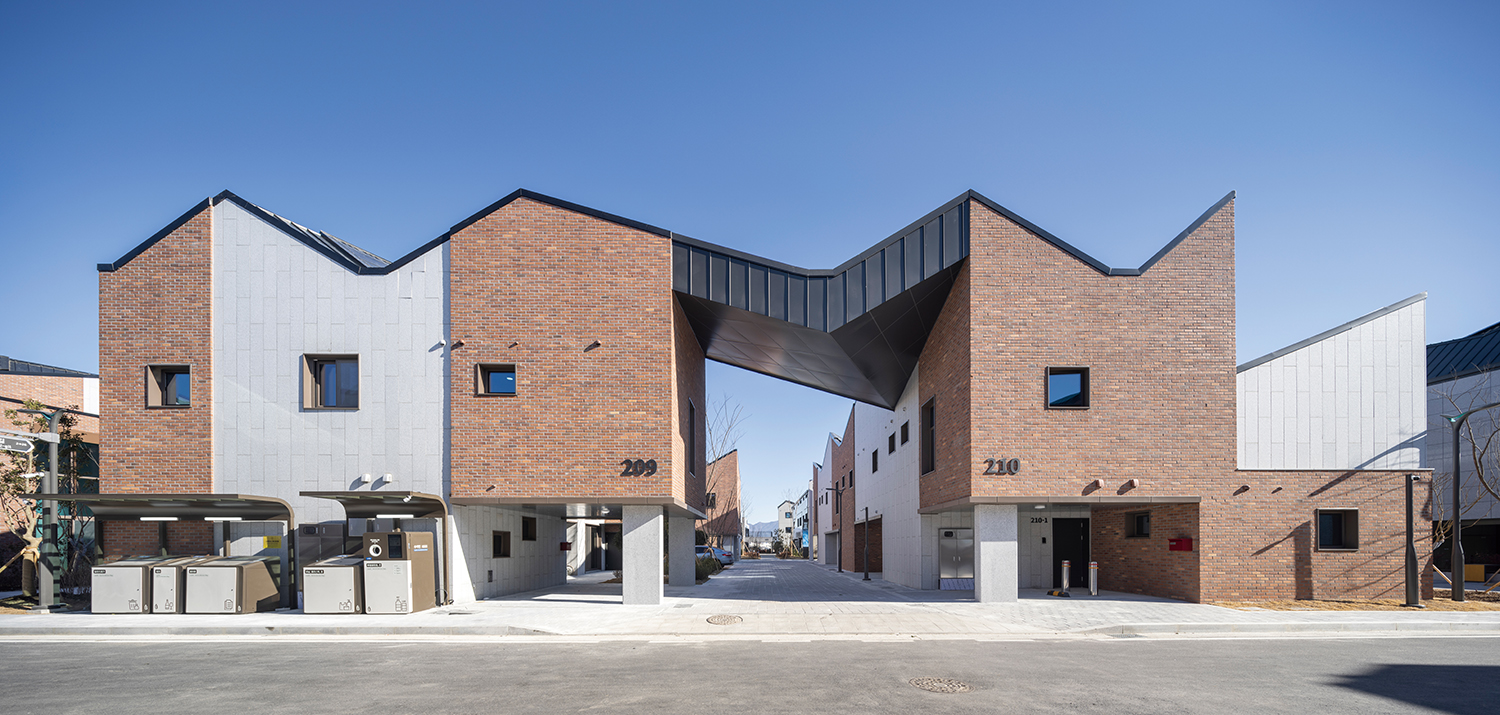
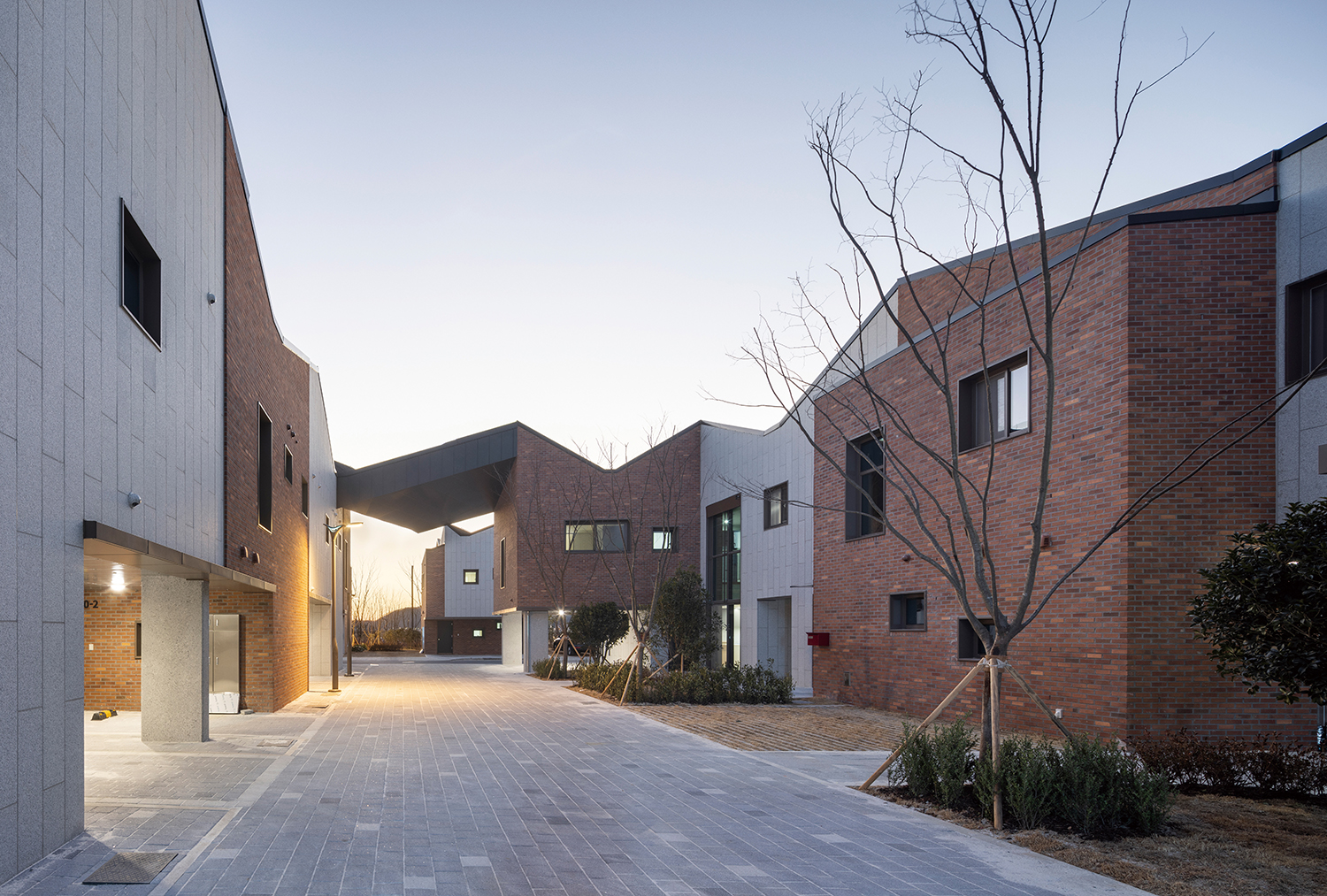
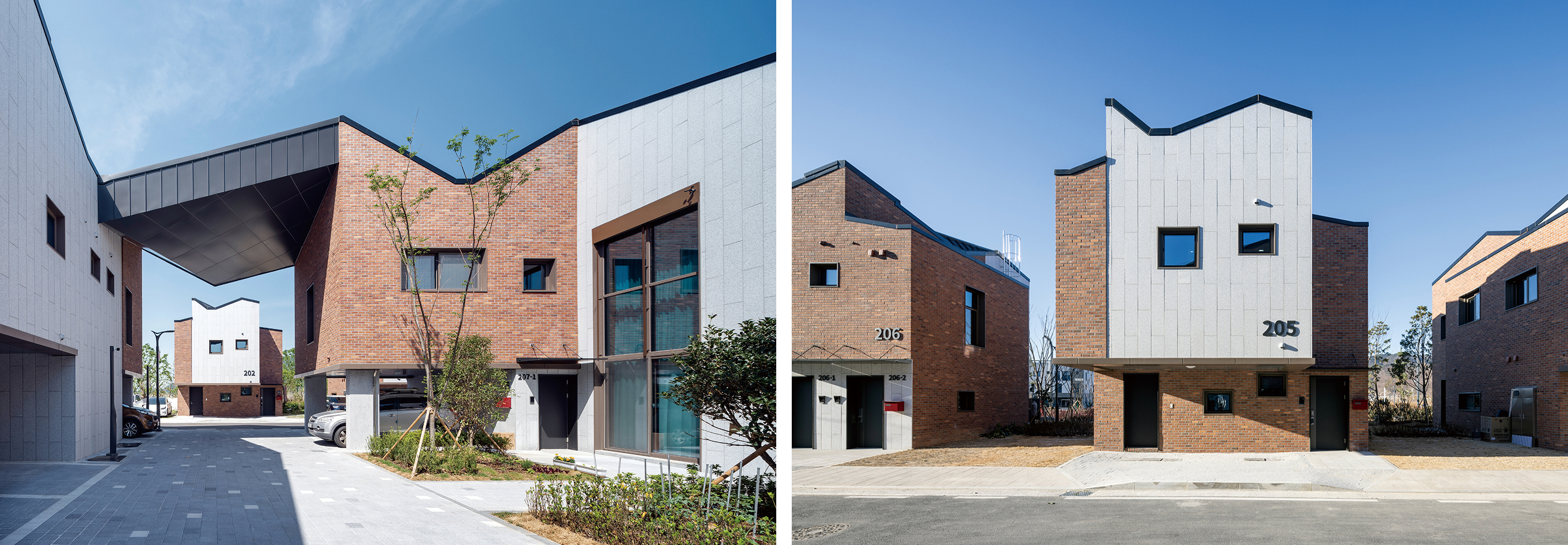
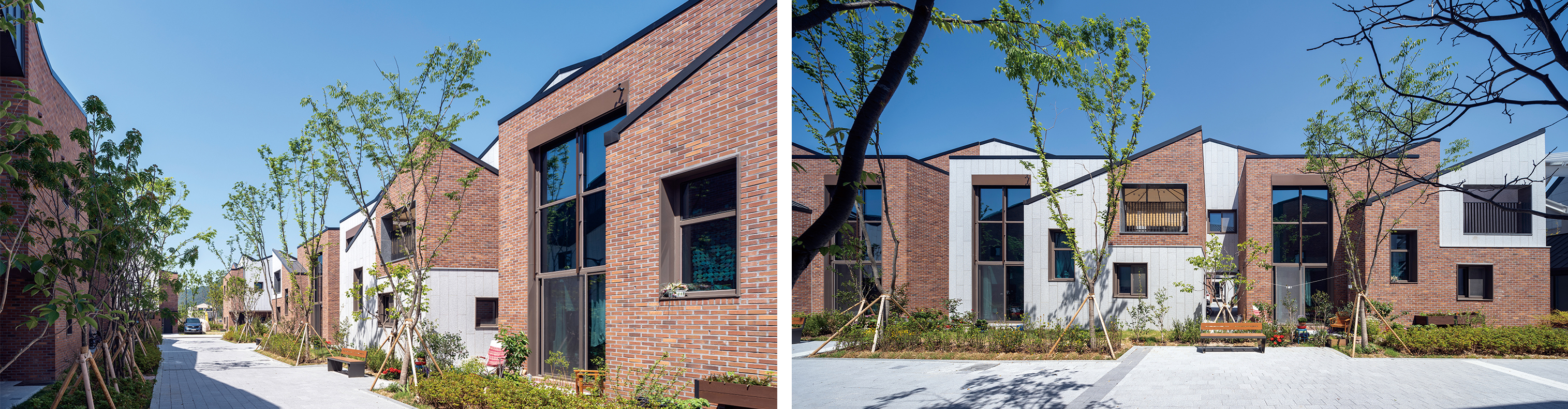
The complex is organised around a single pedestrian axis, the ‘Smart Community Corridor’. More than a simple circulation system, it constitutes a social cross-section where residents’ lives intersect, while pavements for walking and the gaze of passersby occupy the centre. Housing is arranged along the perimeter in detached types and in party-wall-connected types, forming block configurations that share open courtyards. In the detached houses, south-facing daylighting, private yards, and flexible furniture propose ways of ‘living broadly within small spaces’. In the party-wall housing, which explores the boundaries and rhythms of shared living, the party wall functions both as a device for energy efficiency and as a loose connection between dwellings.
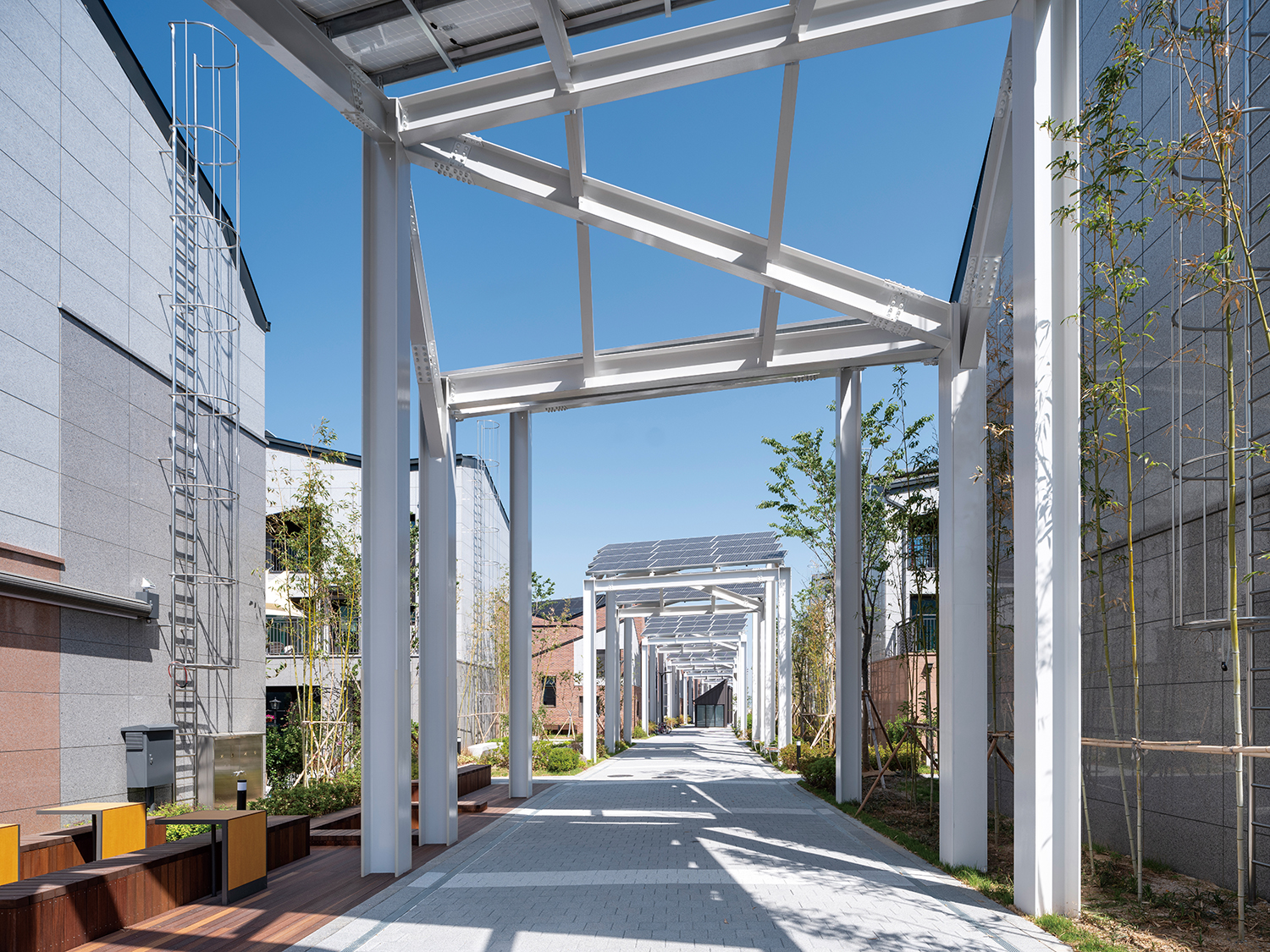
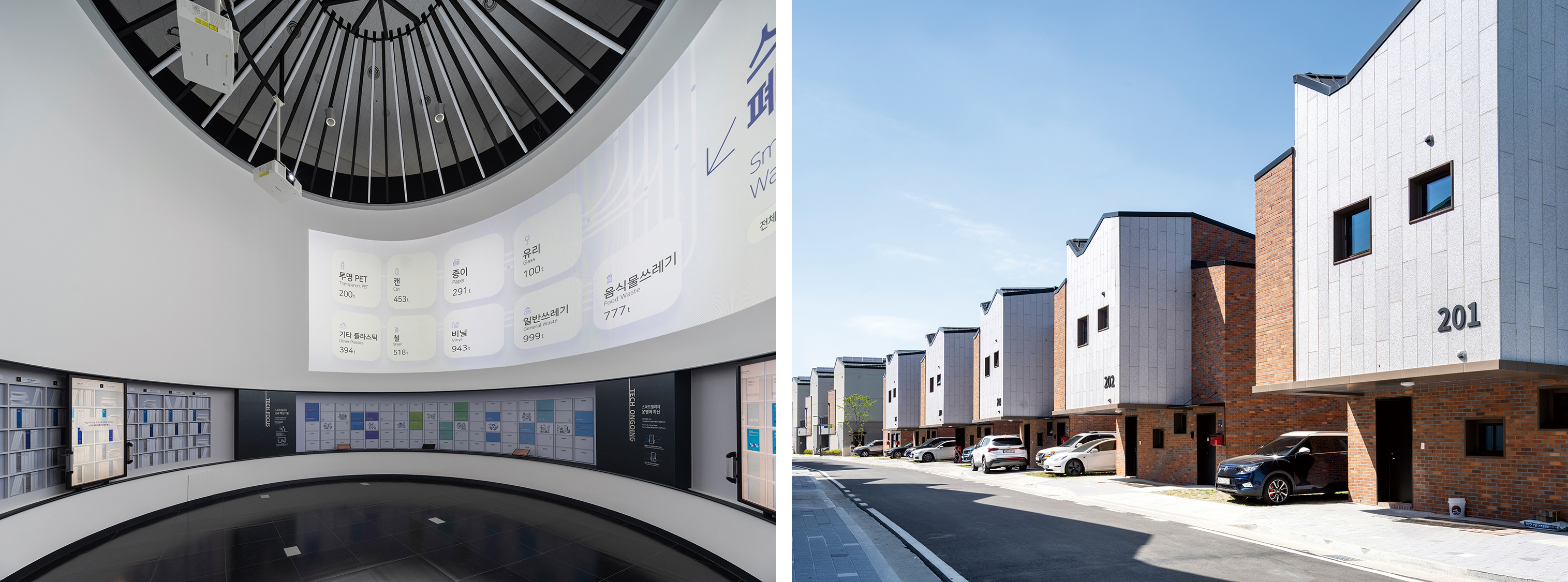
Within the Smart Village, 3,000 sensors collect data on temperature, electricity use, and patterns of daily life. The collected data are analysed through the BEMS (Building Energy Management System) and used to adjust the operational systems of the complex. This technological advancement raises the question: ‘Who owns the data, and how is it managed?’ For this reason, from the design stage onward, we believed that such systems should be spatially visible, grounded in the conviction that trust emerges from transparent relationships.
Accordingly, in this project, energy technology was not merely a technical issue but a task to be resolved through architectural form and spatial order. Performance has been translated into form by adjusting the window ratios, roof angles, and façade rhythms, while photovoltaic systems, geothermal energy, and BEMS were integrated as principles of spatial operation. As a result, an energy self-sufficiency rate of 106 percent was achieved; yet the core significance lies not in the figure itself, but in the spatial order that produced it. Functions permeate the exterior and appear like patterns; ‘functions rendered as patterns’ became the new architectural language of the complex. The significance of the Smart Village lies in its desire to allow residents to experiment with their own lives and the outcomes of this feed back into the city. Architecture serves as the stage and apparatus for that experiment, becoming an interface that connects people with technology.
Unsangdong Architects (Jang Yoongyoo, Shin Changh
Kim Bongkyun, Oh Taekjoon, Kim Sol, Yang Wonjoon,
13, Smart 3-gil, Gangseo-gu, Busan, Korea
single houses, neighbourhood living facilities
7,202m²
2,247.23m²
3,219.99m²
single houses – 2F / community facilities &#
33
single houses – 10.14m community facilities
31.2%
32%
single houses – RC, light gauge steel / com
single houses – clay brick, stone, Low-E gl
CS Structural Engineering Inc.
HIMEC Ltd.
Shindonagh Constructon Co., Ltd.
Dec. 2019 – Jan. 2021
July 2020 – Dec. 2021
K-water
Studio HYMH