SPACE July 2026 (No. 704)
Between June 6 ‒ 16, Hall 1 of the Dongdaemun Design Plaza was transformed into a fantastical stage set. Hermès’ interactive exhibition ‘Mystery at the Grooms’’ arrived in Seoul, inviting visitors into a detective game centred on locating horses that have mysteriously disappeared from the Grooms’ House. Upon entering, visitors received a ticket with a QR code, giving them access to the game page, and embarked on a mission through six themed rooms ‒ the Stock Room, Dining Room, Pantry, Head Groom’s Office, Laundry Room, and Dormitory ‒ to find the horses hidden among the Hermès objects. The task unfolds with surprising urgency. Participants must closely examine the forms, patterns, and decorative details of tableware, silk, shirts, ties, saddles, leather goods, and other objects, while activating concealed mechanisms throughout the exhibition. Within one hour, they are challenged to locate thirty horses. Some can only be discovered through interactions with actors playing the role of the grooms.
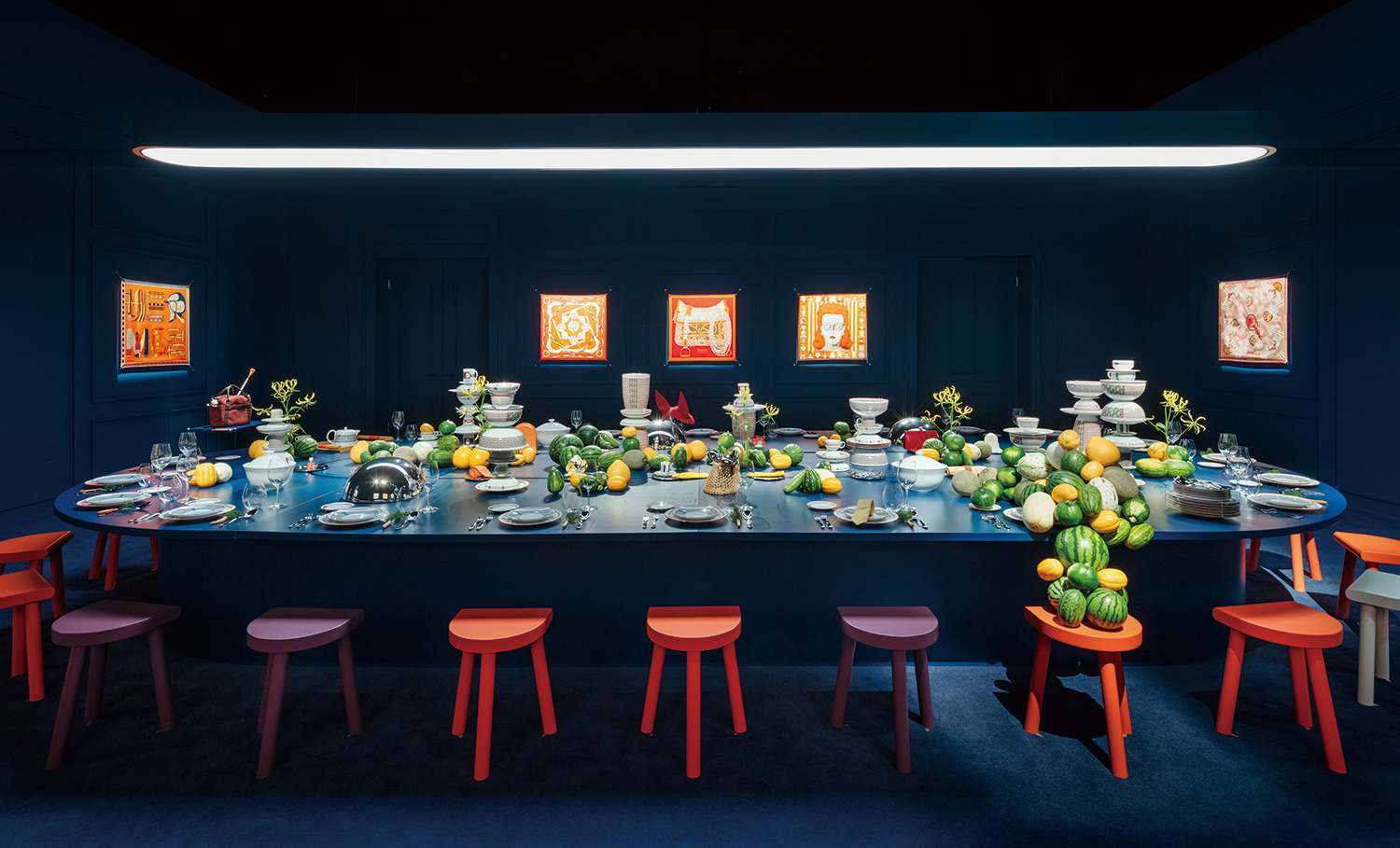
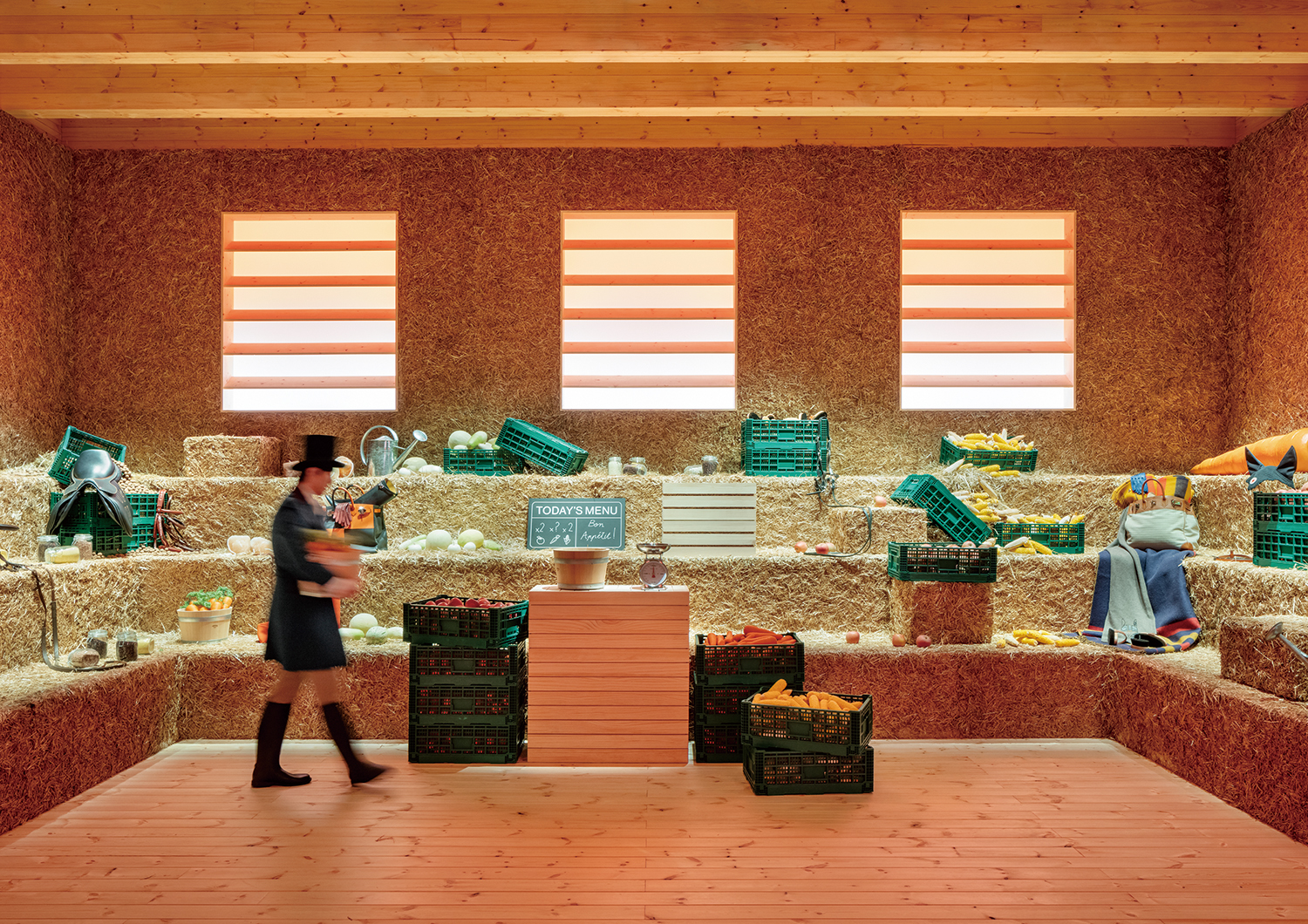
The Dining Room (top) and the Pantry (bottom), two of the six rooms in ‛Mystery at the Grooms’’ ©Kyungsub Shin
This premise is directly linked to the history and heritage of Hermès. The company originated in 1837 as a harness-making workshop founded in Paris by Thierry Hermès. Before becoming a decorative symbol of the brand, the horse inspired in its origins. Early harnesses and saddles were designed as equipment positioned between horse and rider, requiring craftsmanship concerned with the durability of leather and the stability of movement. Over time, Hermès expanded its expertise developed through building horseback riding equipment into leather goods, silk, footwear, tableware, apparel, and other fields. Throughout this evolution, the motif of a horse has continually reappeared in different forms—as images, patterns, traces, and material expressions shaped by the techniques and materials of each métier. This exhibition revisits this long history through the fictional setting of the Grooms’ House, encouraging visitors to look closely at Hermès objects within this narrative framework.
What is particularly striking is that the products themselves are never placed at the forefront. There are no explanatory labels directing attention toward merchandise. Instead, six immersive environments are arranged according to the domestic functions of a mansion – for example, the Laundry Room focuses on shirts and ties, while the Dining Room concentrates on tableware and silk – but these groupings function less as a catalogue classification than as scenographic compositions. This approach echoes Hermès’ longstanding window-display tradition. The display windows of the Faubourg Saint-Honoré flagship store have long operated as theatrical stages where objects are placed within fantastical narratives. Most notably, Leïla Menchari, who directed the store’s windows from 1978 to 2013, developed the brand’s visual culture by situating objects within unfamiliar landscapes, alongside animals, mythical scenes, and exotic settings. ‘Mystery at the Grooms’’ expands this tradition on a habitable scale through which visitors can physically move and with which they can engage.
The exhibition also marks the first occasion on which all sixteen Hermès métiers have been brought together in a single venue. Hermès categorises its creations by métier—not according to product type, but according to the specialised craftsmanship and creative disciplines behind them. From the Leather Goods and Saddlery métier, which presents the Hermès Sabot Picnic bag inspired by a horseshoe, to the Silk métier, which features the Rocabar de Rire scarf adorned with playful and lively horse illustrations, and the Shoe métier, which introduces footwear leaving horseshoe-shaped traces, each métier offers a distinctive interpretation of the horse motif. Alongside these contemporary creations, iconic archive pieces such as the Kelly rocking horse are also on display, further reinforcing the enduring relationship between Hermès and the horse.