SPACE May 2026 (No. 702)
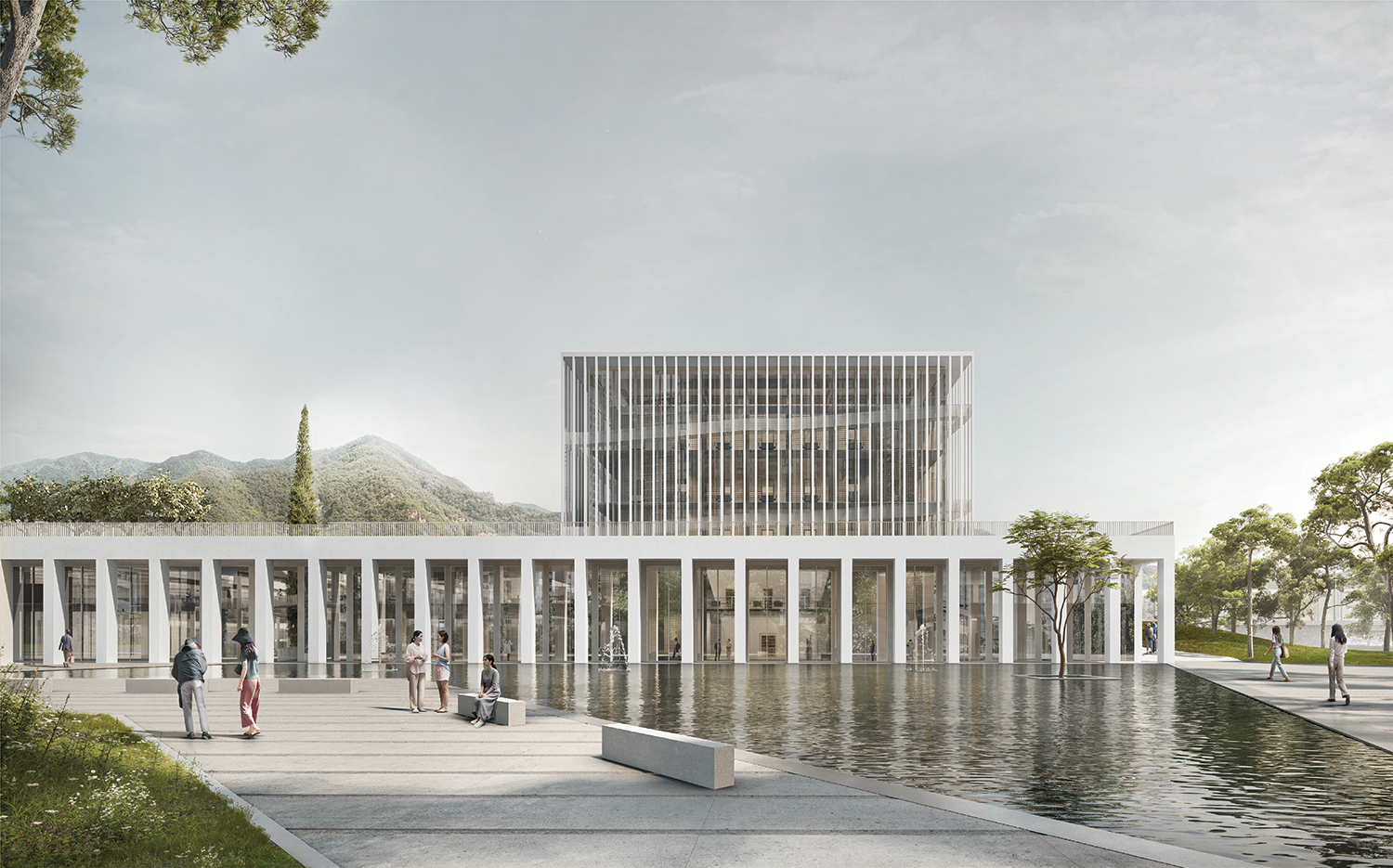
Winning proposal of Dasa Integrated Community Center, Dasa Transfer Parking Lot, and Multi-purpose Sports Hall International Invited Design Competition ©Yi Architects Seoul + SUNJIN Engineering & Architecture Co., Ltd.
On Mar. 9, Dalseong-gun, Daegu-si, announced the design proposal by Yi Architects Seoul (Principal, Yi Eunyoung) + SUNJIN Engineering & Architecture Co., Ltd. (CEO, Bae Sungjin) was selected as the winner of the Dasa Integrated Community Center, Dasa Transfer Parking Lot, and Multi-purpose Sports Hall International Invited Design Competition. This competition aims to build a complex consisting of three components: the Dasa Integrated Community Center (GFA: 10,956m2), which includes a library, youth facilities, daycare centre, and community childcare space; the Dasa transfer parking facility (GFA: 7,472m2); and a multipurpose sports hall. The winning proposal was developed in light of two characteristics found in Dasa; its ‘basin within a basin’ topography and the reinterpretation of the ancient Silla term, dasa (多斯), meaning ‘a hill with large waterbody’ as a form of genius loci. At the same time, the project establishes ‘spatial layers’ as its primary concept, articulating a continuous spatial sequence of forest–water–colonnade–envelope–glass block–centripetal space. A water body placed in front of the building serves as the most significant feature of this design. Beyond the water body, the vertical library mass rises from a low, compressed volume that reads as building foundation. Meanwhile, more complex programmatic elements, such as the gymnasium and youth facilities, are embedded beneath this expansive platform. A gently sloping ramp connects the plaza, rooftop garden, and roof terrace, produces a continuous spatial experience. In response to the complexity of accommodating multiple programmes within a historically layered context, the team suggest that the entire project operates as ‘the living room of the city’ rather than as a more conventionally understood aggregation of buildings. In particular, the proposal draws the arc to historical precedents, such as the stoa of the ancient Agora, where colonnaded space receives and frames civic life and the Kyujanggak Library, where a sequence of spatial order produces a gradual transitional experience. These references appear to have been key to the project’s positive reception.