SPACE April 2026 (No. 701)
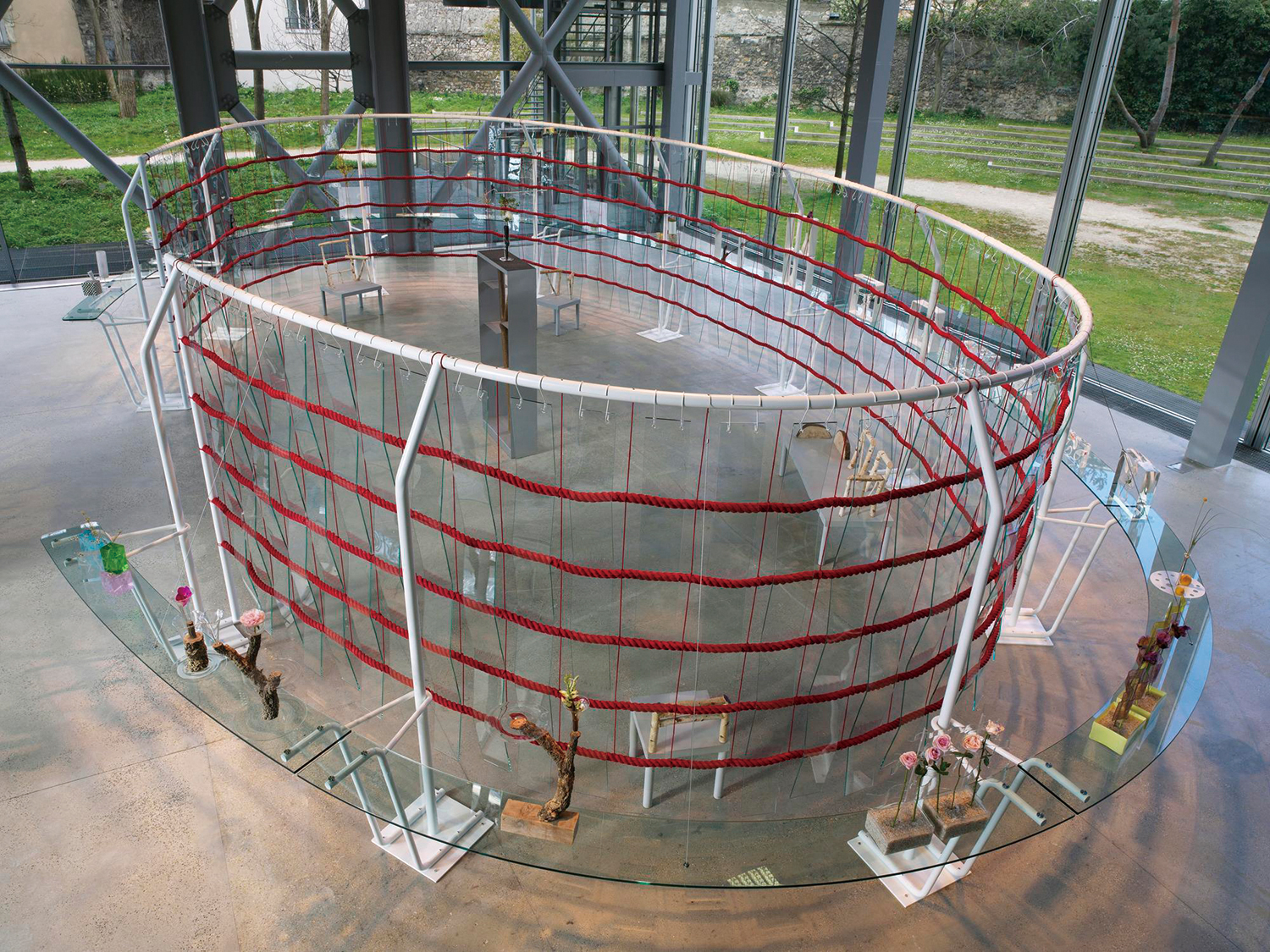
©Patrick Gries / Image courtesy of Fondation Cartier pour l'art contemporain
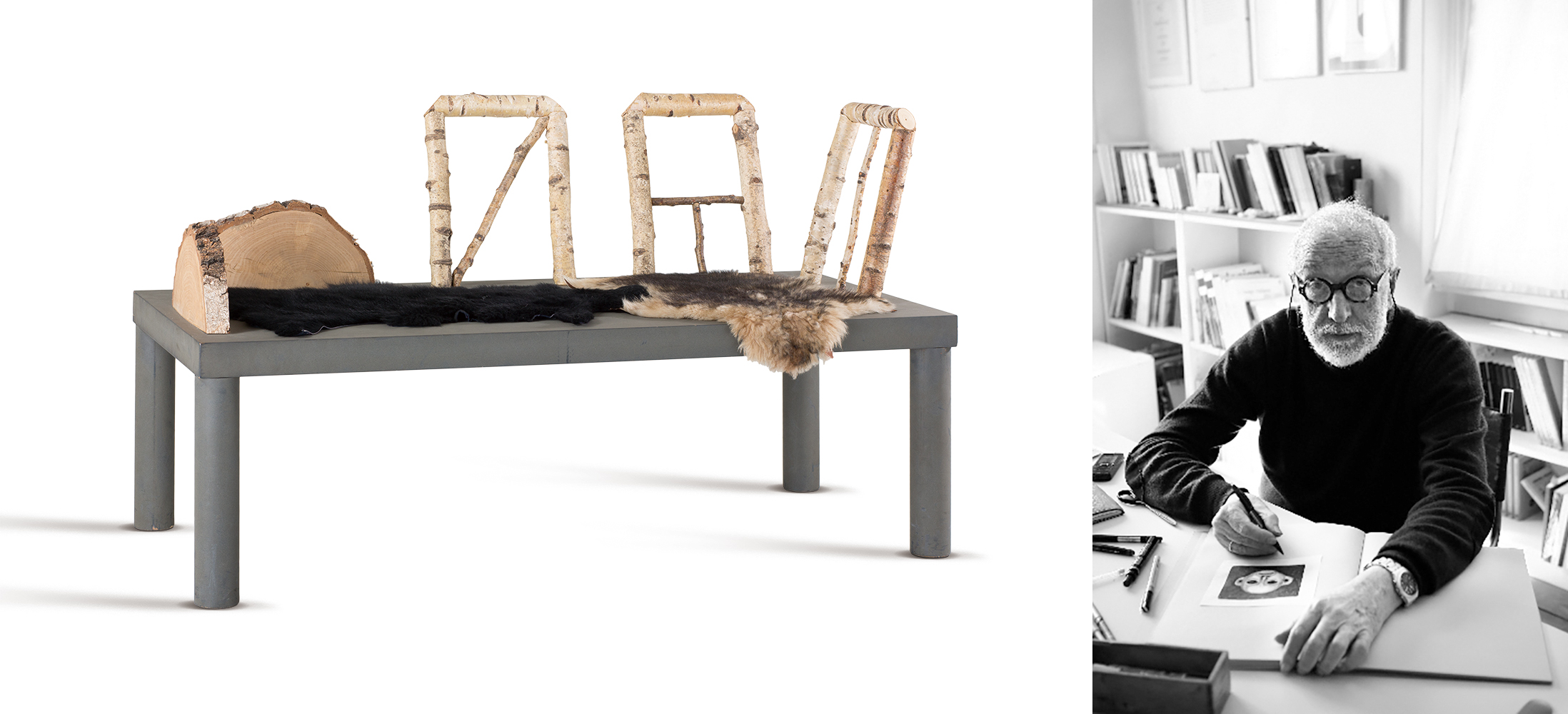 Andrea Branzi, Animali domestici, Zabro-Zanotta ©Jürgen Hans / Image courtesy of Vitra Design Museum (1985, left); Andrea Branzi ©Elisabetta Claudio (2012, right)
As part of a cultural partnership between Triennale di Milano and Fondation Cartier, an Andrea Branzi retrospective exhibition entitled ‘Andrea Branzi by Toyo Ito: Continuous Present’, will be on view from Mar. 19 to Oct. 4 at Palazzo dell’Arte.
Branzi, one of the founding members of Archizoom Associati, was a key figure in the anti-design movement of the 1960s and 1970s. More specifically, his No-Stop City project is a conceptual work that pushes the logic of consumer society and functionalist urbanism to its limits and has been consistently referenced in architectural and urban discourse. Beyond his role as a designer, Branzi extended his practice into theory, education, and curatorial work, maintaining a continuous presence across multiple fields.
The exhibition space has been designed by Ito Toyo. Based on his long-time friendship with Branchi, he approached the exhibition not as a closed-off narrative from the past, but as something situated within a ‘continuous present’. This idea, articulated through the concept of an ‘uninterrupted flow’, shapes a fluid spatial sequence where flows and vortices coexist.
The exhibition has been organised into an archipelago of eleven islands. There are five main themes, fragility, hybridity, coexistence, ecology, and interdisciplinarity; Branzi was committed to the exploration of all five themes and they run throughout the whole exhibition and articulate their contemporary meanings. The exhibition begins with ‘Superarchitettura’, Archizoom’s first exhibition in 1966, and continues with ‘No-Stop City’, presenting Branzi’s early furniture and design works followed by ‘Metropoli teoriche’, which expands his work to a larger scale. Sections such as ‘Decorattivo’, which gathers material experiments from the 1970s, ‘Superfici Attive’, introducing a series of landscape works, and ‘Case a pianta centrale’, focused on interior design and furniture, further trace the evolution of his practice. In this section, ‘Case a pianta centrale’, visitors can encounter one of his most well-known furniture series, Animali Domestici (1985).
The centre of the exhibition space is occupied by ‘Ambienti e dispositivi espositivi’, which foregrounds the role of display and spatial configuration in Branzi’s work. His installation work, including Ellipse (2008) and Gazebo (2008) from the collection of the Fondation Cartier, are also presented here.
The latter part of the exhibition unfolds as a series of thematic ‘islands’ centred on objects and anthropological design. ‘Ospitalità cosmica’ investigates interspecies coexistence and collaboration, while ’Oggetto Ibri’ explores experiments in assemblage and mixture. Along the exhibition circulation, a selection of publications and unpublished video interviews of Hans Ulrich Obrist can be found. Public events will take place throughout the exhibition period, beginning with a lecture by Ito Toyo.